Rich Thanksgiving leftovers can make some dogs seriously ill. Keep scraps out of reach, watch for changes, and contact a veterinarian when your dog seems unwell.
A guest slips the dog a piece of turkey skin. Someone leaves a plate within reach, or a bag of scraps sits by the back door. Thanksgiving gives dogs plenty of chances to find rich food, and for some, that can lead to serious illness. Pancreatitis, or inflammation of the pancreas, is one concern. It can range from a mild illness to a life-threatening emergency.
Keeping fatty scraps out of reach is sensible, but there is no verified national Thanksgiving pancreatitis peak and no known amount of turkey skin that predicts an episode in an individual dog. Vomiting after dinner does not establish the diagnosis, either. What owners can do is prevent access to rich food, notice when a dog seems unwell and contact a veterinarian promptly.
How pancreatitis can make a dog ill
The pancreas helps with digestion and blood-sugar regulation. Inflammation can disrupt those functions and make a dog feel very unwell. VCA's veterinary guidance describes vomiting, reduced appetite, abdominal pain, lethargy and diarrhea among possible signs. Some dogs appear mildly ill; others need urgent hospital care. Those signs overlap with many other problems, which is why an owner cannot diagnose pancreatitis by watching a dog at home.
At the clinic, the veterinarian will ask what happened and examine the dog before deciding which tests may help. Blood tests and imaging can be part of that assessment. A pancreatic lipase test can provide useful evidence, but the result needs to be considered alongside the history and examination. Treatment depends on that fuller picture, not on an owner matching symptoms to an online description.
Why rich scraps are worth avoiding
The American Veterinary Medical Association advises against fatty table scraps such as gravy, skin and trimmings during Thanksgiving. The advice is practical even though not every dog who eats a scrap will become sick. A 2008 retrospective study reported associations between unusual food intake and pancreatitis in a veterinary referral population. An association does not prove that one bite caused a case. Its referral population and comparison group also limit how broadly the result can be applied; it cannot calculate an individual dog's holiday risk.
Often, the cause remains uncertain. Other health conditions may matter, and two dogs can respond differently to the same food. The research does not provide a safe weight of fat to serve or a way to trace every episode to one guest's plate. If your dog has had pancreatitis or follows a prescribed diet, stick with the veterinarian's plan rather than making a holiday exception.
Illness may also show up after the plates have been cleared. Signs can be delayed, and there is no universal symptom-free interval that tells you the danger has passed. Mention recent meals when you call the clinic. If your dog already seems ill, do not wait for a particular number of hours to pass before seeking advice.
What to do when a dog looks sick
If your dog has repeated vomiting, marked weakness, a painful abdomen, refuses food, or seems unusually quiet, call your veterinarian promptly. If the dog collapses, struggles to breathe, cannot keep water down, or seems severely ill, seek emergency veterinary care. Tell the clinic what the dog may have eaten, approximately when, how much is missing if you know, and what signs you have seen. You do not need to prove pancreatitis before asking for help.
Do not start a home treatment because a social post calls the symptoms “holiday pancreatitis.” A veterinarian may need to assess dehydration, pain or another emergency. Other Thanksgiving hazards, including ingredients toxic to dogs and swallowed bones, can require a different response. Keep packaging or a photograph of an ingredient list if available without delaying care. Follow the clinic's directions about food and water; do not make up a fasting period or give leftover drugs.
The care plan may include fluids, pain relief, treatment for nausea and a feeding plan chosen by the veterinary team. Some dogs can go home with follow-up instructions; others need hospital care. Ask the clinic what to expect and which changes mean you should call again. The right diet and treatment depend on the dog and the severity of the illness.
Keep the information useful for a call
If several people fed the dog, ask them what they offered without turning the conversation into blame. The clinic will benefit from a clear account of possible foods and symptoms. Save any relevant packaging and note when the dog last seemed normal. A dog can also find discarded bones or ingredients in the trash, so the account may remain incomplete. Say what you know and what you do not. If the dog is already severely ill, gathering a perfect list can wait until you are on the way to care. The veterinarian can use the history with the examination to decide what to test; the household does not need to solve the cause first.
Make the table easier to manage
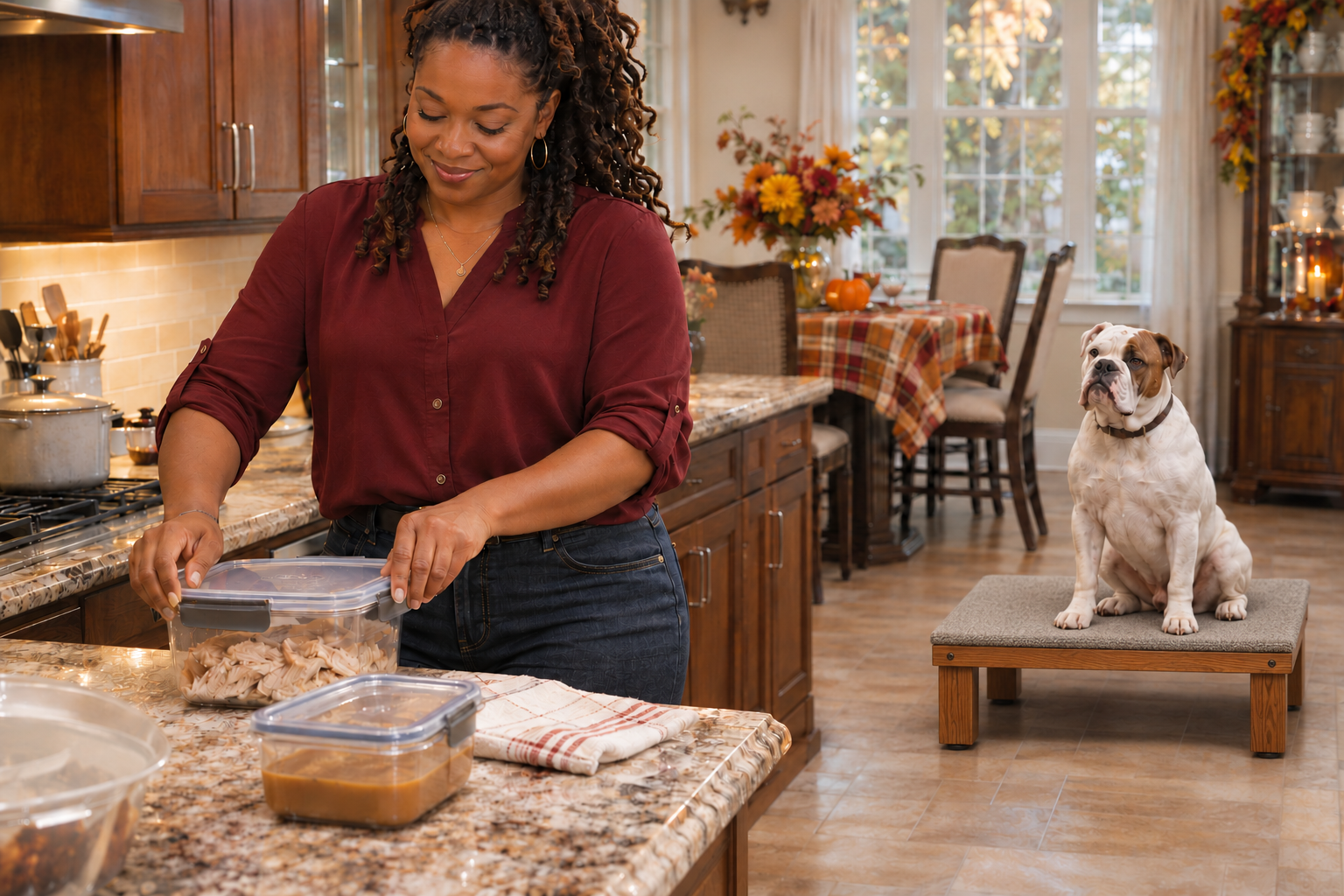
Before guests arrive, decide who is responsible for feeding the dog and what the dog may have. Tell visitors clearly that scraps are off limits. Place serving dishes and the trash where the dog cannot reach them, and check the floor after clearing plates. If your dog tends to investigate food, a separate comfortable space during dinner may be easier than repeatedly asking guests to watch their plates. Use the household's normal, veterinarian-approved food or treats rather than testing a rich new dish on a busy day.
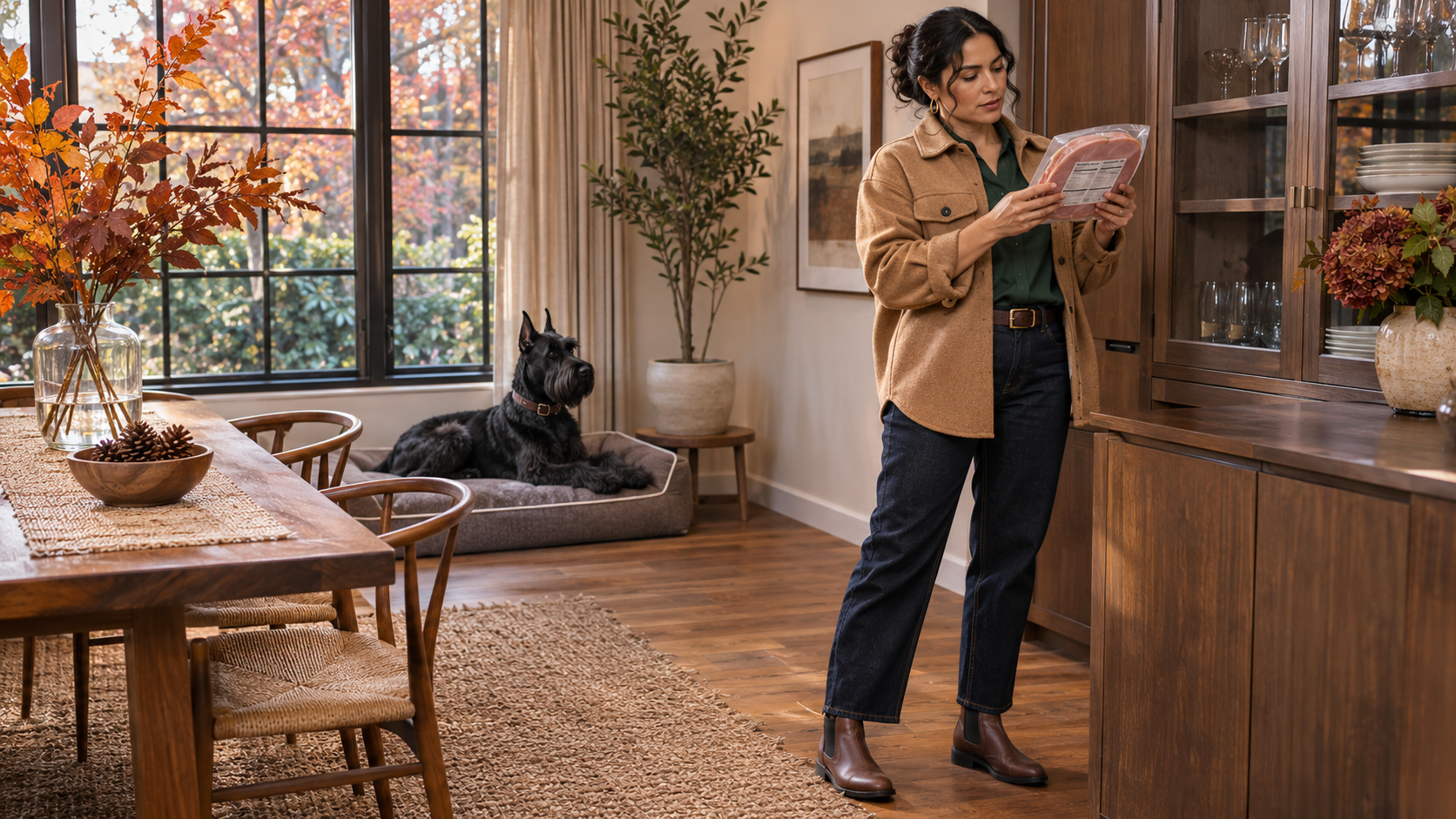
A plain piece of boneless, skinless turkey may be suitable for some dogs in a small amount, according to the AVMA, but that does not make all holiday leftovers safe. Sauces, gravy, cooked bones, onions, garlic, raisins, chocolate and raw dough bring separate concerns. Dogs with medical diets or a past pancreatic episode need their own veterinary instructions. If your dog has swallowed an ingredient known to be toxic to dogs, contact your veterinarian or an animal poison service promptly even before symptoms appear. The simplest option is often to keep the regular menu and make the celebration about attention or a familiar activity.
Reports about holiday illness need a close look at what was actually counted. A clinic network's analysis of visits and pancreatic-lipase testing after Thanksgiving does not tell us how many dogs nationwide had confirmed pancreatitis. An increase in testing can reflect how owners and clinicians respond to illness, among other factors. It cannot be read as an equivalent increase in diagnosed disease.
Your dog can still be part of Thanksgiving without sharing the rich food. A familiar meal, attention and a normal activity keep the day enjoyable without adding a dietary gamble. Make the feeding rule clear before guests arrive, keep scraps and trash out of reach, and take changes in your dog's health seriously.
Sources and further reading
More stories
 Daily Doggy NewsCan Dogs Eat Ham? Safety and Serving
 Daily Doggy NewsThanksgiving Visitors and Dogs: A Practical Safety Plan
 Daily Doggy NewsWhen a Dog Gets Into Medication
 Tyson’s LifeIf You Cannot Come Home to Your Dog
 Daily Doggy NewsWhen an Older Dog Suddenly Loses Balance
 Latest Daily Doggy NewsBloat Signs That Need Emergency Care