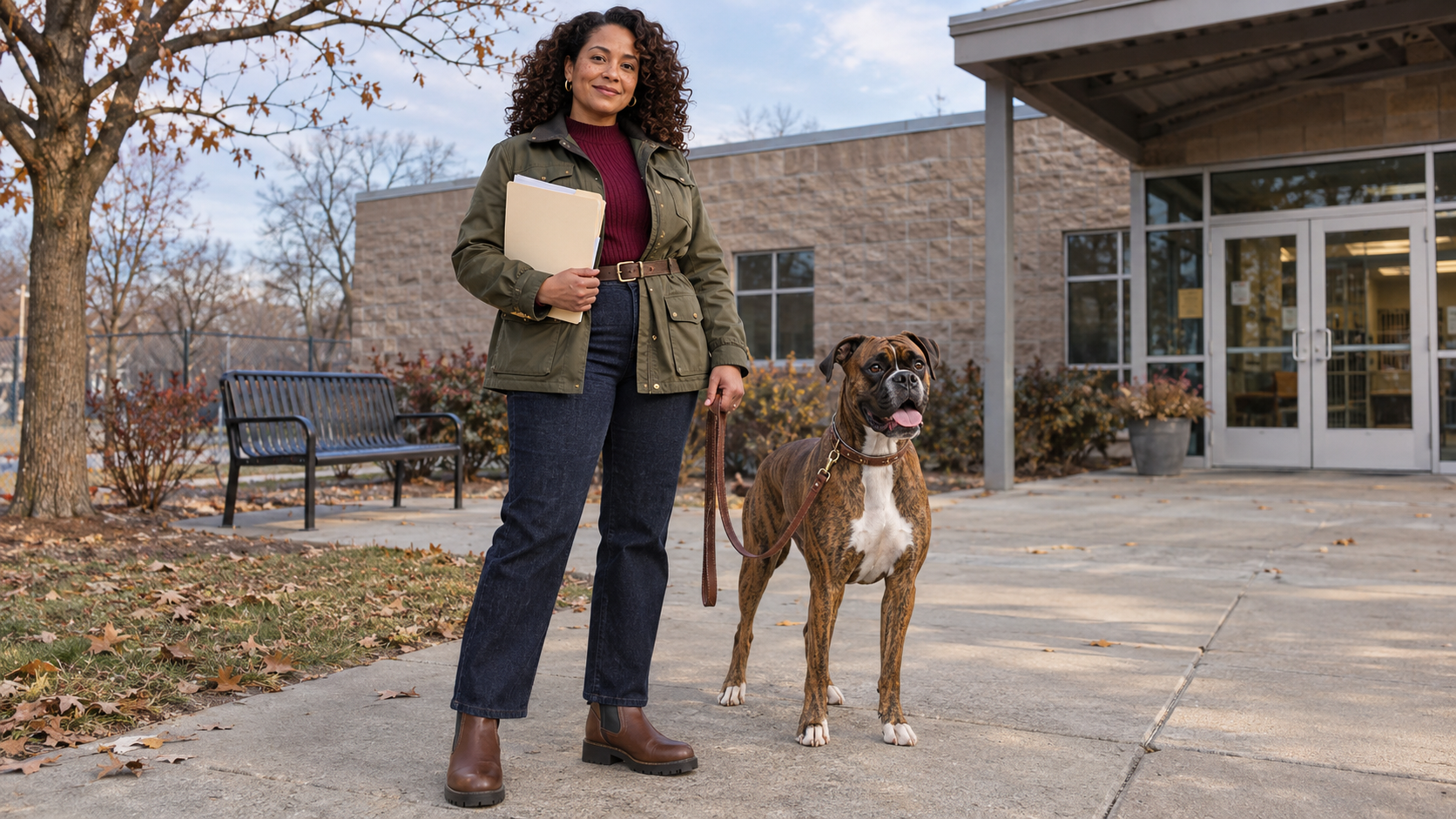
Mazie’s shelter story forced me to face the unfinished emergency plan I have for Tyson, including who can enter my home if I cannot return.
Shopping disclosure: Inspired by Tyson may earn a commission from qualifying purchases made through links in this article, at no additional cost to the reader.
Mazie had been at the shelter for less than a day when Rocky Kanaka sat down outside her kennel. She was a seven-and-a-half-year-old Chihuahua whose person had moved into assisted living and could not bring her along. According to Kanaka's account, family members brought Mazie to Animal Friends of the Valleys in Wildomar, California. The dog they described as gentle, playful and a couch potato was now pressed low against the kennel floor, barely willing to move.
Kanaka gave her time. He sat nearby, spoke softly and offered food. Mazie initially stiffened and showed her teeth when he tried to touch her. With time, she accepted contact and allowed herself to be picked up. The scene is difficult to watch because it shows how quickly a dog's entire world can change when the person and home she knows disappear.
We do not know what Mazie's owner wanted, what led to the move or which options the family had. Entering assisted living is not abandonment. It can be a necessary decision made during an emergency or after a long decline. What Mazie's story does show is the dog who remains after everyone else has had to make a decision.
Tyson waits by the door
That part of Mazie's story stayed with me because Tyson notices every change in my routine. Before I leave for work, he lets me know if he needs to go outside. He parks himself by the door and faces it so I cannot miss the message. If he does not want to go, he walks into his cage, which is his house, and stays put.
He knows when to expect me back, too. On workdays, if I am not home by around 9:30 or 9:45, Tyson comes to the door and waits.
On days when I am not working, he has less certainty. I am home most of the time, but sometimes I leave. If I am gone longer than he expects, he waits by the door. The camera near the entrance sends me an alert, and I see him there wondering where I am. When I return, he is usually waiting to greet me.
If I know I will be out for a while, I prepare him first. I feed him, walk him, play with him and pay attention to the timing. I know that several hours after he eats, he will probably need to go outside. That rhythm tells me when I need to be home. If I return and he has not made a mess, I give him a treat, sometimes a fresh bone, and we settle back into our routine.
The question I have not finished answering
Then there is the question I keep coming back to when I am driving or away from the house: what happens if I do not come home? Who checks on Tyson? Who knows that he is waiting? Who can get through the door before his normal routine becomes an emergency?
I do not have a complete formal plan yet, and that bothers me. But I have taken one practical step: my mother and a few people I trust can get into my home. I installed the eufy Security Video Smart Lock S330, which combines entry control with a camera and app access. I can open it with a physical key, my thumbprint, my phone or a code.
My mother lives in New York, but she has access through the app. She can see who is at the door and, when necessary, unlock it for someone I trust who can reach Tyson. I also bought the lock so I would have another way into the house if I lost my keys.
It is not a complete emergency plan, and it will not fit every door. A reader considering the same lock should check the manufacturer's door measurements, keep the physical keys available and test every approved person's access before depending on it.
I have also tried to make sure the people who might help have met Tyson. He is friendly, but familiarity still matters. A dog who is confused or frightened may react differently from the dog you see every day. The person entering the home should know where the leash is, what cue the dog recognizes and whom to call if the dog will not leave.
A lock is access, not the whole plan
Emergency access solves only the first problem. Someone still needs clear authority, current information and the willingness to take responsibility. The ASPCA recommends making formal or informal arrangements for a pet's care. An informal plan can be a written agreement with family or friends. Formal options can include provisions in a will, a pet trust, a limited power of attorney or a letter of instruction. The right legal tool depends on the owner's circumstances and state law.
That first evening matters. A dog may need food before anyone can find or act on a will. The American Kennel Club's planning guidance emphasizes naming someone who can begin care right away. A pet trust can address money and oversight, while a living arrangement may also help during incapacity, but neither replaces a person who knows the dog and can act in the first hours.
A useful plan should name a primary caregiver and a backup. Both people should agree to the role before an emergency. They should know where the dog normally sleeps, how often the dog eats, what medications are required, which veterinarian has the records and what behaviors could become a problem under stress.
Write down what another person would need
Start with a care sheet that is easy to find. Include the veterinarian's contact information, medication names and instructions, feeding amounts, walking schedule, microchip details, insurance information, allergies, known triggers and the names of people the dog already trusts. Add a recent photograph and describe where the leash, carrier, food, medication and physical house key are kept.
Prepare a small go bag with several days of food when practical, copies of veterinary records, medication, a leash, a secure collar or harness and something familiar that smells like home. Check it periodically so the food and medicine do not expire. Give the backup caregiver a copy of the care sheet instead of leaving the only copy inside a locked house.
Then test the plan. Ask the person to enter while you are present, handle the leash and walk through the feeding routine. Confirm that the smart-lock app, passcode and physical key still work. Decide what should happen during a power, internet or battery failure. Technology can shorten the distance between an emergency and help, but only if the human plan around it is current.
Ask assisted living facilities directly
When a move to assisted living is being considered, ask each facility for its written animal policy. Rules can vary by facility and jurisdiction. Questions should cover permitted animals, size or temperament requirements, deposits, vaccination records, who provides daily care and what happens if the resident is hospitalized. An assistance animal is legally different from a pet, so a person who needs an animal because of a disability should seek reliable guidance about reasonable accommodations rather than relying on a facility's general pet policy.
Even when a facility allows dogs, the resident still needs a backup plan. Health can change after move-in, and another person may need to feed, walk or temporarily house the dog. The best time to have that conversation is before the move becomes urgent.
What Mazie needs from a new caregiver
Rocky Kanaka’s November 4 adoption page still listed Mazie as available when checked on November 9. Readers should confirm her current status directly with Animal Friends of the Valleys. What does not change is the patience shown in the video. Mazie was not being difficult. She was overwhelmed.
A shut-down dog may need quiet, distance and time before accepting food or touch. A new caregiver should not force an introduction because the dog was previously described as friendly. The dog in front of them is processing a sudden loss of place, person and routine. Veterinary and qualified behavior support may be needed if the dog will not eat, appears ill or remains unable to settle.
The one step I can take now
I still do not have a finished answer for Tyson. Mazie's story made me look at the gaps in my own plan. The lock gives someone a way inside. The cameras help me see what is happening. The people who know Tyson give me a beginning. I still need to put the rest in writing and confirm who would take responsibility if the emergency lasted longer than a day.
That is the step I would ask another dog owner to take this week: choose one person, have the uncomfortable conversation and write down what that person needs to know. You do not need a perfect binder to start that conversation. Legal advice may help with the formal arrangements, but choosing someone who can act in the first hours is a step you can take now, before your dog is waiting by the door and no one knows how to reach him.
Sources and further reading
- Rocky Kanaka, Mazie feature and shelter account
- Rocky Kanaka, Mazie adoption page
- ASPCA, Three Tips for Creating a Plan So Your Pet is Always Cared For
- ASPCA, Making a Plan for Your Pet
- ASPCA, Pet Trust Primer
- American Kennel Club, What Will Happen to My Dog After I am Gone
- HUD, Assistance Animals
- eufy, Video Smart Lock S330 specifications