A sudden loss of balance can be frightening. Keep your dog safe from falls, contact a veterinarian promptly, and let the exam—not a home guess—guide the next step.
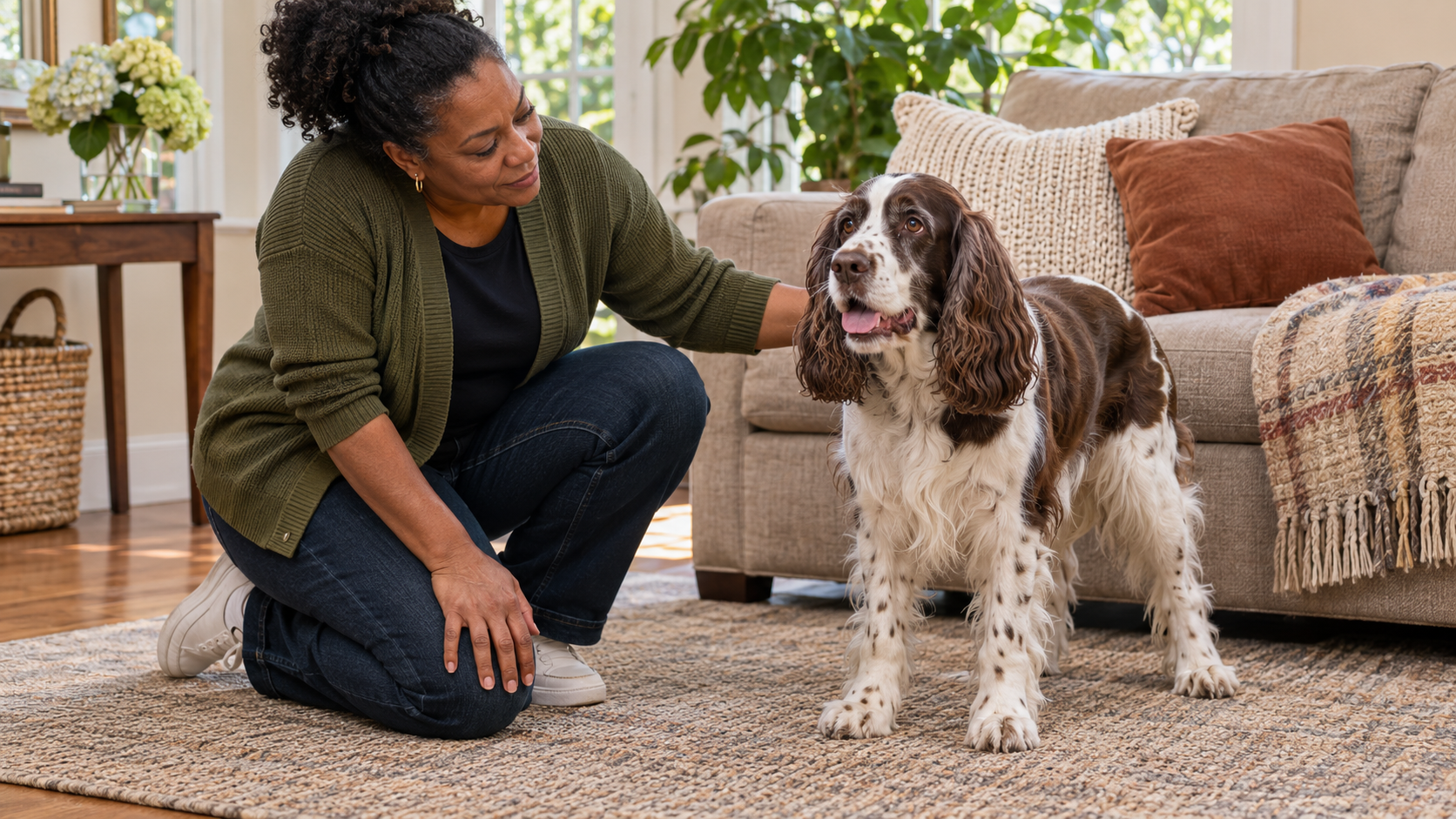
If your older dog suddenly staggers, falls or cannot stand, call your veterinarian immediately and follow the clinic's advice for assessment that day. A dog who cannot stand or walk safely, keeps falling, has a seizure, becomes less responsive or struggles to breathe needs emergency veterinary care now. Even if you have heard of “old-dog vestibular” disease, do not wait a few days to see whether the problem passes.
It can be frightening to see a dog lose balance so suddenly. You may also notice a tilted head, rapid eye movements, circling, nausea or vomiting. These signs can accompany a problem in the balance system, but they do not reveal the cause. Some walking problems have other explanations altogether. A veterinary examination is the first step toward finding out what is wrong.
How the balance system works
A dog's vestibular system helps it sense position and keep its balance. Parts of it are in the inner ear and the nerve leading from it; other parts are in the brain. Veterinarians call a problem arising in the ear or nerve peripheral, and one involving the brain central. Those words describe where a problem may be, not how severe the dog looks to a worried owner.
A dog with a peripheral problem can look dramatically unsteady. A dog with a central problem may show additional neurologic changes. Eye movements or a head tilt alone cannot safely sort the two at home. A veterinarian examines the whole dog and uses the history to decide what testing and care are needed.
Several conditions can cause these signs, including disease in the middle or inner ear. A stroke can affect the brain's balance pathways, so “stroke or vestibular disease” is not an either-or question. Other possibilities include inflammation, infection, a tumor, trauma, certain drugs or toxins, and an idiopathic syndrome. These are possibilities for the veterinarian to consider, not diagnoses an owner can choose from a list.
Why age does not explain the symptoms
Idiopathic vestibular syndrome is a diagnosis veterinarians consider when no underlying cause is identified. Older dogs can develop it suddenly, and many improve with supportive care. But age alone does not establish that diagnosis, and an initial improvement does not rule out every other cause. The same visible signs call for an examination first.
Your veterinarian may ask about the time you noticed the change, recent medications or possible exposures, ear problems and other health conditions. A physical and neurologic examination can guide the next steps. An ear examination, blood or urine tests, blood pressure, imaging or other tests may be appropriate depending on the findings. Not every dog needs every test or an immediate MRI. The vet's job is to decide what the signs require.
Appearances can be misleading. A normal-looking ear does not rule out a problem deeper in the middle ear, and severe dizziness does not, by itself, establish a brain tumor. The examination helps the veterinarian decide which possibilities need further investigation without jumping to reassurance or the worst explanation.
What recovery figures mean
VCA describes a pattern often seen in veterinarian-assessed idiopathic cases: signs may be worst during the first day or two, many dogs improve within about 72 hours, and balance can continue to improve over the following weeks. MedVet offers a somewhat different approximate early window and also describes substantial improvement over two to three weeks. These are descriptions of a particular diagnosis after assessment. They are not a countdown to use before calling a vet.
Some dogs retain a mild head tilt or unsteadiness, and recurrence is possible. Dogs with a different underlying cause have different treatment needs and outcomes. A dog that worsens, does not improve as the treating vet expected, or cannot eat, drink or move safely needs reassessment according to that vet's instructions. Failure to improve does not prove one feared disease.
An owner can help the examination by reporting observations without trying to perform neurologic tests. A short note about the dog's last normal activity, the first fall and any vomiting is useful. If someone can safely record a brief clip of the dog's movement without delaying care or causing another fall, ask the clinic whether it would help; the priority is getting the dog seen. Do not make a dog walk repeatedly for a video when standing is unsafe.
This is also why an online checklist cannot replace the examination. The clinician considers the dog's strength, awareness, responses to movement and other findings together. Those findings depend on context and trained interpretation. At home, the useful job is to report what changed and keep the dog safe, rather than trying to copy neurologic tests.
When a clinic advises assessment the same day, call as soon as signs appear rather than waiting until evening. If your usual veterinarian cannot see the dog promptly, ask where to go for urgent evaluation. A dog who cannot safely reach food or water, keeps falling or develops other severe signs needs emergency attention.
Even when a veterinarian eventually diagnoses idiopathic vestibular syndrome, the care plan may change as the dog recovers. The clinic may set a recheck or advise an owner which changes warrant a call sooner. Keep those instructions and report new weakness, worsening signs or difficulty taking in water. A recovery estimate in a general article cannot replace that follow-up.
Care follows the cause
Treatment may include relief from nausea, fluids for dehydration or care for an identified ear problem. Hospitalization may be needed when a dog cannot stand comfortably. Even when an idiopathic case is expected to improve, supportive care matters. Antibiotics, steroids, supplements and exercises are not a single treatment package for every dog with dizziness; the cause and the dog's condition guide those decisions.
After veterinary assessment, the care plan may include a quiet area, soft bedding and blocked stairs so a dog who is unsteady does not fall. Follow the clinic's directions for helping the dog move and eat. Do not force food or water into a nauseated dog or one unable to sit upright safely; tell the vet if hydration is a problem. Any rehabilitation plan should be tailored by the treating professional.
Owner accounts can convey how unsettling this illness is, but they cannot establish a diagnosis or show that a treatment works. A dog described online may have a different cause, examination findings and care plan from yours. Even a story that sounds familiar is no reason to delay an assessment or borrow someone else's medication. Your veterinarian needs the history of the dog in front of them.
When you call, tell the clinic whether your dog can stand, whether there have been falls or vomiting, and when you last saw the dog moving normally. Mention medicines and possible exposures. Keep the dog away from stairs while you arrange care, and follow the clinic's transport advice. You do not have to work out the cause before asking for help.
Sources and further reading
More stories
 Canine JournalWhen Dog Diarrhea Means Call Your Vet
 Tyson’s LifeTeach Your Dog to Wipe After Meals
 Daily Doggy NewsFoods Dogs Can’t Eat
 Daily Doggy NewsCan Dogs Safely Enjoy Avocado Treats?
 Daily Doggy NewsThanksgiving Visitors: A Dog Safety Plan
 It MattersWill the New Congress Save Animal Shelters?