Before a Thanksgiving drive, check your dog’s travel readiness, destination rules, secure restraint, and local emergency options.
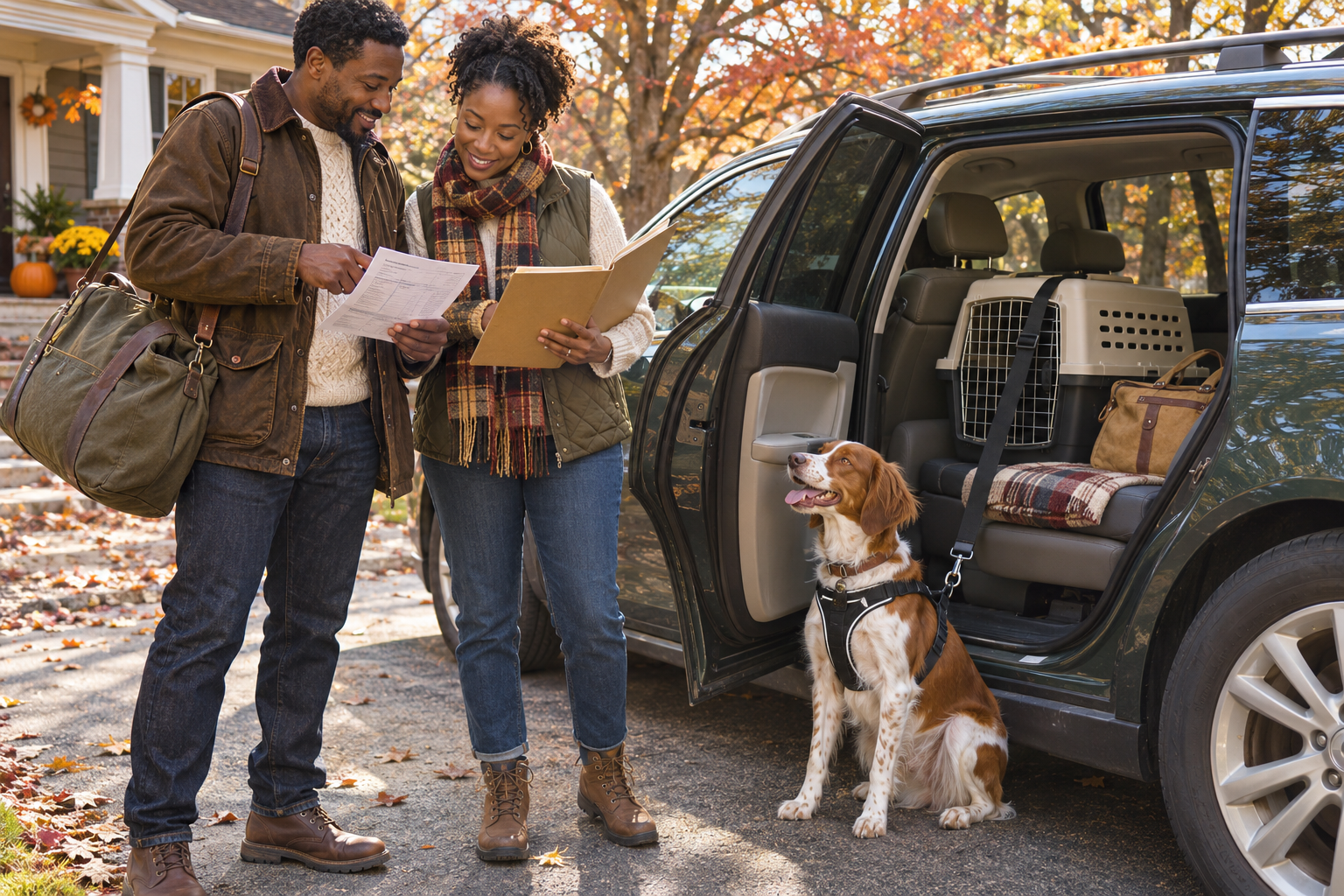
Thanksgiving can mean a longer ride than the usual run to the store. You might be headed to a relative’s house, a rental, or several stops across a state line. Before you pack the leash, ask yourself three questions: Is my dog ready for the drive? Does the destination require any paperwork? Who do I call if my dog needs help away from home?
Start with your dog, not the clock
If your dog has never settled comfortably in the car, a long holiday drive is a lot to ask. The ASPCA recommends starting with short practice rides before a longer trip. Use those rides to see how your dog responds and whether the travel setup stays in place. A good practice run helps you prepare, but it doesn’t guarantee an easy ride on Thanksgiving.
If your dog gets carsick or distressed, talk with your veterinarian before you leave. Your vet can assess whether the trip makes sense for your dog and advise you about medication or other care. Don’t try out a new sedative or change a prescription on the strength of a travel tip online. What works for somebody else’s dog may not be right for yours.
Check the rules for your actual trip
There isn’t one set of paperwork rules for every family road trip. USDA’s Animal and Plant Health Inspection Service tells owners crossing state lines to check the destination state’s requirements. Those may include proof of rabies vaccination, a certificate of veterinary inspection, or other conditions. What you need depends on where you’re headed and what the state currently requires.
Check your destination and any relevant stops while there’s still time to call the vet. Ask the clinic which documents it can provide and when. Don’t assume every trip requires a certificate, or that yours won’t. Florida, for example, exempts privately owned pets traveling with their owners from its usual certificate requirement. It still requires proof of current rabies vaccination for pets at least three months old entering the state. That’s Florida’s rule, not a shortcut for another destination.
If the itinerary changes, take another look at the rules. A last-minute invitation across a different state line can change which records you need. Keep those documents handy in the car, not tucked somewhere you can’t get to without unloading. If you’re not sure which requirement applies, ask the destination’s animal health office and bring the answer to your veterinarian rather than relying on a rule someone remembers from an earlier trip.
Set up a safer ride
The ASPCA recommends a secure, ventilated crate or carrier anchored so it won’t slide, or a properly fitted vehicle harness attached as directed in the back seat. Make sure the setup fits both your dog and your vehicle, and check it before travel day. A restraint can help keep your dog from moving around and distracting the driver, but it can’t guarantee protection in a crash.
Give your dog room to rest without letting them roam where the driver needs to concentrate. Keep a leash within reach, and don’t let your dog ride with their head out the window. Never leave your dog alone in a parked vehicle. Even an errand you expect to take a minute can run long.
Plan stops where you can offer water and give your dog a safe place to stretch and relieve themselves. Clip the leash on before opening the door. A busy service area or a driveway your dog doesn’t know is an easy place for them to slip away. If you’re traveling with someone else, decide ahead of time who will handle the leash.
Pack for a normal day and a change of plans
Bring your dog’s usual food, water, bowls, leash, waste bags, and any prescribed medicine with its directions. Keeping the routine familiar makes one part of the trip easier. Some Thanksgiving dishes aren’t safe for dogs, so plan your dog’s meal separately and ask your hosts to keep plates and scraps out of reach.
Check the contact information on the ID tag and in the microchip registry. The American Animal Hospital Association recommends keeping both up to date so you can be reached if someone finds your dog. A clear, recent photo is worth keeping handy in case your dog gets lost.
Before you leave, save the address and phone number of an emergency veterinary clinic near where you’re staying. Check its holiday hours and know where to find your regular vet’s records. If your dog gets sick or hurt, contact a veterinarian promptly. That’s much easier when you don’t have to hunt for a number.
Talk to your host before you arrive
A Thanksgiving house can be louder and busier than home. Ask your host where your dog can rest, how you’ll manage doors, and where food will be kept out of reach. If other pets live there, ask about them before the visit. The point is to make a plan, not to predict how any dog will react once the house fills up.
Tell the people around your dog what you need them to do. Put one person in charge of the leash and of checking on your dog when guests come and go. That’s more useful than asking everybody to keep an eye out and hoping someone does. Give your host the same plan so the person opening the door isn’t left guessing where your dog is supposed to be.
If you’re making several stops, think about whether your dog will be comfortable at each one. A quiet place to settle may help, but don’t count on finding a suitable room, yard, or dog-friendly stop after you arrive. Ask ahead, and make another arrangement if the setting isn’t workable for your dog.
Do one last check before you leave
Put the paperwork and contacts someplace another traveler can find them. Include your regular clinic, the nearby emergency clinic, the medication list, and a backup contact who can be reached. A paper copy can help if your phone loses service. Make sure the driver and the person watching your dog at stops both know the plan and have agreed on who does what.
The best checklist is the one that fits your dog and your destination. Practice the ride, check the state rules, ask your vet when health or medication is in question, and set up the back seat before departure. With the clinic number already saved, you can start the Thanksgiving visit knowing you’ve done the important work.
Sources and further reading
More stories
 Daily Doggy NewsCold-Weather Walks: What Dog Owners Should Check First
 Daily Doggy NewsThanksgiving Visitors and Dogs: A Practical Safety Plan
 Tyson’s LifeIf You Cannot Come Home to Your Dog
 Daily Doggy NewsWhen an Older Dog Suddenly Loses Balance
 Daily Doggy NewsCan Dogs Eat Ham? Safety and Serving
 Latest Daily Doggy NewsBloat Signs That Need Emergency Care