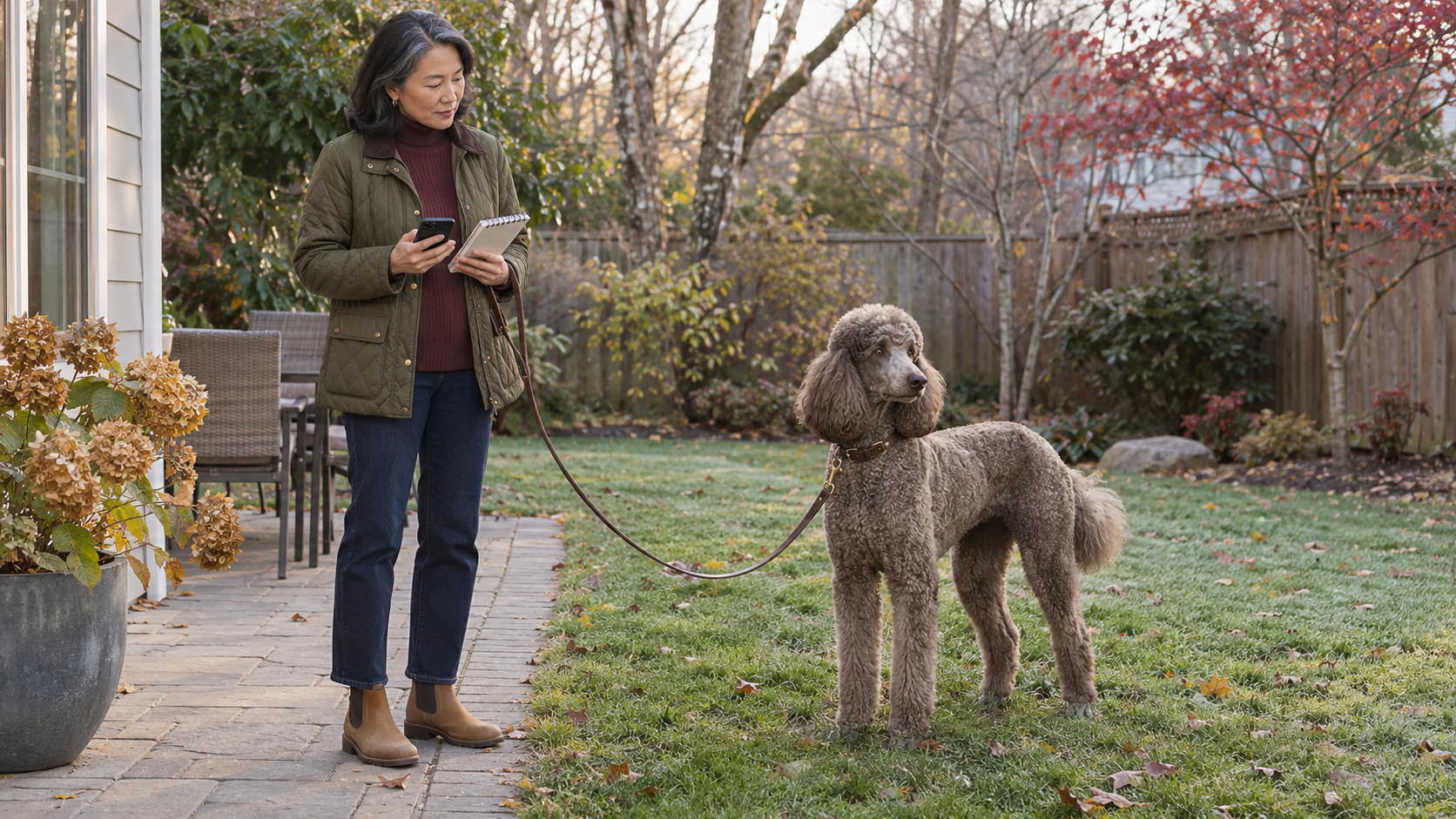
Before a cold-weather walk, look at your dog’s condition and the weather. Small changes in wind, wet fur, age or health can change the plan.

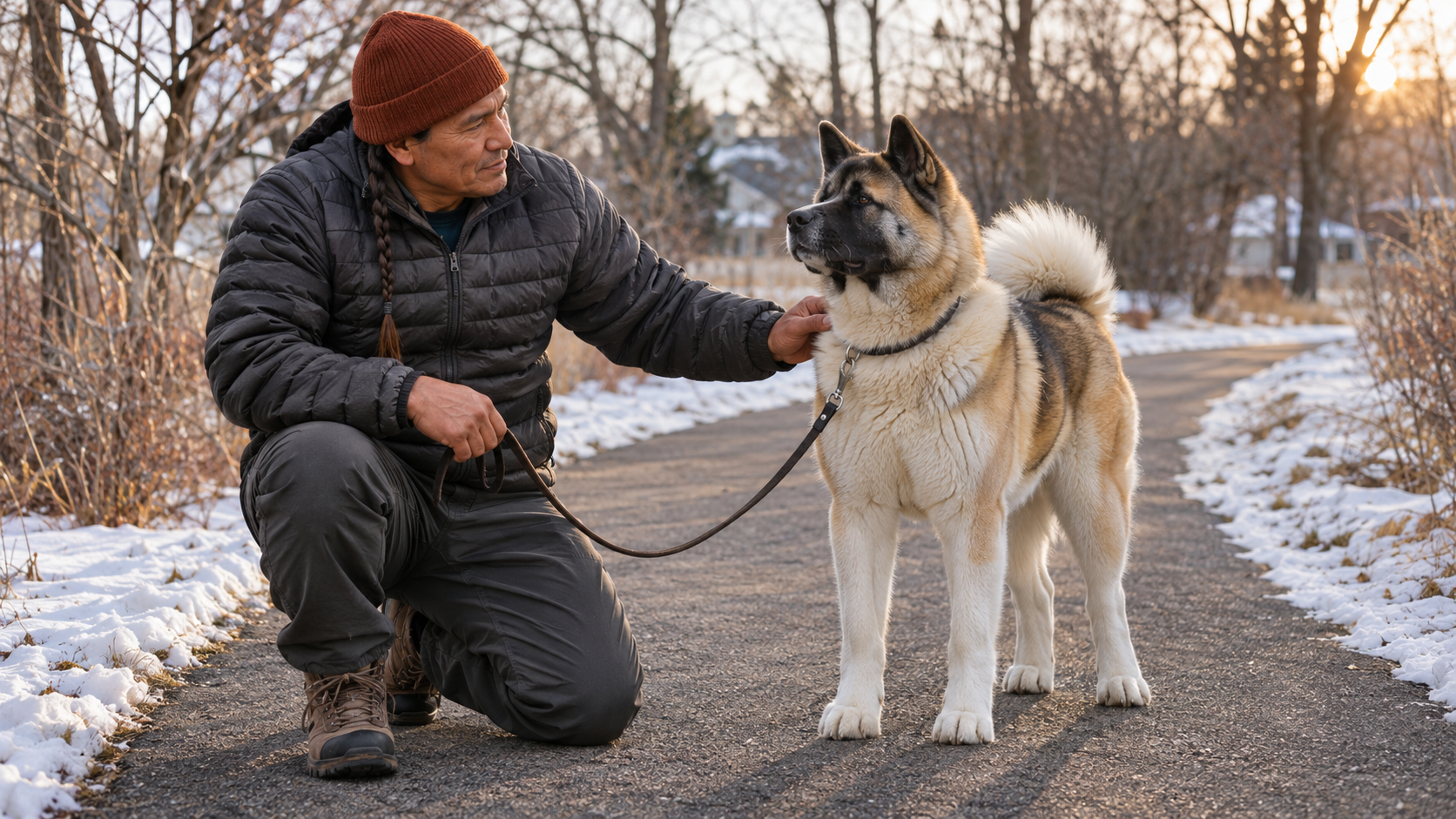
Before you clip on the leash, look at how your dog is moving and what the weather is doing. Then choose a route that lets you get home quickly if either changes while you are out walking together. On a cold day, a shorter walk may suit your dog better than the usual distance.
There is no single safe walking temperature for every dog. Cornell veterinary guidance explains that size, age, coat, health, and conditioning matter, along with wind, wetness, and time outside. A dog who was comfortable last week may struggle when the weather suddenly turns colder or brings driving rain and icy wind.
Start with how your dog feels
Puppies, older dogs, small dogs, thin-coated dogs, and dogs with medical problems may need extra caution. Their needs still vary from dog to dog. Watch your own dog closely, and ask your veterinarian how any health or mobility restriction should affect winter outings.
Notice how your dog behaves before you leave. Stiffness, tiredness, reluctance to go outside, or recovery from an illness can all affect today’s plan. The forecast is useful, but your dog’s condition needs a place in that decision too.
Wind and wet fur make a cold outing harder. So does a dog that has not had time to adjust to colder conditions. Rather than trying to “toughen up” a dog, choose a route and length that lets you turn back easily.
Pick a route you can leave early
Choose a route with enough light to see where you are stepping and an easy way home. Stay off frozen ponds and lakes. Snow can conceal uneven ground, debris, and ice. A reflective collar, light, or other visibility gear can help people see you and your dog, but it does not remove the risk of a driver, a slick sidewalk, or a poor surface.
Check the leash, collar, harness, and fasteners before leaving. If visibility or footing is poor, a short loop near home is often a better plan than committing to a longer route. Your own footing matters too. A fall can turn a routine walk into a problem for both of you.
Make gear fit the dog
Some dogs benefit from a coat or boots. Others do not need them for a brief outing. The useful question is whether the gear fits, allows normal movement and toileting, and does not rub, restrict, or irritate the dog.
A coat is not permission to stay out indefinitely. A thick-coated dog can become too warm during mild weather or active play if it is bundled unnecessarily. Boots can reduce contact with ice, packed snow, and treated surfaces, but they need a secure fit and a gradual introduction. If unfamiliar boots distress your dog, do not force them through a difficult walk just to use the new gear.
After the walk, check for ice clumps, rubbing, cracked areas, or signs of pain around the feet.
Treat de-icers with care
Road salt and ice melts are not all the same. Their ingredients and risks vary, and the amount swallowed and the dog’s size matter. The ASPCA Animal Poison Control Center notes that some common ice-melt ingredients can cause stomach upset, while calcium chloride can irritate the mouth. “Pet-friendly” does not mean a product is harmless if eaten.
Try to keep your dog from licking treated paws or eating dirty snow. When you return, wipe the legs, belly, and feet, then dry the dog promptly. A quick cleanup reduces residue and dampness, but it is not treatment for poisoning.
If you think your dog has swallowed de-icer or contaminated snow, contact your veterinarian or an animal poison service right away. Keep the product package available if you can do so safely. Do not wait for vomiting, tremors, or seizures, and do not try to improvise a remedy.
Turn back at signs of distress
Turn back and get your dog indoors if you see shivering, repeated paw lifting, hunching, anxiety, or a refusal to continue. A dog who will not keep walking may be uncomfortable or hurt. Check for injury or another problem, especially if the behavior continues at home.
Drowsiness, confusion, poor coordination, pale gums, or collapse require emergency veterinary care immediately. A severely cold dog can stop shivering, so that change is not reassurance. While arranging care, dry the dog gently and use blankets for gradual warming. Do not place hot objects against the skin or try to heat the body rapidly.
Pain, swelling, or a changed skin color after cold exposure can also need prompt veterinary attention. Bring the dog inside and do not rub affected tissue.
On days when conditions are simply poor, short outdoor breaks and appropriate indoor training or games can help meet your dog’s needs without asking them to push through distress. The best winter walking plan changes with the dog, the conditions, and the safe route home. Ask your veterinarian about an individual plan if illness or mobility limits complicate winter outings.
Check again when you get home
Keep the first few minutes after a winter walk simple: remove wet gear, check the paws and coat, wipe off residue, and offer the dog a warm, dry place to settle. Note any behavior that seems unusual after the dog has warmed up. If limping, pain, unusual tiredness, or repeated licking continues, contact your veterinarian for guidance. Checking soon after the walk also helps you recall when a limp or other change first appeared.
Have a backup plan ready
Decide what you will do if the pavement is icy or your dog seems uncomfortable before you reach that point. A brief toilet trip and a full exercise walk are different outings. For a dog with medical or mobility limits, ask the veterinarian which indoor activities and outdoor adjustments are appropriate.
Keep the clinic’s contact details handy for concerns about cold exposure or swallowed de-icer. You do not need to identify an ingredient from memory before seeking help. Back indoors, watch whether your dog returns to normal. Continued pain, limping, unusual tiredness, or changed breathing warrants a call even if the weather has improved. Leave room to change the plan throughout the outing. The distance you intended to cover should never take priority over a dog who is struggling.
Sources and further reading
- Cornell University College of Veterinary Medicine, “Winter safety tips”
- Cornell Richard P. Riney Canine Health Center, “Winter Safety – January 2026”
- American Animal Hospital Association, “Cold Weather Pet Safety Tips for Dogs and Cats” (updated February 4, 2026)
- ASPCA Animal Poison Control Center, “Keeping Pets Safe during Winter: The Dangers of Ice Melts”
- PDSA Pet Health Hub, “Hypothermia in Pets”
- Dogs Trust, “How to keep your dog safe and warm in cold weather”