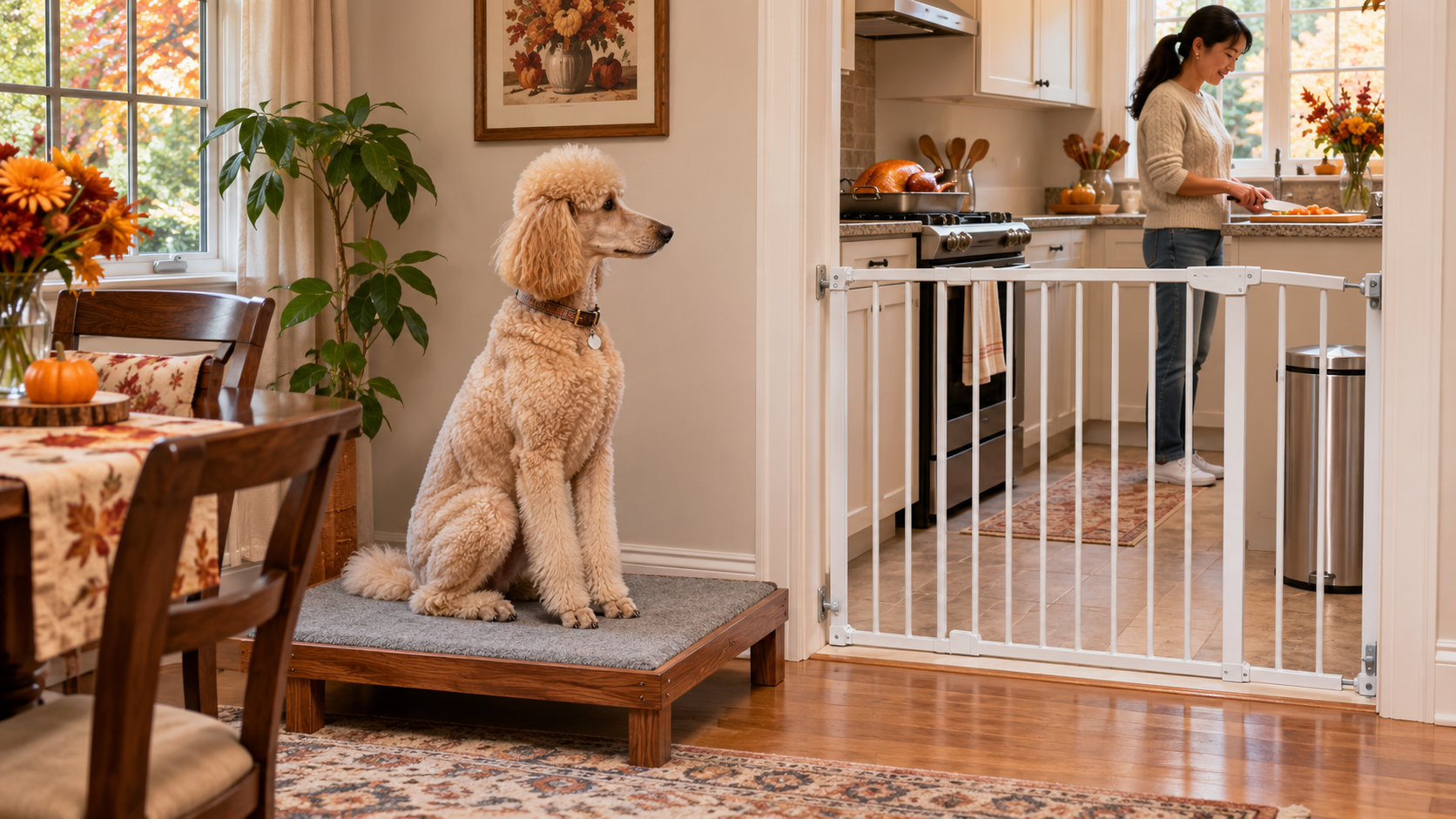
A clear kitchen boundary, secure trash and one adult assigned to the gate can keep a busy Thanksgiving safer for your dog.
The easiest time to keep a dog out of the Thanksgiving kitchen is before anyone starts cooking. Once dough is rising, turkey bones are on the cutting board and guests are setting down bags, it's much harder to keep track of what the dog can reach. Decide where the dog will be, who will check the door and where the scraps will go. Tell everyone the plan before the kitchen gets busy.
This is a plan for keeping your dog away from the prep area, not a guide to sharing Thanksgiving food. A comfortable place to rest and a barrier that holds up when people are coming and going will do more than asking everyone to keep an eye on the dog.
Start with a place your dog knows
Choose a room or a secure barrier that works for your dog. Put water and a familiar bed or resting spot on the safe side. If the setup is new, introduce it before the holiday if you can. A gate won't work for every dog. What matters is that your dog can't get to the counters, the oven area or the trash while you cook.
Put one person in charge of checking the door or gate. Tell guests not to feed the dog or leave bags in the kitchen. If the dog needs a break, name an adult to handle it. This doesn't replace supervision or a separate plan for helping your dog around guests. It does make clear who's checking the barrier when everyone else has something in their hands.
Check the route from the floor up
Before you cook, look at what your dog could reach. A stool beside a counter, a bag by the pantry or a door propped open for one trip can make a secure-looking kitchen easy to enter. Move food and supplies out of reach and check again when guests arrive. Make sure anyone carrying dishes between rooms knows to close the barrier behind them.
Keep raw dough and bones separate
Unbaked yeast dough poses a different risk from fully baked bread. The ASPCA and AVMA explain that raw yeast dough can expand in a dog's stomach and produce alcohol as it ferments. Put the bowl somewhere the dog can't reach, even if it will only be there a short time. If you think your dog ate raw yeast dough, call for professional help right away rather than treating it like a bite of bread.
The turkey carcass and bones belong in secured waste, not on the counter or in an open bin. The ASPCA warns about choking, and the FDA describes how bones can lodge in the food passage or airway. A swallowed bone is a physical injury or blockage concern, not a poisoning. Don't give your dog cooked bones. If you think one was swallowed, call a veterinarian promptly. Trouble breathing calls for emergency veterinary care.
Read what's in the dish
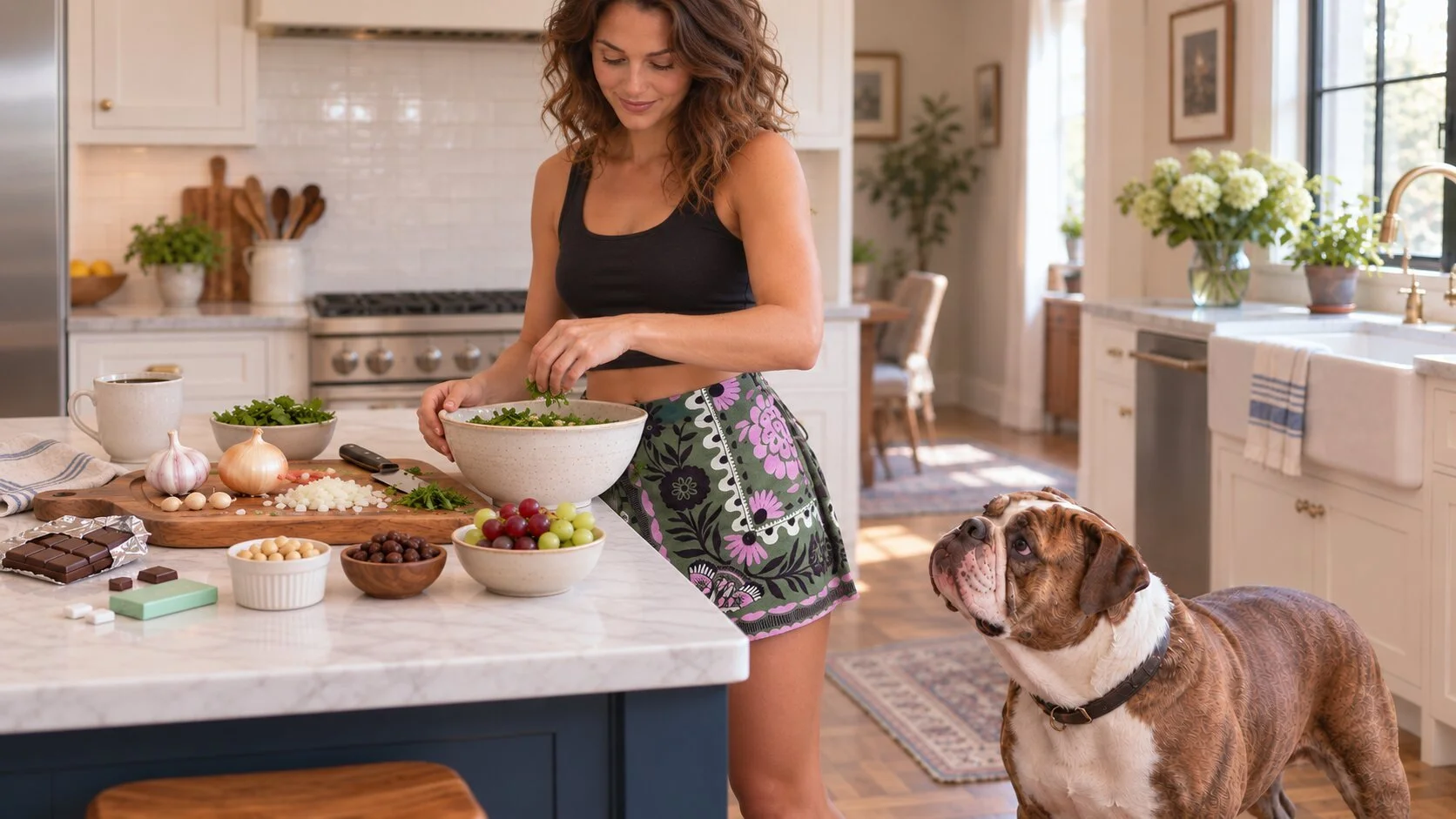
Stuffing and gravy can contain onion or garlic, which the ASPCA identifies as toxic to pets. Something that looks plain may already be seasoned. Check the ingredients rather than judging by appearance, and don't assume cooking makes a dish with dangerous ingredients suitable for your dog.
Chocolate and xylitol are two different hazards. The FDA warns that chocolate can poison dogs and that xylitol, a sweetener used in some sugar-free products, can be dangerous to them. Not everything labeled sugar-free contains xylitol. If your dog gets into candy or baked goods, keep the packaging if you have it so the veterinary team can check the ingredients. Don't rely on an online dose calculator to decide whether to wait.
Give guest bags a place off-limits to the dog
Ask guests to put purses, bags, pill organizers and medicine bottles in a closed space the dog can't access. A partly open purse on a chair next to the table isn't secure. The ASPCA notes that visitors may bring medications into the home, so this is worth mentioning when people first come in.
If you suspect your dog got into medicine, keep the original labeled container if you can safely do so and call for professional guidance. Different drugs pose different risks. An experience another owner describes doesn't tell you how this exposure will affect your dog.
Keep the plan going through cleanup
Decide who will empty the trash and where the full bag will go before the bin fills up. The AVMA advises keeping carcasses and waste in a closed container behind a shut door or outdoors where the dog can't reach them. The ASPCA also recommends limiting access to Thanksgiving trash. Check that the lid closes and that your dog can't tip the bin over.
After dinner, bones and wrappers are still moving from the table to the counter and into the bin. Keep the dog's safe spot available while plates are cleared and leftovers are put away. Remind guests where their bags go and take a look at the floor before letting the dog back into the room. Cleanup is part of the plan, not the point when it ends.
Know who to call and what to tell them
If your dog may have swallowed something toxic, call your veterinarian, an emergency animal hospital or ASPCA Poison Control at 888-426-4435 immediately, even if the dog seems fine. If you suspect a bone or another object was swallowed, call a veterinarian. Breathing trouble, collapse or seizures mean your dog needs immediate emergency veterinary care.
Have the dog's weight ready if you know it. Tell the professional what the dog may have reached, about how much and when, and whether you've noticed any signs. Bring the packaging or take a picture of the label if it's handy, but don't delay the call to look for it. Don't induce vomiting or give a home remedy unless a veterinary or animal poison-control professional specifically tells you to.
Thanksgiving doesn't have to run perfectly for the kitchen plan to work. Give your dog a comfortable place to be, put someone in charge of the barrier and make sure the waste stays out of reach. If you think your dog got into something, call and let a veterinary professional guide the next step.
Sources and further reading
More stories
 Daily Doggy NewsThanksgiving Visitors and Dogs: A Practical Safety Plan
 Daily Doggy NewsFoods Dogs Can't Eat: A Quick Safety Guide
 Latest Daily Doggy NewsHydrogel Products and Dogs
 Canine JournalKennel Cough: What Dog Owners Should Know
 Tyson’s LifeThe Boss Has Four Legs
 It MattersVeterans Need Clearer Service Dog Support