Foods Dogs Can't Eat: A Quick Safety Guide
Tyson doesn't have to break into the pantry to get into trouble. A stick of sugar-free gum on the coffee table, raisins that fell out of someone's trail mix, a plate with onion powder still on it — any of that is enough to land a dog at the emergency vet.
That's the part that trips people up: some human food is a fine treat, and some of it will hurt your dog even though it looks completely ordinary sitting on the counter.
My rule with Tyson is simple. If I don't know what's in something, he doesn't get it until I check.
The quick answer
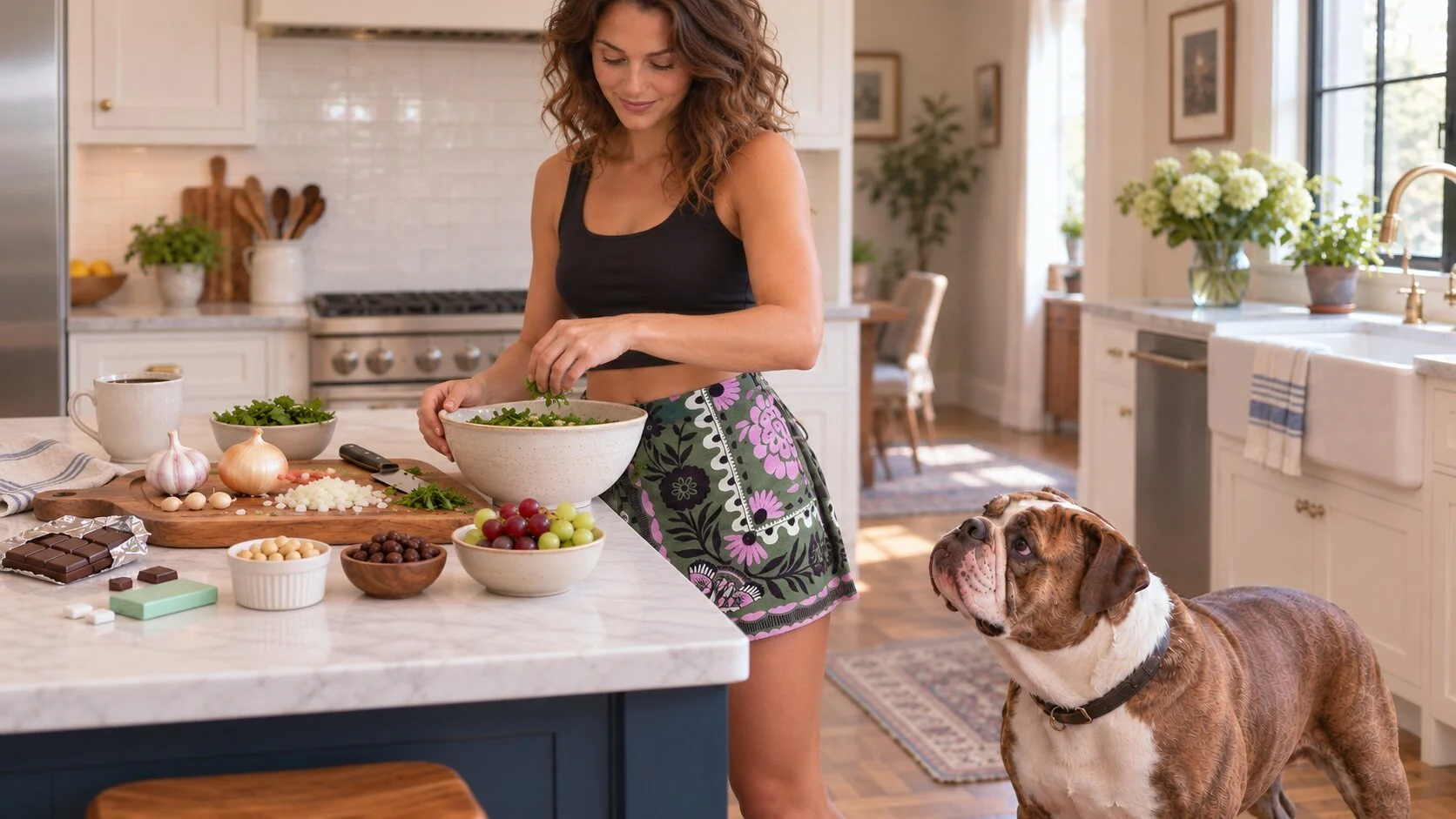
Never give a dog chocolate, grapes or raisins, onions or garlic or chives, anything with xylitol in it, alcohol, raw yeast dough, caffeine, or macadamia nuts. If he eats any of it, call the vet or an emergency animal hospital immediately — don't wait to see if he acts sick first. This list covers the big ones, not every possible hazard.
Why these specifically
Chocolate has theobromine and caffeine in it, and dogs can't break those down the way we can. Dark chocolate and baking chocolate are the worst offenders, but I don't treat any chocolate as fair game around Tyson. If it happens, the vet is going to want to know exactly what product, roughly how much, his weight, and when it happened — so don't just call and say "he ate chocolate."
Grapes and raisins can shut a dog's kidneys down. Researchers identified tartaric acid as the likely toxic compound in 2022, but there's still no safe amount — tartaric acid levels vary so much between grapes that the amount eaten doesn't reliably predict the risk. One dog eats a handful and seems fine; another eats three and ends up in the hospital. That includes raisin bread, trail mix, and anything with dried fruit baked into it.
Onions, garlic, chives, and leeks damage red blood cells, and cooking doesn't make them safe. The sneaky part is powdered onion and garlic — it's in gravy, soup, seasoning packets, and a lot of prepared meat you wouldn't think to check.
Xylitol is the one I watch closest because it shows up in stuff that doesn't look like candy. Sugar-free gum, mints, some peanut butter, even toothpaste. Xylitol triggers a rapid insulin release in dogs, which crashes their blood sugar, and in some cases it can also cause severe liver injury or failure. I've started reading labels on peanut butter jars because of this exact ingredient.
Alcohol is obvious. Raw yeast dough is the one people forget about — it keeps rising in a warm stomach and produces alcohol as it ferments, so a dog that eats raw dough can end up drunk and bloated at the same time. Coffee, tea, and energy drinks belong on the same "keep it off the counter" list.
Macadamia nuts cause weakness, vomiting, tremors, and can overheat a dog fast. Other nuts aren't on the toxic list but they're hard, high in fat, and can trigger pancreatitis or just be a choking hazard. None of it beats a regular bowl of dog food.
"Safe" doesn't mean unlimited
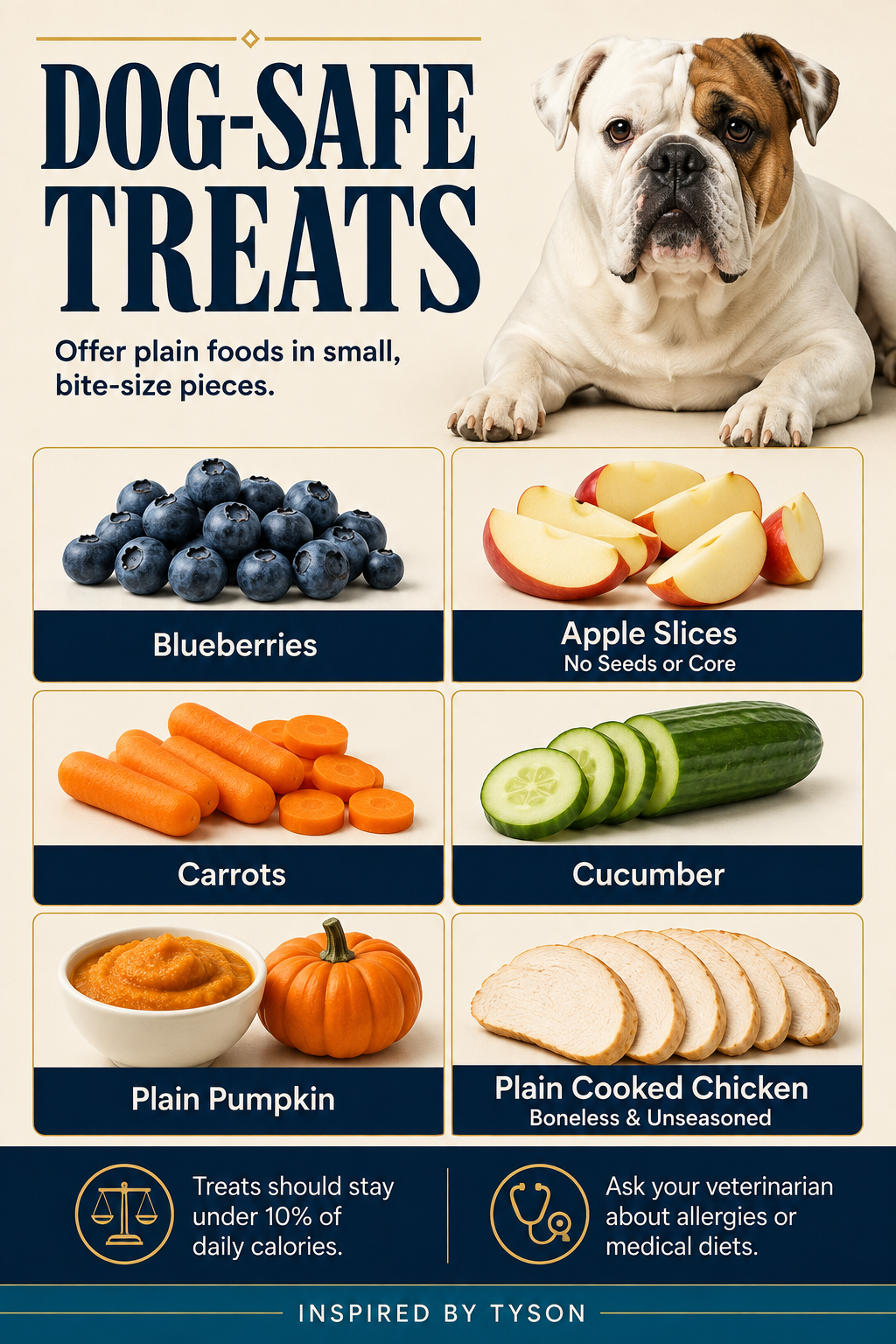
Tyson gets small pieces of blueberries, carrots, cucumber, or apple (seeds and core out) without any issue. Plain pumpkin and boneless, unseasoned cooked chicken work too, in small amounts. But plain matters — pumpkin pie filling isn't plain pumpkin, and the seasoned chicken skin off your plate isn't the same as a plain chicken breast.
The World Small Animal Veterinary Association's guidance is to keep treats under 10 percent of a dog's daily calories, with the rest coming from a complete diet. If your dog has diabetes, allergies, kidney disease, or is on a prescription food, check with your vet before adding any of this — their limits might be different.
If it already happened
Take the food away and hang onto the packaging if there is any — you'll want the ingredient list. Note what he ate, roughly how much, and when.
Call your vet, an emergency animal hospital, or a poison control line. ASPCA Animal Poison Control is 888-426-4435. Pet Poison Helpline is 855-764-7661. Both charge a consultation fee, but that's not the moment to worry about it.
Do what they tell you to do. Don't try to make your dog throw up on your own unless a vet or poison control specifically walks you through it — home remedies can make things worse.
And don't wait around for symptoms before calling. The earlier the vet knows, the more options they have.
Keeping it from happening
Gum, candy, baking ingredients, coffee, and alcohol stay behind closed doors or up high in my house. I ask guests not to feed Tyson from their plates, and I check the floor after we eat. He's never going to understand why one dropped bite is fine and another one sends him to the ER. That part's on us.
Sources
- U.S. Food and Drug Administration: Paws Off! Xylitol Is Toxic to Dogs
- Merck Veterinary Manual: Xylitol Toxicosis in Dogs
- U.S. Food and Drug Administration: Potentially Dangerous Items for Your Pet
- U.S. Food and Drug Administration: Who Do You Call if You Have a Pet Emergency?
- ASPCA Animal Poison Control: Macadamia Nuts Are Toxic to Dogs
- ASPCApro: Toxic Component of Grapes and Raisins Identified
- World Small Animal Veterinary Association: Guide to Treats for Dogs
- Pet Poison Helpline: Emergency Instructions and Contact
This article is general safety information, not a diagnosis or a substitute for veterinary care. If a dog eats a potentially toxic food, call a veterinarian, emergency animal hospital, or animal poison control service immediately.
About the editor
Stephen Gill writes Daily Doggy News from real life with Tyson, the Olde English Bulldogge behind Inspired by Tyson.