
A chew can become an urgent problem without warning. Stephen Gill looks at how to prepare for choking, when to seek veterinary care, and why a video is no substitute for learning current first aid.

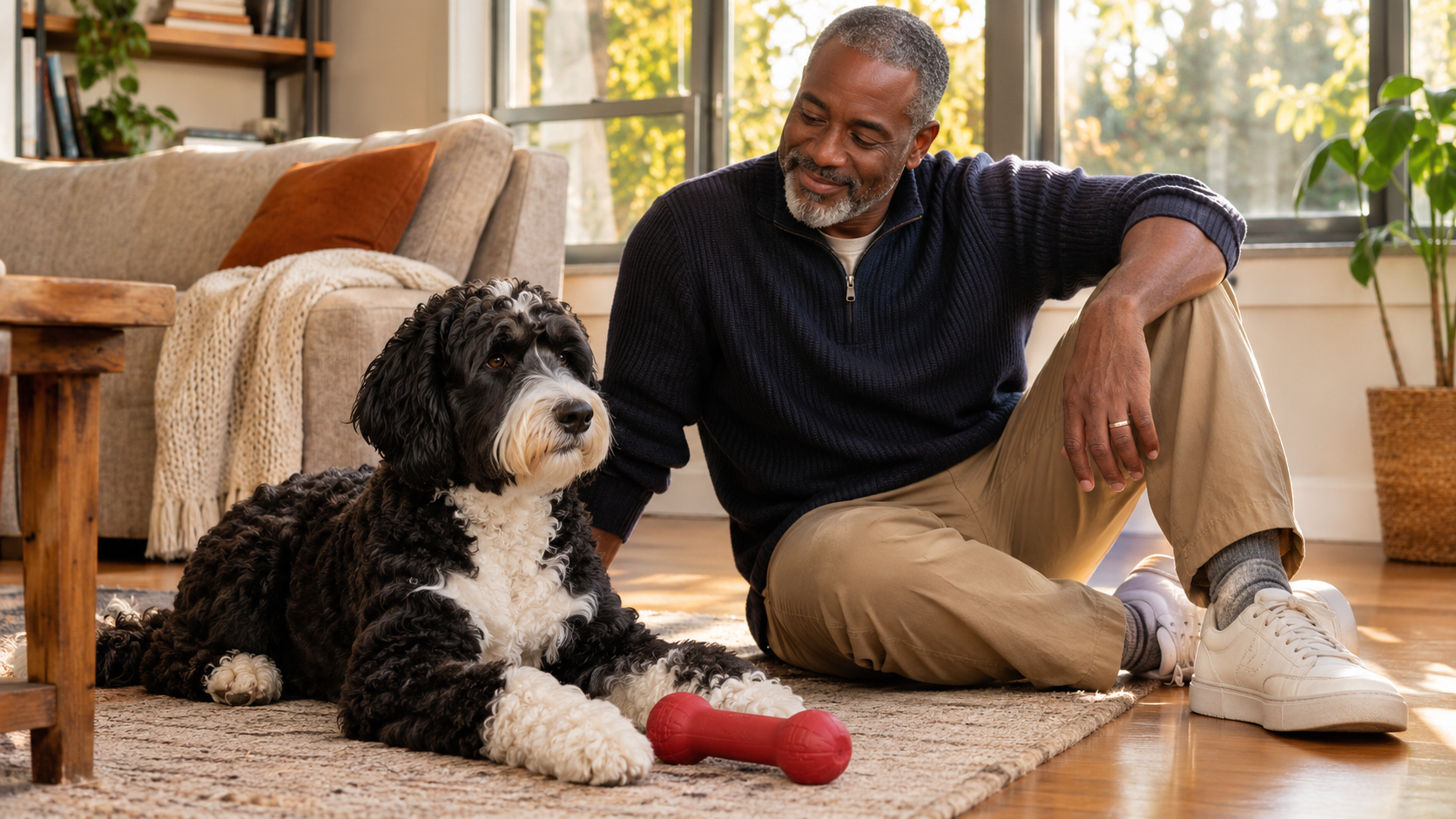
A chew on the floor looks harmless. It stops looking harmless the moment a piece lodges in a dog's mouth or throat. Good care starts before the emergency, in the ordinary moments. However well you know your dog and the product, the next piece is still an unknown. A chew gets less attention than a meal or a walk, and once it's in the dog's mouth it needs just as much.
This is not a story about Tyson choking. Nothing in this story is an emergency he went through, and I didn't perform any procedure on him. Caring for him is why I want to settle this question before I need the answer. If a chew did become a problem, I'd need to recognize the danger and know where to get help.
The first decision is to get help
A dog struggling to breathe needs emergency veterinary help right away. Do not wait for blue gums, collapse, or a completely silent attempt to breathe. Choking looks different from dog to dog.
Call an emergency veterinarian immediately and arrange urgent care. First aid matters while you wait for help, but it doesn't replace veterinary treatment. No verified rule gives an owner a safe one- or two-minute window to experiment before calling or leaving.
A written guide can cause a delay without meaning to. "Try this, then that, then call" reads as orderly on a screen. In a real emergency, getting help belongs in the plan from the start. If someone else is nearby, one person contacts the clinic while the other follows appropriate first-aid guidance within their ability and without taking a serious risk.
A lodged piece does not always block the airway
Owners use the same words for different events: gagging, choking, vomiting. A piece can lodge in the mouth or esophagus without fully blocking the airway, and that is still urgent. An esophageal blockage stops food from passing and needs a veterinarian to assess it.
Merck's owner guidance lists drooling, gagging, regurgitation, and repeated swallowing as signs of an esophageal foreign body. Rawhide pieces are among the objects it describes. The signs flag a problem, and a veterinarian is the one who finds out where the piece sits and what it damaged.
Moving some air doesn't rule out an obstruction lower down or make waiting safe. Don't try to remove a suspected esophageal object at home because of a video you watched.
Tell the clinic what you saw: the chew the dog had, the change you noticed, and whether breathing looks difficult. Plain facts are enough, and the exact label can wait.
Why I would learn first aid before needing it
Instructions online disagree with each other. The 2026 RECOVER clinical guidelines put back blows first for a conscious choking dog and advise against reaching into a conscious animal's mouth. RECOVER treats unconscious choking as a separate situation. That one starts with chest compressions, and RECOVER rejects blind finger sweeps.
The Red Cross webpage and the AVMA's 2025 brochure describe different approaches to mouth entry and maneuvers. If you stitch pieces from those sources together, you end up with a procedure none of them recommends. A frightened owner needs one learned in advance, because putting one together mid-emergency uses up the minutes that matter.
For me, the practical lesson is preparation. Learn current choking first aid with your veterinarian before an emergency. Your vet knows your dog's size, breed, and health history, and that shapes the guidance in ways a general webpage can't. Use the complete guidance, since a shortened social clip leaves out steps. Ask how it applies to the dog you live with and which actions could injure the dog or the person helping.
RECOVER also acknowledges limited evidence, much of it drawn from human research. That limit belongs in the open. It describes the guidance accurately, but it can't tell you whether a particular maneuver will work.
Video is a poor teacher
A dramatic removal on video makes an owner's reaction look easy to repeat. The recording hides the object and the dog's condition, along with the risks that come with them. A clip shows seconds. Training covers the signs and the sequence, plus the decisions a viewer never sees.
The social-media incident that started this article couldn't be verified during research. I can't tell you how it ended for the dog, and I won't treat the recording as a confirmed demonstration. It gives no evidence that Tyson faced the same situation.
Even a verified recording covers a single event, which can't show that reaching into another dog's mouth is the right call. Pain and fear make a dog hard to handle, and current guidance weighs the safety of the person trying to help.
Choosing a chew is an individual decision
Chews give a dog an outlet for chewing. Veterinary literature also records dental injury and obstruction of the airway or digestive tract. A sound decision weighs the benefit against the risk for the particular dog.
The research for this story found no proof that skin rolls are uniquely dangerous, and no reliable ranking of the products that cause choking most often. I take supervision seriously without needing an invented percentage.
Ask your veterinarian which chews suit your dog, and watch your dog with toys and treats. A familiar name or a good review can't predict the next piece, and neither can a history of uneventful use.
That is what I bring back to Tyson. I'm not making up a household rule or claiming to have every answer. I'm asking whether an everyday choice still fits the dog.
The emergency does not end at removal
Once an object comes out, the dog still needs assessment. The Red Cross recommends immediate veterinary evaluation even when the dog looks recovered. Complications can follow after apparent recovery. RECOVER calls for immediate evaluation after assistance was needed to clear the airway.
Tell the veterinarian what happened and what you tried. Looking better doesn't settle what is happening with the airway or any injuries, or what care is still needed.
I want Tyson's life full of ordinary, comfortable days, with regular meals, walks, and play. A chew can be part of a dog's routine and warrants attention. Save the nearest emergency clinic's number and learn current first aid before the next chew hits the floor. Ask your vet which chews suit your dog.
Sources and further reading
- RECOVER, First Aid for Dogs and Cats: Clinical Guidelines (2026)
- RECOVER, PMC
- American Red Cross, What to Do if Your Dog Is Choking
- AVMA, Pet First Aid brochure (2025)
- Merck Veterinary Manual, Disorders of the Esophagus in Dogs
- Today's Veterinary Practice, The Benefits and Risks of Chew Treats
- PetMD, Dog Choking