TYSON & STEPHEN · A LIFE WITH DOGS
A gentle, reward-based routine can teach some dogs to bring their muzzle to a towel after food or water.

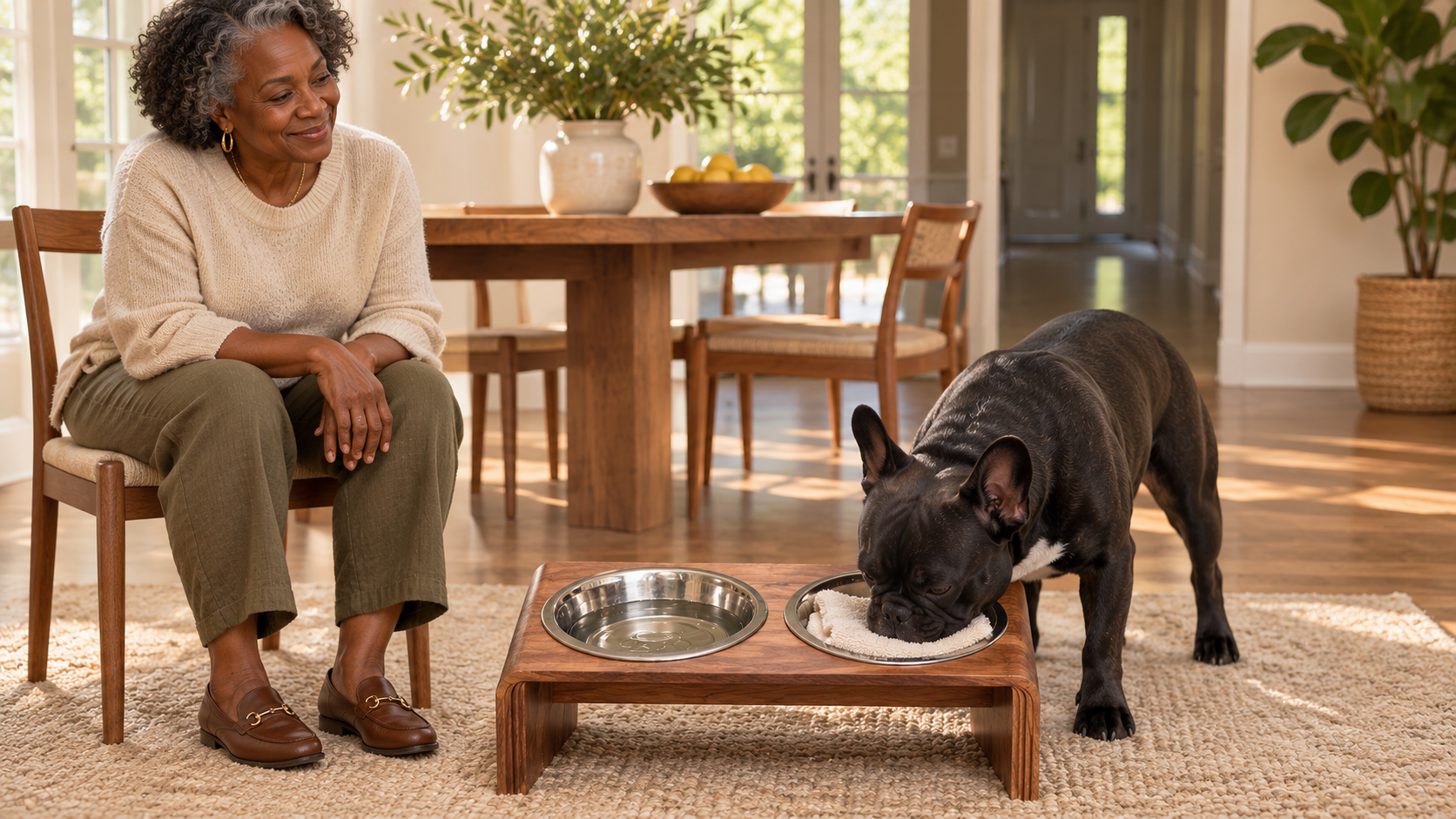
A clean towel, a familiar cue and a food reward can turn a small cleanup task into a repeatable routine. The goal is not a perfect trick on day one. It is to show a dog that placing its face on the towel can lead to a reward, then to practice that same motion after food or water.
The social-media demonstration that inspired this article uses a low two-opening feeding stand. One opening holds the dog’s regular bowl. The second holds a bowl lined with a towel that sits down inside the opening. That detail matters because it gives the dog a clear, consistent place to go instead of asking it to find a loose towel on the floor.
In the demonstration, the person begins with the dog’s favorite small treats. The person guides the dog’s muzzle toward the towel with a treat. When the dog’s face reaches the towel, the person gently wipes the dog’s face and rewards the dog. The lesson is repeated until the dog understands that the towel is the target and the cue means it is time to use it.
That is different from simply leaving a treat on a towel and hoping the dog will make the connection. The handler is actively building the association: cue, guided movement to the towel, gentle wipe, reward. Over time, the dog may need less guidance. But the early repetitions give the dog a clear picture of what earns the reward.
Start with a simple, safe setup
Choose a stable stand or a dependable station that will not slide when your dog leans toward it. The reel uses a low wooden stand with two circular openings. One side holds the regular food or water bowl; the second bowl holds a soft towel that sits inside the opening. You do not need the same piece of furniture, but the arrangement should be steady, easy to clean and comfortable for your dog’s height.
Use a clean towel with a soft surface. Avoid a rough, heavily scented or damp cloth. Place it so it stays put when the dog touches it. If your dog is likely to chew or swallow fabric, do not leave the towel available unsupervised. The point is a short training exercise, not an object your dog should pull apart.
Pick small rewards your dog can eat easily. The creator in the demonstration uses pieces of Redbarn Choppers, but the important part is selecting a reward your own dog likes and can safely have. If your dog is on a special diet or has food restrictions, use an approved reward or talk with your veterinarian about appropriate options.
Teach the first contact
Begin before a meal or in a calm moment when your dog is interested but not overstimulated. Bring a treat toward the towel in a smooth, patient motion. You are not pushing the dog’s face into the fabric. You are giving the dog a reason to move toward the target and rewarding the contact when it happens.
Say the chosen cue once, such as “wipe your face,” as the dog moves to the towel. When its muzzle touches the towel, give a light, brief wipe and immediately reward. The wipe should never be rough, surprising or held in place against a dog that is trying to move away. The dog should be able to step back at any point.
Repeat only a few times at first. Training works better when the dog can succeed without getting bored or frustrated. A dog who turns away, freezes, backs up or shows sensitivity around the face is communicating that the exercise is too much. Pause rather than adding pressure. You can return to an easier step later, or decide that this particular routine is not right for your dog.
Build consistency, not a long session
The demonstration emphasizes repetition. That does not mean drilling a dog until it gives up. It means using the same towel location, the same cue and the same short sequence often enough that the dog begins to recognize the pattern.
Each repetition can look like this: cue, guide the muzzle toward the towel with the reward, gentle face wipe when the towel is reached, then reward. As your dog starts moving toward the towel more easily, gradually reduce how much you guide with the treat. The reward remains important because it tells the dog that choosing the towel is worthwhile.
Some dogs will understand the pattern quickly. Others may need many brief sessions. There is no universal timetable. Size, previous training, comfort with face handling and individual personality all affect the pace. Keep the goal modest: a willing, comfortable response to the towel and cue.
Practice after water without turning it into a chase
The hardest part of the reel’s routine is transferring the behavior to drinking water. The creator explains that this requires close observation at first. When the dog drinks, the person gives the cue and repeats the same towel-and-reward sequence. Repetition after actual drinks helps the dog connect the towel routine with water rather than treating it as an unrelated game.
You do not need to make every drink a training event. Start with a few opportunities when you are already nearby and can keep the interaction calm. If the dog drinks and walks away before you can cue it, let it go. Calling the dog back aggressively or hurrying it toward the towel can make a simple routine feel unpleasant.
With enough successful practice, the creator says some dogs may begin to go to the towel after drinking without hearing the cue. That is a possibility, not a promise. The useful measure is whether your dog is relaxed and understands the routine, not whether it reaches an automatic response by a certain date.
Keep the care limits clear
For dogs with facial folds, including many Bulldogs, a towel routine may be one tidy part of life after food or water. It is not a substitute for regular wrinkle checks, cleaning, drying or veterinary guidance when a dog has redness, odor, pain, discharge or skin concerns. A dog that is sensitive around the face should not be trained through discomfort.
The same principle applies to every dog. This is a gentle, reward-based household routine, not medical care and not a test of obedience. If your dog dislikes being touched near the mouth, has recently had dental work, or shows any sign of pain, stop and ask a veterinarian for guidance.
A small routine with a practical finish
The demonstration works because it breaks the task into clear pieces. First, the dog learns that the towel is a target. Next, it hears the cue and follows a treat toward the towel. When the muzzle reaches the fabric, the handler gives a gentle wipe and a reward. Then the same sequence is practiced after food or water until the dog recognizes what comes next.
That is a realistic way to approach the idea at home: keep the setup familiar, keep your hands gentle and reward the dog for participating. If the routine stays comfortable, a towel can become one more predictable part of finishing a meal or drink.
Sources and attribution
About the author
Stephen Gill
Stephen Gill is the founder of Inspired by Tyson. Tyson’s Life gathers personal stories and practical routines shaped by life with Tyson and the dogs who share our homes.
Read Stephen Gill’s full author profileRead More
Scroll or use the arrows to explore more stories.