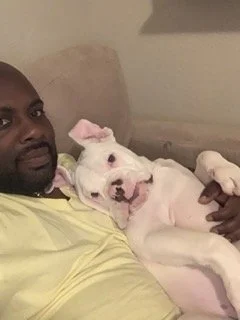
A practical guide to common French Bulldog health concerns, what changes to notice, and how to prepare better questions for your veterinarian.
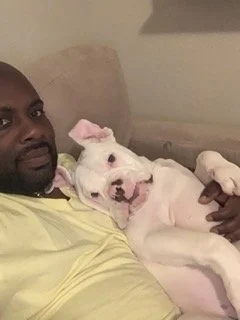
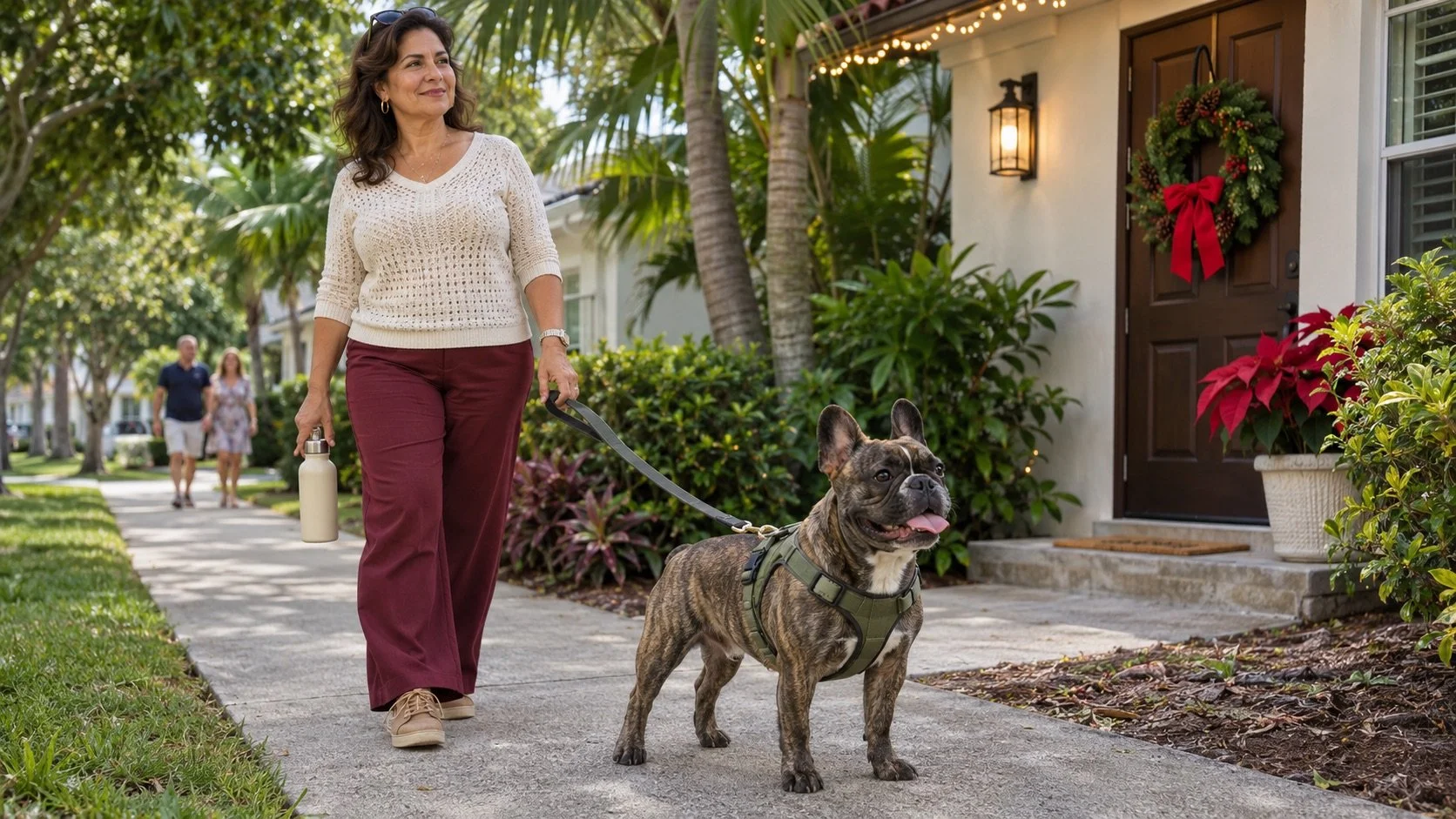
The questions often come up on ordinary days. Your Frenchie stops halfway through a walk they usually finish. The snoring sounds different. They hesitate at a step they've climbed a hundred times. Or you're meeting a breeder and aren't sure what a stack of health records tells you about the puppy.
Start with what's different for the dog in front of you. This guide can help you notice a change, explain it to your vet and decide when it can't wait. It can't diagnose the cause.
What a breed risk can tell you
When a study finds that a breed is predisposed to a condition, it means researchers found it more often in that breed than in the group used for comparison. That's a reason to pay attention, not a diagnosis for your dog or a prediction about what comes next.
The Royal Veterinary College’s UK VetCompass study looked at 2016 veterinary records for 2,781 French Bulldogs and 21,850 other dogs. French Bulldogs had higher odds for 20 of the 43 common disorders studied and lower odds for 11. The researchers linked many differences to features of the breed’s shape, including the flat face, prominent eyes, skin folds, and narrow airways.
Remember where the numbers came from: UK veterinary records. Dogs, breeding lines and recordkeeping in the United States may differ. And “42 times the odds” describes a comparison, not the percentage of French Bulldogs affected. Use it to decide what to ask about, not to assume what your vet will find.
1. When the walk gets hot or the breathing gets loud
A short muzzle leaves less room for the soft tissues of the airway. The American College of Veterinary Surgeons (ACVS) describes several features of brachycephalic syndrome: narrow nostrils (stenotic nares), a long soft palate, tissue sacs that turn outward in the larynx (everted laryngeal saccules), and often a narrow windpipe. In the UK VetCompass comparison, French Bulldogs had about 42 times the odds of narrowed nostrils and about 31 times the odds of brachycephalic obstructive airway syndrome (BOAS) compared with other dogs.
At home, this can look like noisy breathing or snoring, gagging or retching at meals, or tiring sooner than you'd expect on a walk. Some dogs prefer to sleep on their backs. Tell your vet when you first noticed a change and whether it happens at rest or only with activity.
Dogs cool themselves mainly by panting, which is harder with a compromised airway. In a UK study of heat-related illness, French Bulldogs had about 6.5 times the odds of heat-related illness compared with Labrador Retrievers. Flat-faced breeds overall had about twice the odds of medium-muzzled breeds. About 14% of the heat-related illness events in that study were fatal.
What you can do:
Plan walks around the weather. ACVS lists heat and vigorous exercise as factors that can make airway signs worse. Choose the coolest part of the day, and keep walks short and easy when it’s warm or humid.
Ask your vet to show you what healthy body condition looks like on your dog. ACVS lists obesity as a factor that can make breathing signs worse. In the UK study, dogs at or above their breed-and-sex average weight had higher odds of heat-related illness than dogs below it. That comparison is not a weight target for an individual dog.
Never leave a Frenchie in a parked car or a hot, unventilated space.
Ask your veterinarian about an airway assessment before there’s a crisis. When signs cause distress or threaten a dog’s life, a veterinarian may discuss surgery to widen the nostrils or shorten the soft palate. ACVS notes that younger dogs generally breathe more easily afterward. Whether and when to consider surgery is a decision for you and your veterinarian.
Don't wave away new breathing trouble as “just a Frenchie thing.” Bring up noisy breathing at rest with your vet. If the dog is working to breathe, don't wait for a routine appointment: go to an emergency vet.
2. Spine and mobility: protecting the back
French Bulldogs can have wedge-shaped vertebrae called hemivertebrae without showing any signs. In a study of 178 French Bulldogs that had spinal imaging, an abnormal spinal curve called kyphosis was associated with higher odds of a disc extrusion. That's an association in that study, not a diagnosis or a forecast for an individual dog. Acute disc extrusion was the most frequent spinal diagnosis in a separate Royal Veterinary College referral study of French Bulldogs already showing signs of spinal disease; that referral group doesn't tell us how common it is among all French Bulldogs.
With IVDD, a disc between the vertebrae can bulge or rupture and press against the spinal cord. ACVS describes how signs can progress: back or neck pain and reluctance to move, then a wobbly walk, then loss of hind-leg function and bladder control. In severe cases, the dog can lose pain sensation in the limbs.
This is why timing matters. ACVS describes a ruptured disc as generally a surgical emergency. It reports that about 90% of dogs who still have pain sensation in their limbs regain function after surgery. When pain sensation has been lost, the figure drops to roughly 50–60%.
If your dog suddenly yelps, hunches, trembles, or won’t jump or use the stairs as usual, don’t assume it’s an off day. Call your vet the same day for back pain. Go straight to an emergency clinic for wobbliness, dragging legs, or loss of bladder control.
Musculoskeletal injury (about 5 times the odds) and kneecap dislocation, or patellar luxation (about 2.3 times the odds), were also more common in French Bulldogs in the UK data. A vet can check the knees at routine visits.
3. Skin and ears: small daily checks
In the UK VetCompass study, French Bulldogs had about 14 times the odds of ear discharge and 11 times the odds of skin fold dermatitis compared with other dogs. They also had nearly 8 times the odds of allergic skin disorders and about 7 times the odds of food hypersensitivity. The study found higher odds of demodicosis (a mite-related skin disease), paw inflammation, and outer-ear infection, too.
What to look for:
You don't need to turn grooming into an exam. Take a moment to look at the ears and skin folds. New odor, redness or discharge and repeated head shaking or scratching are details worth telling your vet.
Keep folds clean and dry using a method your veterinarian recommends for your dog.
Recurring ear infections, itchy skin, or paw licking can be clues to an allergy, but they don’t tell you what’s causing it. Work with your vet rather than repeatedly switching foods on your own.
4. Eyes: why a squint is urgent
Prominent eyes and wide eyelid openings expose more of the cornea, the clear surface at the front of the eye. A 2017 UK primary-care study found that flat-faced types had 11.18 times the odds of corneal ulcerative disease compared with crossbreds (95% confidence interval: 8.72–14.32). That comparison describes groups of dogs. It doesn’t diagnose an individual dog.
Call your vet the same day if your dog squints, keeps an eye closed, has a watering eye, paws at the face, or develops a cloudy or bluish patch on the eye. Corneal ulcers can get worse quickly.
5. Hips, knees and heart: what screening covers
To get a CHIC number through the Orthopedic Foundation for Animals (OFA), the French Bull Dog Club of America (FBDCA) requires four screenings: hips (OFA or PennHIP), eyes (by a board-certified veterinary ophthalmologist), patellas (kneecaps), and heart. The eye exam is required for the initial CHIC entry. Annual eye recertification is recommended. The club also lists optional screenings for the trachea and elbows, DNA tests for juvenile hereditary cataracts and cystinuria type 3, and respiratory function grading. The American Kennel Club notes that the FBDCA doesn’t otherwise recommend DNA testing.
The OFA says the Cambridge/Royal Kennel Club Respiratory Function Grading Scheme is licensed and available in North America. Ask to see the official result and bring it to your vet to discuss what the grade means.
Screening can help reduce risk. It tells you about the parents, not how healthy a particular puppy will be.
How to use health-screening records before you choose a puppy
Start with each parent’s registered name or number. Look up both dogs in the OFA database rather than relying on a screenshot or a verbal summary. Make sure the record belongs to the right dog, and check what test was done, when, and what the result was.
Look for all four FBDCA screenings: hips, eyes, patellas, and heart. One clear result can’t stand in for the other exams. The initial CHIC entry requires an eye exam, and annual eye recertification is recommended. If the eye result is old, ask whether there’s a newer one.
Ask separately whether each parent had a respiratory function grade through the scheme the OFA offers in North America. Get the official results and review them with your veterinarian. A grade describes the dog at assessment; it doesn’t guarantee that a puppy will never have breathing trouble.
Use those records to start a conversation. Has either parent needed airway surgery, had spinal disease, struggled on walks or in the heat, or needed a caesarean section? Ask how the breeder selects for health and function, not just appearance. If you can’t verify the records or the answers are vague, factor that into your decision.
Before you commit, show the records to your vet. They can explain what was screened, what wasn’t, and what to keep an eye on as the puppy grows. Screening can inform breeding decisions and reduce uncertainty, but it can’t predict every future diagnosis.
6. Birth and breeding
The UK VetCompass data found that French Bulldogs had about 9 times the odds of difficult birth (dystocia) compared with other dogs. If you’re considering breeding, talk through the decision with a veterinarian before a pregnancy, not during one.
When to go to the vet now vs. when to book an appointment
Go to an emergency vet immediately if your French Bulldog:
Has blue, purple or gray gums or tongue, is struggling to breathe, or collapses
Keeps panting heavily after being removed from heat or stopping exercise, collapses, is stiff, wobbly, confused, vomits or has diarrhea after heat exposure
Suddenly becomes wobbly, drags a leg, can't stand, or loses bladder control
A 2023 UK study looked back at how cooling was recorded in veterinary records. It didn’t establish which methods worked better or whether a particular method changed survival. A separate 2021 clinical-grading study found overall death rates of 2.21% for mild events, 5.46% for moderate events, and 56.76% for severe events (equivalent to approximately 97.8%, 94.5%, and 43.2% surviving). Those outcomes don’t predict what will happen to an individual dog. Call the emergency clinic on the way.
Call your vet the same day for: back or neck pain or reluctance to move; a squinting, cloudy or painful eye; gagging or breathing noise that is getting worse.
Book a routine appointment for: recurring ear discharge or odor, red or smelly skin folds, persistent itching or paw licking, loud snoring at rest or poor exercise tolerance, and a body-condition and weight check.
Questions to ask a breeder
Can I verify both parents’ hip, patellar, heart, and ophthalmologist eye results in the OFA database? Are the eye results current?
Have both parents been respiratory-function graded? Can I see each official result and review it with my vet?
Has either parent had airway surgery, spinal problems or a caesarean section?
Do the parents have open nostrils and handle a short brisk walk without distress?
Questions to ask your veterinarian
Do my dog's nostrils or breathing sounds suggest airway narrowing, and would an assessment or surgery help?
What is a healthy weight and body condition for my dog?
What temperature or humidity should limit our walks?
How should I clean my dog's facial folds and ears, and how often?
What back signs should send me straight to an emergency clinic?
Where is my nearest 24-hour emergency hospital?
A daily check without turning every noise into an emergency
Learn what your individual dog looks and sounds like during an ordinary cool, calm day. Notice how they breathe while resting, how far they usually walk comfortably, and how quickly they recover after easy activity. A change from that baseline can be easier to recognize than a single symptom read in isolation. Record what you observe and tell the veterinarian rather than deciding from a general breed list that the change is normal.
For breathing, the distinction between familiar snoring and a new struggle matters. ACVS describes exercise intolerance, blue gums or tongue, and collapse as serious signs associated with airway trouble, particularly after excitement, exertion, heat, or humidity. If your dog is working to breathe or collapses, seek emergency care. If the noise is gradually worsening, happens at rest, or the dog tires earlier than before, ask your veterinarian for an airway assessment. No owner can determine airway anatomy from a video or a checklist alone.
A walk can reveal several different problems, so describe the details. Was the day warmer or more humid? Did the dog stop to pant, limp, or move unsteadily? Did a previously easy route become difficult? A veterinarian can sort out breathing, orthopedic, neurologic, or other possibilities. Do not push a dog through distress to compare today's performance with yesterday's. A short note about the conditions and what the dog did is more useful than a statement that all French Bulldogs are poor walkers.
Making the home easier to navigate
The back section of this guide names urgent signs, but daily choices also matter. Observe whether your dog hesitates at stairs, changes the way they jump, or seems uncomfortable being picked up. Those signs are reasons for a veterinary discussion, especially if they are new. Avoid treating a reluctance to move as stubbornness. Imaging studies show that some vertebral changes can be present without outward signs. ACVS describes disc disease that can become a surgical emergency as function worsens. A home observation cannot distinguish those conditions.
Ask your veterinarian what movement is appropriate for your dog and whether changes in the home would help. The answer depends on the dog's examination, health history, and any diagnosis. Do not start a treatment plan from an internet list. If the dog becomes wobbly, drags a leg, cannot stand, or loses bladder control, the emergency direction above takes priority over rearranging the house or waiting for a routine appointment.
Skin, ears, and eyes deserve their own observations. Check whether the folds are newly red or smelly, whether the dog shakes their head, or whether one eye is held closed. These changes can be described to a clinician without guessing the cause. The breed's higher odds for several disorders in the UK records justify paying attention, but they do not mean every itch is an allergy or every sore eye is the same condition. The eye signs identified above warrant same-day veterinary contact because a corneal problem can progress.
What health records can—and cannot—settle
When choosing a puppy, a stack of documents may feel reassuring. Work through it methodically. Match each screening to the correct parent, the right dog identifier, the date, and the result. Verify the public OFA entry where available. A breeder may have performed one test and omitted another; OFA explains that a CHIC number confirms completion and public availability of the breed's required tests; it does not mean the results were normal or guarantee a healthy puppy. Discuss the results with your veterinarian before making a decision.
The respiratory-function grade deserves a separate conversation. OFA says the Cambridge and Royal Kennel Club scheme is available in North America for breeds including French Bulldogs. It assesses a dog at a point in time. Ask for the official grade and whether there are other breathing or exercise concerns. A parent with a grade is better documented than one with no grade, but neither the grade nor the absence of noisy breathing in a brief meeting predicts a puppy's entire life.
The same caution applies to the UK disorder figures. A high odds ratio can draw attention to a risk, but it is not a probability for the dog in front of you. Geography, records, and breeding practices limit how directly the VetCompass comparison applies to an individual US puppy. Use the numbers to ask better questions and plan veterinary care, not to label a healthy dog ill or to dismiss a problem because the breed average seems favorable.
The bottom line
A French Bulldog’s breed can tell you where to pay closer attention, but it can’t tell you what will happen to your dog. Plan for heat, keep up with weight and body-condition checks, and get to know how your dog normally breathes and moves. Check the skin, ears, and eyes as part of your routine. Take back pain seriously and treat breathing distress as an emergency. If you’re choosing a puppy, verify the parents’ health records and ask your vet to help you understand them.
This guide is general information, not veterinary advice. Most breed-level figures come from UK veterinary records and may differ for dogs in the United States.
Sources
Royal Veterinary College VetCompass, French Bulldog disorder comparison: https://pmc.ncbi.nlm.nih.gov/articles/PMC8675495/
Hall EJ, Carter AJ, O’Neill DG. Heat-related illness risk factors in UK dogs: https://pmc.ncbi.nlm.nih.gov/articles/PMC7303136/
Royal Veterinary College researchers, spinal disease diagnoses in referred pugs and French Bulldogs: https://pmc.ncbi.nlm.nih.gov/articles/PMC11827693/
Royal Veterinary College researchers, kyphosis and disc extrusion in 178 French Bulldogs: https://pmc.ncbi.nlm.nih.gov/articles/PMC5756331/
American College of Veterinary Surgeons, Brachycephalic Syndrome: https://www.acvs.org/small-animal/brachycephalic-syndrome/
American College of Veterinary Surgeons, Intervertebral Disc Disease: https://www.acvs.org/small-animal/intervertebral-disc-disease/
French Bull Dog Club of America, Health Testing and Registries: https://frenchbulldogclub.org/health/testingregistries/
American Kennel Club, French Bulldog health testing requirements: https://www.akc.org/breeder-programs/breed-health-testing-requirements/
Orthopedic Foundation for Animals, Respiratory Function Grading Scheme: https://ofa.org/diseases/rfgs/
Orthopedic Foundation for Animals, CHIC Program: https://ofa.org/chic-programs/
O’Neill DG et al. Corneal ulcerative disease in dogs under primary veterinary care: https://pmc.ncbi.nlm.nih.gov/articles/PMC5471714/
Hall EJ et al. Cooling practices for dogs with heat-related illness: https://pmc.ncbi.nlm.nih.gov/articles/PMC10385239/
Hall EJ et al. Heat-related illness clinical grading and outcomes: https://pmc.ncbi.nlm.nih.gov/articles/PMC7994647/
More stories
 Daily Doggy NewsPreparing Your Dog for a Holiday Boarding Stay
 Daily Doggy NewsThanksgiving Visitors and Dogs: A Practical Safety Plan
 Daily Doggy NewsParvo Warning Signs for Puppy Owners
 Canine JournalKennel Cough: What Dog Owners Should Know
 Tyson’s LifeThe Boss Has Four Legs
 It MattersShould Ear Cropping Still Be Legal?