Dog Product Recalls Go Beyond the Food Bowl
A recall can involve more than what your dog eats. Historical notices show why exact product details and the right remedy matter.
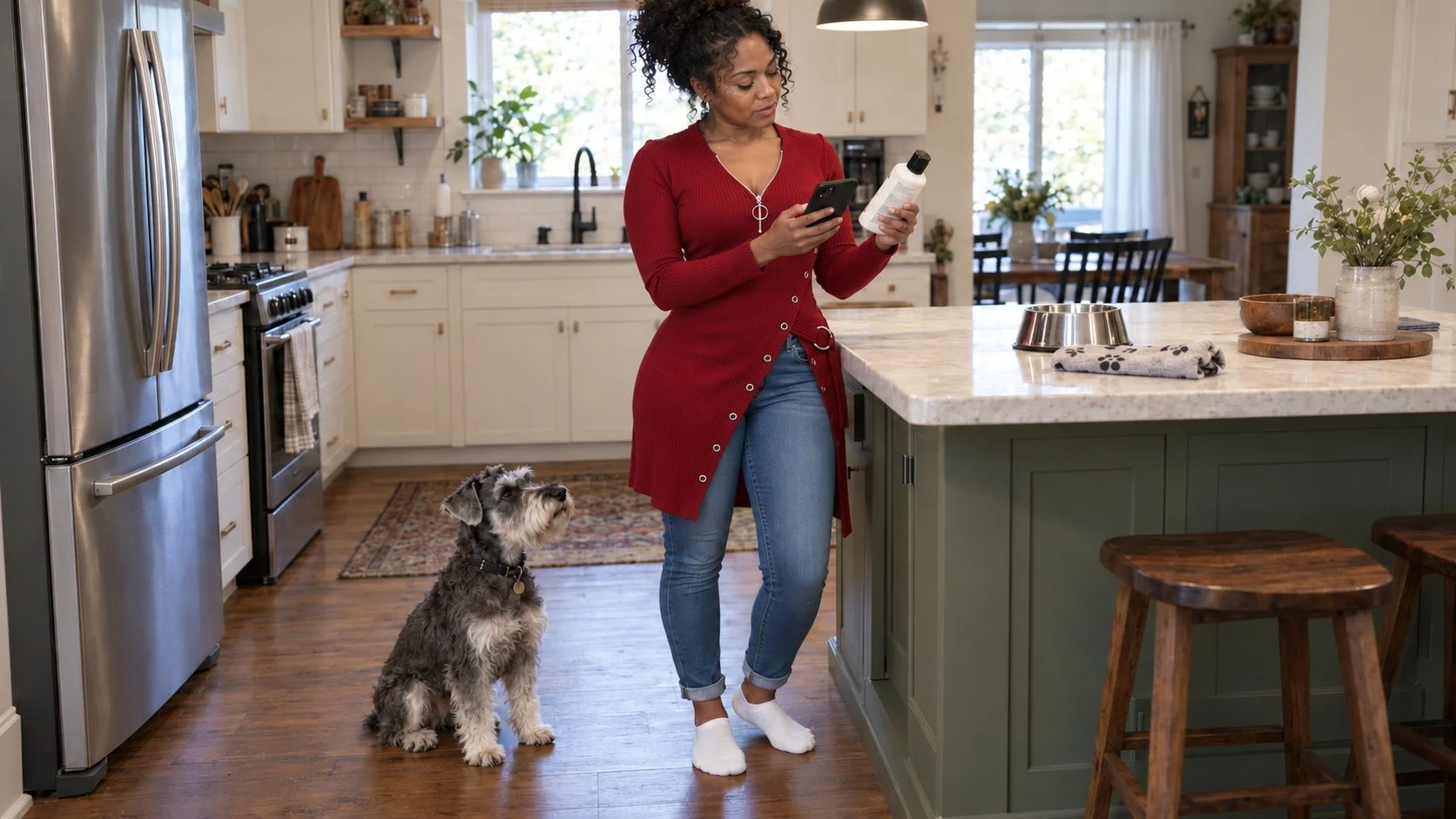
AI-generated image and graphics by Jason Mitchell, digital-persona photographer and visual designer for Inspired by Tyson.
A bag of dog food has a label you might think to check after a recall. The bowl underneath it deserves a second look, too.
So do grooming products and the equipment you use around the house. Official recall notices have covered dog bowls with exposed edges, conditioner with a bacterial-contamination risk and heated mats with electrical hazards. These are different problems with different products and different instructions for owners. [1,2,3]
The useful habit is knowing where to find the notice, how to match your item to it and what to do next. Memorizing brand names doesn't get you there.
The examples below are historical recalls, not new alerts. They're here to show the checking process. We haven't confirmed whether the original refund arrangements are still available today.
Look beyond one recall list
The FDA's Animal & Veterinary recalls page lists animal-food and veterinary-product notices. The Consumer Product Safety Commission keeps a separate consumer-product recall search, which is where the gear and grooming examples here appear. Both make good starting points, but neither is a complete list of everything that could affect a dog. [4,5]
If a message arrives saying "dog product recalled," follow it to the official notice and read the date before you pass it along. Then read the product description. A notice that's years old can still help you identify an item sitting in a cupboard. It shouldn't be shared as if the recall was announced this morning.
A familiar logo is only a clue. What you need to establish is whether the particular item in your hands matches the particular item in the notice.
A bowl recall shows why identifiers matter
On September 1, 2021, CPSC announced a recall of Top Paw Double Diner Dog Bowls. The notice said a bottom gasket could detach, exposing an unfinished edge that posed a cutting hazard. PetSmart had received three reports of cuts or scratches to consumers' hands. [1]
The description identified two elevated metal bowls in a metal base, with SKU 5270098. That number appeared on a sticker on the underside, near an embossed paw print. The published remedy told owners to stop using the recalled bowls and return them to PetSmart for a refund. [1]
Notice the gap between "a Top Paw bowl" and that specific description. A brand name starts the search. A matching identifier, construction and recall description make the notice useful.
Don't run your fingers along a suspected sharp edge to see whether the warning applies. Use the label and the notice to identify the item, and follow the safety instructions instead of testing the hazard yourself.
A conditioner recall shows why remedies differ
A June 6, 2024, CPSC notice covered one-gallon FURminator deShedding Ultra Premium Dog Conditioner. It identified possible bacterial contamination, including Pseudomonas aeruginosa, and described infection risks for people with weakened immune systems or external medical devices. [2]
The affected UPC was 854460001073. The notice specified lot 211102 for containers without a pump and lots 220402 through 240152 for those with a pump. Lot numbers were printed on the underside. [2]
Its instructions were unusually important: stop using the product, contact the firm for a refund, and do not empty the container before disposal or pour its contents into a toilet or drain. The published process required marking and photographing the product and providing a disposal photograph during registration. [2]
That's why "just throw it away" isn't a good universal response to a recall. You could miss disposal precautions or lose information the remedy requires. Read the complete current notice and its linked instructions first.
An older electrical example
In August 2012, World Class recalled about 25 Indoor Pet Heating Comfort Pad Mats. CPSC identified model GKC2G002 and described poor wiring and construction that created fire and electrical-shock hazards. The mats had been sold through Amazon between July 2011 and March 2012. [3]
This small, dated recall doesn't show that heated pet products as a category are unsafe. What it does show is that a model number can matter as much as a product's everyday name. Searching for "dog bed" alone might not be the quickest way to identify a heating mat.
Look at the item you actually own, including the manufacturer and model information. If the label is unreadable or the description leaves you unsure, use the contact listed in the official notice to ask for clarification. Uncertainty is a reason to check carefully. It isn't a reason to guess that two similar-looking products are the same.
Keep the information before it disappears
For pet-food complaints, FDA asks for details such as the exact product name, lot number, UPC, best-by date, and where and when the food was purchased. It advises keeping the original packaging, if possible, until the food has been consumed. [6]
That's worth remembering when a bag gets emptied into a storage bin. The packaging carries information a photograph of kibble can't supply.
For equipment, consider keeping a small record of the model label and purchase information. A clear photo taken while the label is still readable makes a later check easier. This is a practical organizing suggestion, not a replacement for the identifiers a recall notice requires.
When an item matches, work in order: stop using it as directed, keep the identifying information safe, and follow that notice's remedy. Don't improvise a repair or disposal method because another recall used it.
Do not pass the problem along
CPSC says an unrepaired recalled product can't lawfully be sold just because it looks fine or has never caused its owner trouble. Its guidance allows resale once the prescribed remedy has been applied and the listing clearly says so. That's different from deciding on your own that the item is safe. [5]
The agency directs consumers to SaferProducts.gov to report an unsafe product or a recalled item offered online. FDA takes pet-food complaints through its Safety Reporting Portal. Use the appropriate official route and describe what you observed, keeping assumptions separate from facts. [5,6]
The goal is a habit you can manage: check the notice, match the item, follow the instructions. You don't have to become a product investigator every time you tidy the dog cupboard. You do need enough information to recognize when a warning applies to something in it.
Which item would be hardest to identify if its packaging were already gone?
Sources

About Stephen Gill
Stephen Gill is the founder of Inspired by Tyson and editor of its dog-focused publications. His work focuses on practical dog ownership, canine news, health, safety, behavior, and issues affecting dogs and the people who care for them.
Learn more about Stephen Gill →Subscribe to Daily Doggy News via RSS
Read More
Scroll or use the arrows to explore more stories.
 Latest Daily Doggy NewsSnoopy Helps Shelter Dogs Find Their People
 Related: Pet Food SafetyRaw Pet Food Maker Faces Pathogen Claims Lawsuit
 Related: Food LabelsIs Kibble Ultra-Processed Dog Food?
 Latest Canine JournalAre Florida Frogs and Toads Dangerous to Dogs
 Latest It MattersA Shelter Dog’s Day Out Still Matters
 Latest Tyson’s LifeIs a 10-Minute Walk Enough for Your Dog?