
Is a 10-Minute Walk Enough for Your Dog?

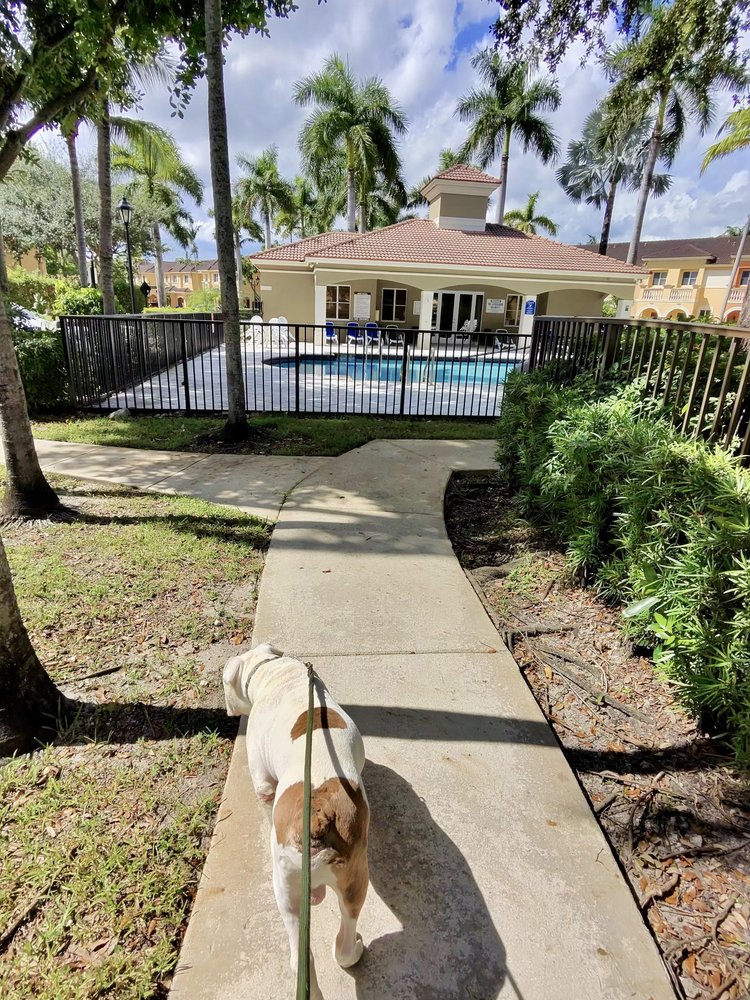
A quick trip outside and a meaningful walk are not always the same thing. The challenge is giving your dog enough activity while still paying attention to breed, age, conditioning, weather, and the dog standing beside you.
Sometimes I look outside in the middle of a Florida afternoon and think the same thing Tyson probably does: absolutely not.
Tyson is an Olde English Bulldogge. He enjoys his walks, but he does not enjoy standing outside baking in the sun, and I don't blame him. Still, living inside an air-conditioned house doesn't mean he doesn't need exercise. It just means I have to work around the conditions outside — usually by getting him out early in the morning before the sun really comes up, and again later at night after it goes down. Between those two walks, potty breaks are exactly that: potty breaks. I don't count walking outside for ten minutes, letting him use the bathroom, and coming back in as his exercise for the day.
Most days I try to give Tyson somewhere around an hour or two of walking, spread throughout the day, when the conditions and his energy level allow it. I'm not trying to turn him into a distance runner. I'm giving him time to move, smell what's happening in the neighborhood, explore, and just be a dog.
That's really what got me thinking about a question a lot of dog owners should probably ask themselves: is a ten-minute walk actually enough? For a lot of dogs, it isn't.
A Bathroom Break and a Walk Aren't the Same Thing
There's nothing wrong with taking your dog outside for a quick ten-minute trip. Sometimes that's exactly what the trip is for. But we shouldn't automatically confuse a bathroom break with meeting a dog's actual exercise needs.
Regular activity helps dogs maintain muscle, manage weight, stay mobile, and get mental stimulation, and vets are pretty clear that the amount a dog needs isn't the same across the board. Age, breed, health, body condition, physical structure, and current fitness level all factor in.
VCA Animal Hospitals recommends tailoring exercise and conditioning to the individual dog rather than applying the same routine to every animal. Read the VCA guidance.
A senior Bulldog isn't a Border Collie. A puppy shouldn't be exercised like a conditioned adult. A dog dealing with arthritis, breathing problems, heart disease, or orthopedic issues may need a completely different routine.
But I've also seen the opposite mistake — healthy, energetic dogs getting almost no meaningful exercise simply because they live indoors. A ten-minute loop around the apartment building might genuinely be enough for a lower-energy dog at a certain stage of life. For a different dog, that same loop barely gets them started.
The American Kennel Club points out that exercise requirements vary with breed, health, age, and energy level, and that high-energy dogs often need considerably more physical activity and mental stimulation than lower-energy dogs.
Your Apartment Isn't the Problem
I've heard versions of this argument before — "but my dog lives in an apartment." That doesn't automatically mean a large or active dog can't live there. The real question is what happens after the dog walks out the apartment door.
If you've got an active dog in an apartment, there's no backyard sitting there for the dog to wander into whenever it feels like it. That means you have to be more intentional about exercise, enrichment, sniffing time, and play.
And honestly, a backyard isn't an automatic fix either — opening a door and letting a dog stand in a yard doesn't necessarily provide meaningful exercise on its own.
Dogs need engagement, and walking is one of the simplest ways to provide it. A good walk isn't only about calories burned. It gives dogs a chance to smell things we barely notice — another dog that passed by a tree, food someone dropped near the sidewalk, a neighbor's cat crossing the driveway.
Stuff that means nothing to us can be the most interesting part of the whole walk to a dog, and that mental engagement matters too. The goal isn't dragging your dog through a predetermined number of miles. It's giving the dog standing next to you the right amount of physical activity and mental stimulation.
How Much Exercise Does a Dog Actually Need?
This is where I don't want to turn my experience with Tyson into a rule for somebody else's dog. I might walk him for an hour or more over the course of a day, but that doesn't mean every Bulldog — or every dog — should follow his routine.
Vets generally recommend tailoring exercise to the individual dog's age, breed, health, body condition, physical limitations, and fitness. If a dog has underlying medical or orthopedic issues, it's worth looping in a veterinarian to help build an appropriate plan.
Some working and sporting breeds may need considerably more physical and mental activity. Other dogs may need shorter, slower sessions. And some dogs shouldn't be pushed into a long walk simply because somebody read online that dogs “need two hours.”
Watch the dog in front of you.
This Reel Makes the Point
I like the basic point behind this video because it gets owners thinking about how different dogs actually are from each other. What I don't want is for people to take every minute recommendation in a Reel and treat it like a veterinary prescription — use it as a conversation starter instead.
Your dog's breed can tell you something about what they were bred to do and how much energy they're likely to have, but breed is only part of the picture. Age, health, conditioning, personality, body structure, environment, and even today's weather all change what an appropriate walk looks like.
And where Tyson lives, the weather matters a lot.
When the Florida Sun Changes the Rules
This is probably the biggest adjustment I make with Tyson. It gets hot here, and the fact that I want him to exercise doesn't mean I'm marching him down a scorching sidewalk in the middle of the afternoon just to hit some walking target.
Bulldog-type dogs need extra consideration because short-muzzled, or brachycephalic, dogs can have a harder time cooling themselves efficiently through panting.
Veterinary guidance identifies brachycephalic dogs as being more vulnerable to heat-related problems. Research summarized by the Royal Veterinary College also identifies increased heat-related illness risk among flat-faced breeds.
That's why I'm not interested in proving anything by walking Tyson at two o'clock in the afternoon. I'd rather change the schedule — early morning, late evening, whenever it's cooler.
Same responsibility to get him moving, just smarter timing.
The Air Temperature Isn't the Whole Story
There's another problem people forget about because we're wearing shoes: the ground gets hot too.
Asphalt and concrete can become much hotter than the surrounding air. The American Kennel Club cites data showing that when the air temperature is around 86°F, asphalt can reach approximately 135°F.
Hot walking surfaces can cause discomfort, blisters, and burns to a dog's paw pads. VCA recommends avoiding extremely hot concrete, asphalt, and sand. Read the VCA safety guidance.
I pay attention to this with Tyson. Grass would obviously be cooler, but Tyson isn't particularly interested in walking on grass unless he's got business to conduct there — he wants the sidewalk.
So instead of pretending the pavement temperature doesn't matter, I change when we use it: before the sun's had hours to bake it, or after the heat starts to ease off.
Don't Turn Exercise Into a Punishment
There's another side to this. More isn't automatically better.
If your dog has been living a pretty inactive life, jumping from ten-minute walks to two-hour walks overnight isn't a fitness program — it's a good way to overdo it.
Conditioning needs to be gradual. Both VCA and the American Kennel Club recommend progressively building exercise instead of suddenly putting a dog through strenuous activity.
The AKC's dog fitness guidance also recommends gradual increases in exercise.
Exercise also needs to be something your dog can actually handle. Watch for excessive panting, slowing down, stopping repeatedly, seeking shade, weakness, unusual drooling, vomiting, confusion, or other signs that your dog may be overheating or struggling.
Heatstroke can turn into an emergency fast. VCA's heatstroke guidance explains warning signs owners should recognize.
Tyson Usually Tells Me What He Needs
One thing I've learned living with Tyson is there's a difference between following a rule and actually paying attention to your dog.
He lets me know when he's ready to go, and he lets me know when he's had enough. Some mornings we take our time. Some walks have more stopping and smelling than actual walking because he wants to investigate everything, and that's fine with me.
He's not training for anything — we're walking because movement is good for him, getting outside is good for him, smelling and exploring are good for him, and spending that time together is good for both of us.
So when somebody asks me if a ten-minute walk is enough for their dog, I don't tell them every dog needs two hours. I tell them to know their dog well enough to tell the difference between letting them use the bathroom and actually meeting their need for activity.
If you've got a young, healthy, high-energy dog, ten minutes outside probably isn't cutting it. If you've got an older dog, a dog with medical limitations, or a breed that struggles in the heat, the right amount is probably shorter and a lot more carefully planned.
And if you live somewhere hot like we do, don't cut the exercise — change the schedule. Walk before the sun comes up. Walk after it goes down. Find shade when you can. Check the pavement with your hand before you head out. Give them room to sniff around. Play indoors when it's not safe outside.
Mostly, just pay attention to the dog walking next to you, because Tyson's routine works for Tyson — not because I read it somewhere, but because I've watched him long enough to know what he needs.
Research & Preferred Sources
The personal observations in this story are Stephen's. Exercise, conditioning, heat-safety, and pavement-safety statements are supported by the veterinary and canine-health resources below.
- American Kennel Club — How Much Exercise Does a Dog Need Every Day?
- American Kennel Club — Dog Paws and Hot Pavement
- American Kennel Club — How to Create a Fitness Plan for Your Dog
- VCA Animal Hospitals — Healthy Exercise for Dogs
- VCA Animal Hospitals — Dog Walking Safety Tips
- VCA Animal Hospitals — Heat Stroke in Dogs
- Royal Veterinary College — Brachycephaly and Health Issues
What science says about probiotics, fiber, allergies and the canine microbiome.
How training, genetics and experience may shape the way dogs learn.
Exercise, enrichment and gradual practice for changing routines.
Why dogs navigate low-light environments better than people.