What a 16-Dog Fresh-Food Study Actually Found
A six-month trial found firmer stools, higher fecal butyrate and different gut bacteria in Labradors eating one fresh-frozen diet. Those findings are worth examining—but they do not prove that fresh food is healthier than every kibble.



Preferred source: Journal of Animal Science accepted manuscript

The quick answer
A small trial followed 16 adult Labrador Retrievers for six months. Dogs eating one fresh-frozen food had firmer stools, higher fecal butyrate and a gut microbiome that differed from dogs eating one extruded dry food. Most other measured outcomes—including weight, body condition, fecal moisture, pH, ammonia and several fermentation markers—did not differ significantly. The study is interesting, but its size, product-specific design and industry affiliations prevent broad claims that fresh food is healthier than kibble.
The study, in brief
The trial, “Impacts of a fresh-frozen dog food on fecal consistency and microbiome in colony dogs,” was posted online by the Journal of Animal Science on September 21, 2026. It is an accepted manuscript, not yet the final copyedited and typeset version of record. That is a normal publishing stage, but readers should understand which version is being cited.
Researchers randomly assigned 16 adult Labrador Retrievers housed at a research kennel in Missouri to one of two diets for six months: a fresh-frozen food or a commercial extruded dry food. They collected samples at baseline and at approximately one, three and six months. The team examined stool consistency, fecal moisture and pH, ammonia, short-chain fatty acids including butyrate, and gut-microbiome composition using 16S rRNA sequencing. Body weight and body-condition scores were also monitored.
An earlier conference abstract from an overlapping author group reported a 12-week interim look at what appears to be the same 16-dog cohort. That abstract similarly reported that stool-quality scores began separating during the diet transition.
Three findings stood out
Firmer, better-formed stools
The fresh-frozen group had significantly better stool-consistency scores than the kibble group. The reported probability value was below 0.01, meaning the observed difference would be unlikely under the study’s statistical model if there were no real group difference.
That does not mean every dog eating fresh food will have better stool. Stool quality is affected by the complete formulation, fiber type and amount, fat, digestibility, individual tolerance and medical conditions—not simply whether a food is fresh or extruded.
Higher fecal butyrate
Fecal butyrate was also significantly higher in the fresh-food group. Butyrate is a short-chain fatty acid produced when gut bacteria ferment certain dietary components. It helps support cells lining the colon and is widely studied as part of intestinal health.
Still, higher butyrate in stool is a biological signal, not proof that these dogs became healthier overall. The researchers did not establish reductions in gastrointestinal disease, longer life, improved immune function or other long-term clinical outcomes.
Different microbiome patterns
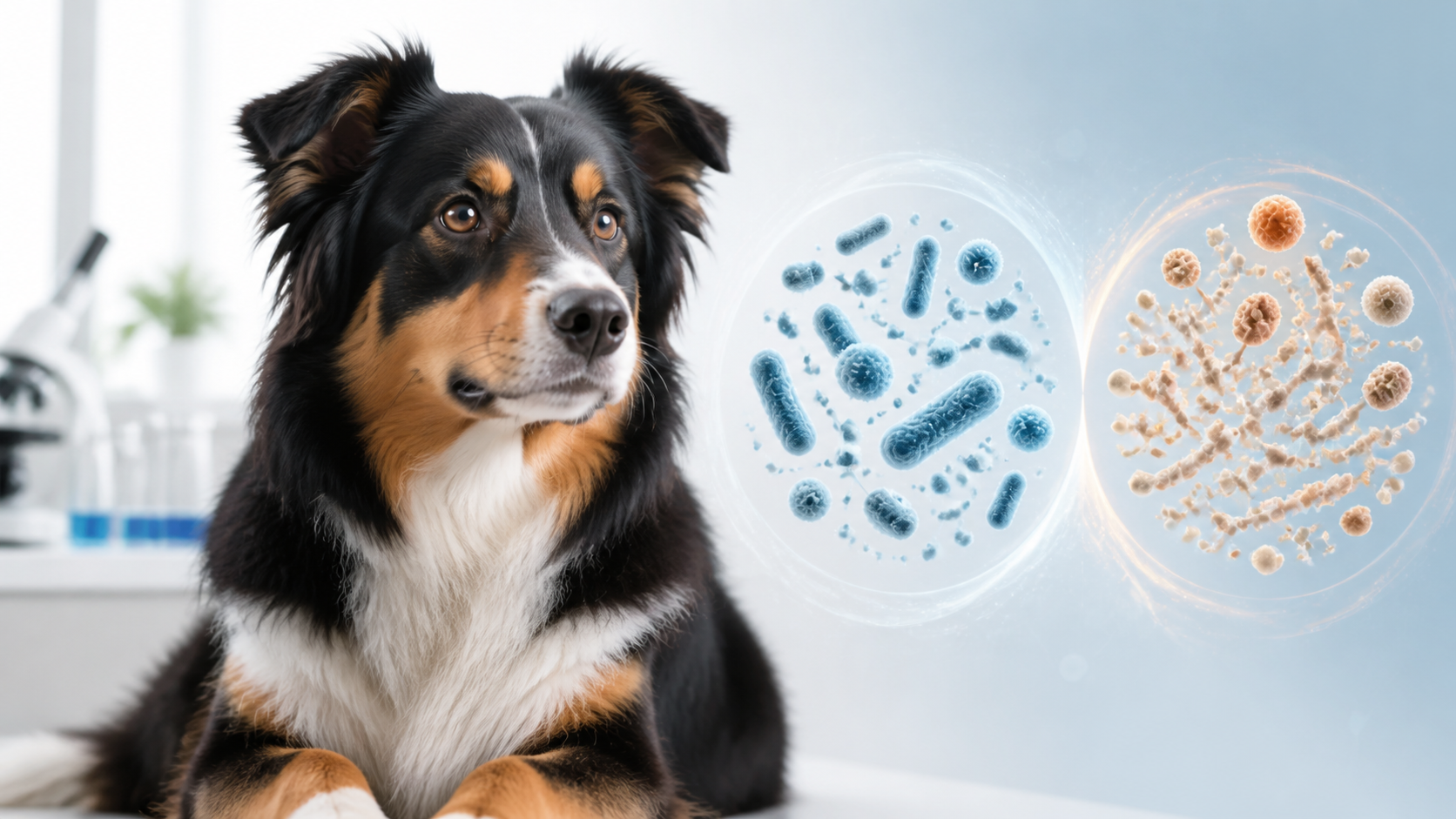
The two groups’ gut-microbiome profiles diverged over the study period. The fresh-food group was relatively enriched in several bacteria associated with butyrate production, including Turicibacter, Ruminococcus and Clostridium species. Valerate remained more stable in the fresh-food group and varied more in the kibble group, although that result was at the conventional statistical threshold.
Together, the stool, butyrate and microbiome findings form a plausible pattern. They deserve attention and independent follow-up. They do not, by themselves, establish a general health advantage for an entire processing category.
What did not change
A responsible reading must include the outcomes that were not significantly different:
- Fecal moisture and pH did not differ significantly between groups.
- Fecal ammonia and most other measured short-chain and branched-chain fatty acids did not differ significantly.
- Body weight and body-condition scores were maintained in both groups.
- The study did not demonstrate that either diet prevented disease or improved longevity.
This was not a clean sweep in which fresh food “won” every measure and kibble “lost.” The statistically supported differences were concentrated in stool consistency, butyrate and microbial composition.
Why the limitations matter
Sixteen dogs is a small study
With only 16 dogs split between two groups, individual variation can strongly influence averages. All were adult Labradors living in a research setting. Results may not carry over to puppies, senior dogs, other breeds, dogs with chronic disease or pets living in ordinary homes.
The diets differed in more than processing
The trial compared two specific commercial products. Fresh and dry foods can differ in ingredients, moisture, fiber, fat, protein sources, energy density and manufacturing methods. Unless diets are carefully matched across those variables, a study cannot isolate processing as the sole cause of every difference.
That matters because kibble is not one uniform product, and neither is fresh food. A result involving one food from each category should not be stretched into a verdict on all foods in either category.
Several authors had industry affiliations
Several authors were affiliated with Ollie Pets Inc., a fresh-food company, and another author was affiliated with Animal Biome, which offers microbiome-related products and testing. Those relationships do not automatically invalidate the research, and industry-supported nutrition studies are common. They do make transparent disclosure and independent replication especially important.
Five questions dog owners may have
1. Should I switch my dog to fresh food because of this study?
Not because of this study alone. It found several meaningful digestive markers in a small, product-specific trial. It did not establish that fresh food broadly improves health, prevents disease or extends life.
2. Does the study matter if my dog has loose stool?
It is a reasonable finding to discuss with your veterinarian, but loose stool has many possible causes. Ingredients, fiber, parasites, infection, stress, medication and gastrointestinal disease can all play a role. A diet change should not replace an appropriate veterinary evaluation.
3. Does higher butyrate prove better gut health?
No. Butyrate is generally considered useful in the colon, and the result is biologically interesting. This study did not show that the higher fecal level produced a measurable long-term health benefit.
4. Should industry funding make me dismiss the paper?
No—but it should make you read carefully. Look at the study design, exact outcomes, missing information and whether independent researchers reproduce the results. Disclosure supports informed judgment; it is not proof of misconduct.
5. How should I evaluate a dog food?
The World Small Animal Veterinary Association recommends looking beyond marketing terms. Useful questions include whether the company employs a qualified nutritionist, who formulates its diets, what quality-control testing it performs, whether the food is nutritionally complete for the intended life stage and whether the company conducts and publishes research.
What dog owners should take away
This study adds useful evidence to a growing area of canine nutrition research. In these 16 Labradors, one fresh-frozen food was associated with firmer stools, higher fecal butyrate and a different microbial pattern than one extruded dry food over six months.
That is the finding. The finding is not that all fresh food is superior, all kibble is harmful or every dog should change diets. Larger independent studies using diverse dogs, clearly characterized diets and meaningful clinical outcomes are still needed.
If your dog is doing well on a complete, appropriately formulated food, this paper is not a reason to panic. If your dog has persistent digestive problems or you are considering a major diet change, bring the product information and your questions to your veterinarian.
Sources and further reading
- Journal of Animal Science: Impacts of a fresh-frozen dog food on fecal consistency and microbiome in colony dogs — accepted manuscript published online September 21, 2026.
- Journal of Animal Science: Fresh-frozen canine diets improve fecal consistency compared to extruded dry kibble — 2025 conference abstract.
- WSAVA Global Nutrition Committee: Guidelines on Selecting Pet Foods.
- Frontiers in Veterinary Science: Diet-induced metabolic and faecal microbiome responses in pet dogs fed a minimally processed versus extruded kibble diet.
Health note: This article provides general educational information and is not a diagnosis or individualized veterinary nutrition plan. Consult your veterinarian before changing a dog’s diet, especially when digestive signs are persistent or the dog has an existing medical condition.
Keep reading