
Postbiotics vs. Probiotics for Dogs: The Truth
Two new 2026 studies add encouraging data, but current evidence does not show that postbiotics are universally better than probiotics.

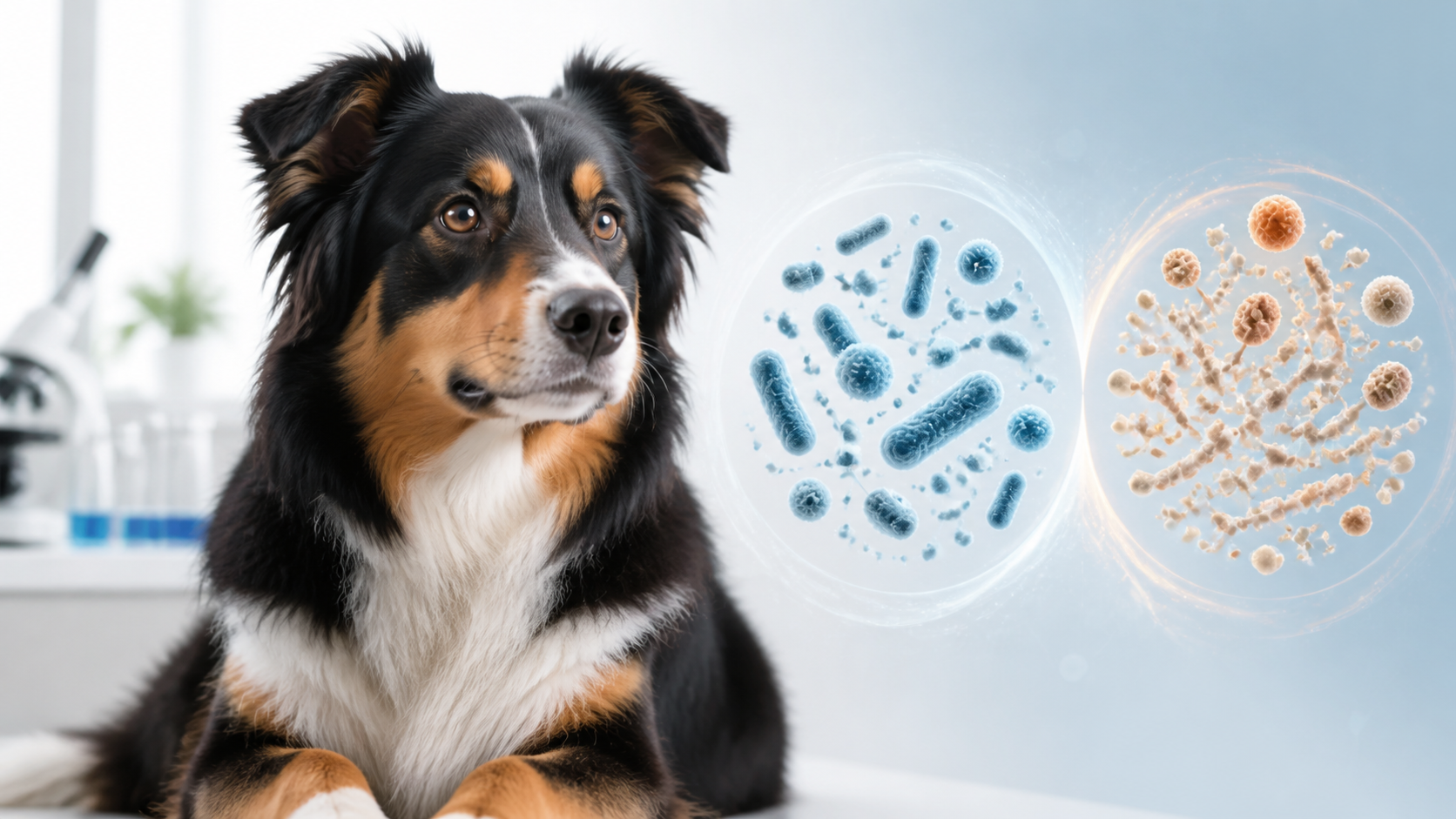
If you’ve browsed the pet aisle or scrolled for dog supplements lately, you’ve probably noticed a new buzzword creeping in alongside traditional probiotics: postbiotics.
Probiotics rely on live microorganisms, which have to remain viable through manufacturing, shipping, storage, and use. Postbiotics are preparations of inactivated microorganisms and/or their components that still provide a health benefit.
That can make postbiotics easier to formulate and keep stable. But does it make them better for your dog?
What the Latest 2026 Studies Tell Us
A Study on Stool Quality
A study published in Pets in April 2026 evaluated 20 kennel-housed dogs with a history of loose stools but no diagnosed gastrointestinal disease. Half received a postbiotic for 28 days, while the other half received a placebo.
By Day 28, the postbiotic group showed a significant improvement in stool consistency and measurable changes in gut microbial composition, while the placebo group did not show the same improvement.
A Study on Broader Health Markers
A second study published in Frontiers in Microbiology in May 2026 followed 24 healthy adult beagles for 42 days. Researchers tested a postbiotic derived from Bifidobacterium animalis and reported changes in immune markers, inflammatory measures, gut bacteria, short-chain fatty acids, and some stool-related outcomes.
The Big Picture: Science vs. Marketing
One or two positive trials do not prove that postbiotics are superior to probiotics.
A 2025 systematic review published in Microorganisms examined 69 eligible postbiotic papers and found only 13 studies conducted directly in living dogs. When researchers pooled the outcomes that could be compared, they found no statistically significant advantage for postbiotics over control groups.
The review still described postbiotics as promising, while highlighting small samples, different microbial sources, inconsistent doses, and difficult study comparisons.
Probiotics have evidence gaps too. Results can vary by strain, dose, condition, and study design. Evidence for one probiotic strain cannot automatically be applied to every other product on the shelf.
That is why comparing “probiotics” and “postbiotics” as two blanket categories is misleading. A specific probiotic strain may have evidence for one condition, while a particular postbiotic preparation may help with another. The category name matters far less than the exact ingredient and the science behind it.
What to Look For Before You Buy
- 1. Identify the ingredient. Check whether the company clearly identifies the probiotic strain or specific postbiotic preparation. Vague “gut-health blends” make it difficult to know whether published research applies to the product in your hand.
- 2. Look at what the study measured. Better stool consistency does not automatically mean a product treats skin allergies, anxiety, or chronic gastrointestinal disease. A change in immune markers is not the same as a proven clinical benefit.
- 3. Check who funded the research. Company-backed studies should not be dismissed automatically, but financial relationships matter when weighing one trial.
The 2026 studies give dog owners more reason to pay attention because specific postbiotic preparations are beginning to show measurable effects in dogs. What the research does not support is the sweeping claim that postbiotics, as a category, are simply better.
Instead of asking which buzzword is newer, ask the more useful question: Is there solid evidence that this exact ingredient helps with my dog’s specific health needs?
Sources & Further Reading
- Sordillo A, Heldrich J, Turcotte R, Sheth RU. A Novel Postbiotic Improves Stool Consistency in Dogs: A Randomized, Double-Blind Placebo-Controlled Study. Pets. 2026.
- Ma M, et al. Dietary supplementation with postbiotics from Bifidobacterium animalis safely enhances multifunctional health in adult beagle dogs. Frontiers in Microbiology. 2026.
- Bonel-Ayuso DP, et al. Effects of Postbiotic Administration on Canine Health: A Systematic Review and Meta-Analysis. Microorganisms. 2025.