How to Help Your Dog Lose Weight Safely
A dog does not need to reach a perfect number before better health starts showing up.
That is the encouraging part of a new veterinary study involving overweight and obese dogs. After a structured 150-day program, the dogs lost about 9% to 10% of their starting weight. Obese dogs also showed improvements in triglycerides and systolic blood pressure—even though most had not reached an ideal body condition.
Small progress still counted.
That does not mean every dog should be placed on the same diet. It means a plan, regular follow-up and consistency at home can make a measurable difference.
Start with the dog in front of you.
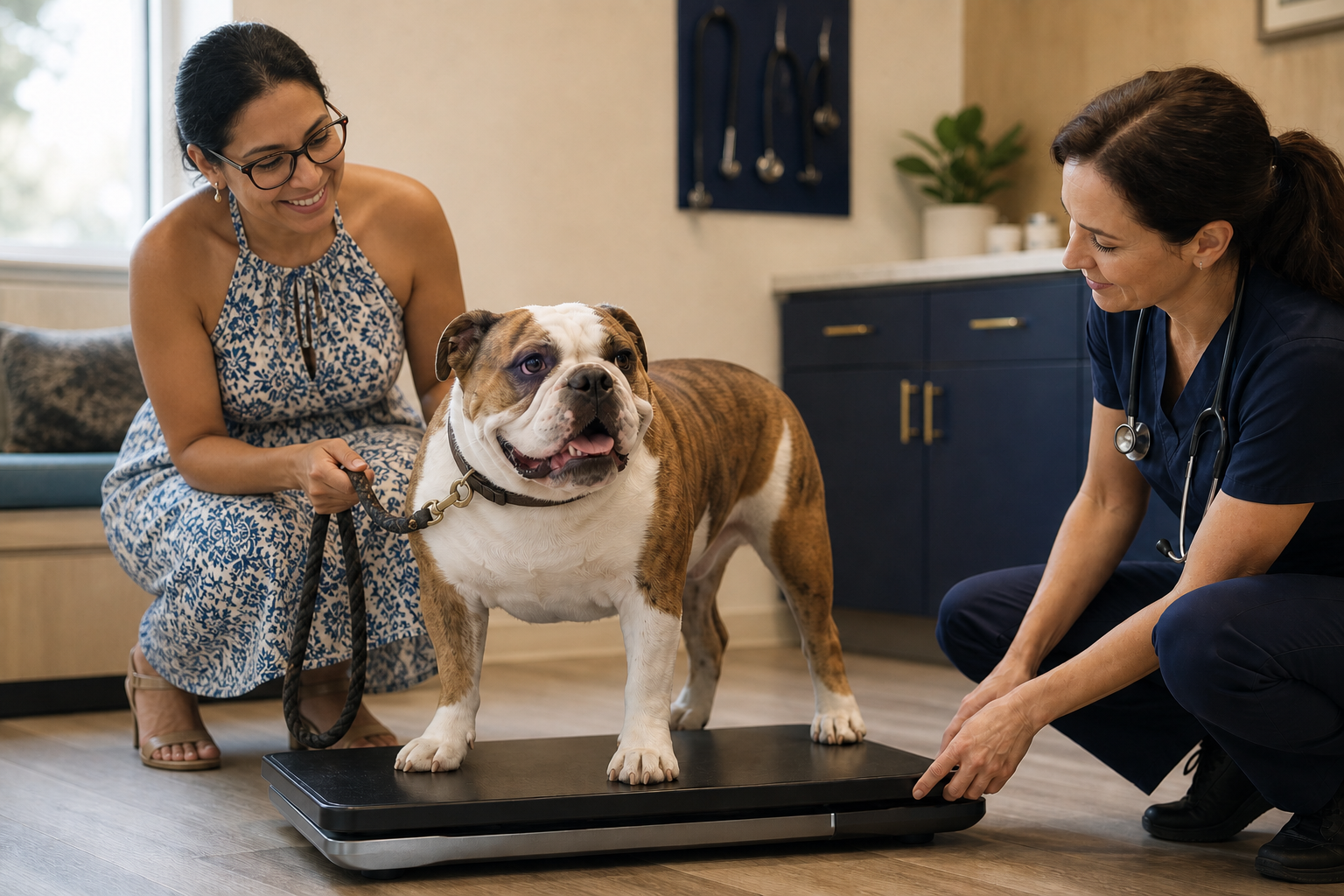
Ask your veterinarian to assess body condition and set a daily calorie target. Measure every meal, count the calories outside the bowl and add activity at a pace your dog can safely manage. Do not slash portions or chase rapid weight loss. The goal is better health—not hunger.
Better health can begin before the finish line
Researchers compared 10 normal-weight, 10 overweight and 10 obese client-owned dogs. The overweight and obese dogs entered a 150-day calorie-restriction program using a high-protein, high-fiber, low-energy diet, with veterinary follow-ups every two weeks.
overweight group
obese group
follow-up
In the obese group, elevated triglycerides dropped and average systolic blood pressure decreased. Program success was also associated with improved physical activity and quality of life.
The useful message is not that one food fixes obesity. The food was one part of a structured plan that depended on veterinary monitoring and owner participation.
Step 1 · Check Body ConditionLook beyond the number on the scale
A scale gives you a number, but it does not tell the whole story. A thick coat, broad chest or naturally stocky frame can make weight difficult to judge by sight. Body condition helps tell you what that number actually means.
For most dogs, an ideal body-condition score is 4 or 5 out of 9. You should be able to feel the ribs without pressing through a heavy layer of fat, see a waist from above and notice the abdomen rising toward the back legs from the side.
Ask your veterinarian to show you your dog’s score. An online photo cannot account for your dog’s coat, muscle, frame or medical history.
Step 2 · Find the Hidden CaloriesFind the calories hiding in plain sight
The measured dinner may not be the whole problem. The little extras throughout the day add up quickly—especially for a smaller dog. AAHA recommends keeping treats and table food to no more than 10% of daily calories. The other 90% should come from complete and balanced food.
Love does not always have to arrive as food.
Action tip: Keep a three-day record of everything your dog eats. Include the amount and who gave it. That list gives your veterinarian better information than “he barely eats anything.”
Step 3 · Serve Precise PortionsMeasure the food you actually serve
Feeding guides on the package are starting estimates. Age, size, activity, health and metabolism all change what an individual dog needs. Ask your veterinarian for a daily calorie target, then check how many calories the food contains per cup, can or kilogram.
- Weigh the day’s food. A kitchen scale is more consistent than a scoop.
- Divide it before breakfast. Set aside meals and training rewards from one measured daily amount.
- Use one household container. When it is empty, the day’s food is finished.
Exercise helps, but do not overdo it
Exercise burns calories, helps preserve muscle and gives you something active to do together. But you cannot safely outrun unlimited calories.
- Start low and go slow. A dog with arthritis, breathing difficulty, heart disease or severe obesity may need shorter, slower sessions.
- Choose manageable activity. Several brief walks, gentle play, sniffing games and food puzzles may work better than one exhausting workout.
- Watch the dog in front of you. Stop if you see unusual weakness, limping, distress or trouble breathing.
The bowl and the routine both change
I can usually see when Tyson is starting to get a little chunky. In South Florida, that can happen when the weather gets hot and we are not spending as much time outside. His food may not have changed, but his activity has.
I feed Tyson Dr. Marty food and sometimes build his bowl with a separate protein. That protein matters. A lean choice and a fattier cut do not bring the same calories to the bowl, even when the portion looks similar. When his body condition begins moving in the wrong direction, I look at both sides of the equation: what he is eating and how much work, walking and training he is actually getting.
Tyson eats once a day. I also occasionally give him a 24-hour, water-only fast—usually once a week or every other week. He always has access to fresh water, but I withhold food for that period. I think of it as a detox or reset for his system. I first heard about the approach from trainers who sometimes work dogs in the morning before feeding. It also changed the way I read Tyson’s behavior around food. A dog can learn when dinner normally arrives. Anticipating that routine does not automatically tell me how hungry he is.
This is personal experience, not a recommendation. It is what I have chosen to do with Tyson. I would not tell another owner to skip a dog’s meal based on this article, and I would not use fasting in place of a veterinary weight-loss plan.
Track the whole picture
Use the same scale when possible and follow your veterinarian’s recheck schedule. Depending on the plan, that may mean checking progress every two to four weeks.
Track more than pounds. A more defined waist, easier movement getting into the car, better stamina on a walk, improved energy and a healthier body-condition score can all help show whether the plan is working.
If progress stalls, do not keep cutting food blindly. An inaccurate portion, hidden calories, medication, pain or an underlying condition may be interfering.
The new study showed that meaningful changes can appear before the final goal. That matters when the scale moves slowly.
No shame. No shortcuts. Just steady care.
Your dog does not need teasing, punishment or hunger. He needs a plan the household can follow and a veterinarian who can adjust it. Steady care turns weight loss into something more useful than a smaller number: more comfortable movement, better routines and more good time together.
Dog health note: This article provides general educational information and is not a substitute for veterinary advice. A dog’s weight-loss diet and activity plan should be developed with a veterinarian.
Stephen Gill
Stephen Gill is the founder and chairman of Inspired by Tyson and the writer and editor of Daily Doggy News. Read Stephen’s author profile →
 Aug 24 · Daily Doggy NewsCan Kindness Help a Fearful Dog Trust You?
 Aug 23 · Daily Doggy NewsFoods Dogs Can’t Eat: A Quick Safety Guide
 Aug 18 · Daily Doggy NewsCan Dogs Eat Vegan Food? The Honest Answer
 Aug 14 · Daily Doggy NewsCRISPR Beagles Spark a Stunning Allergy Breakthrough
 Aug 13 · Daily Doggy NewsCan Dogs See in the Dark? Surprising Truth