Learn which Dachshund health changes call for a routine conversation, a same-day veterinary call, or immediate emergency care.
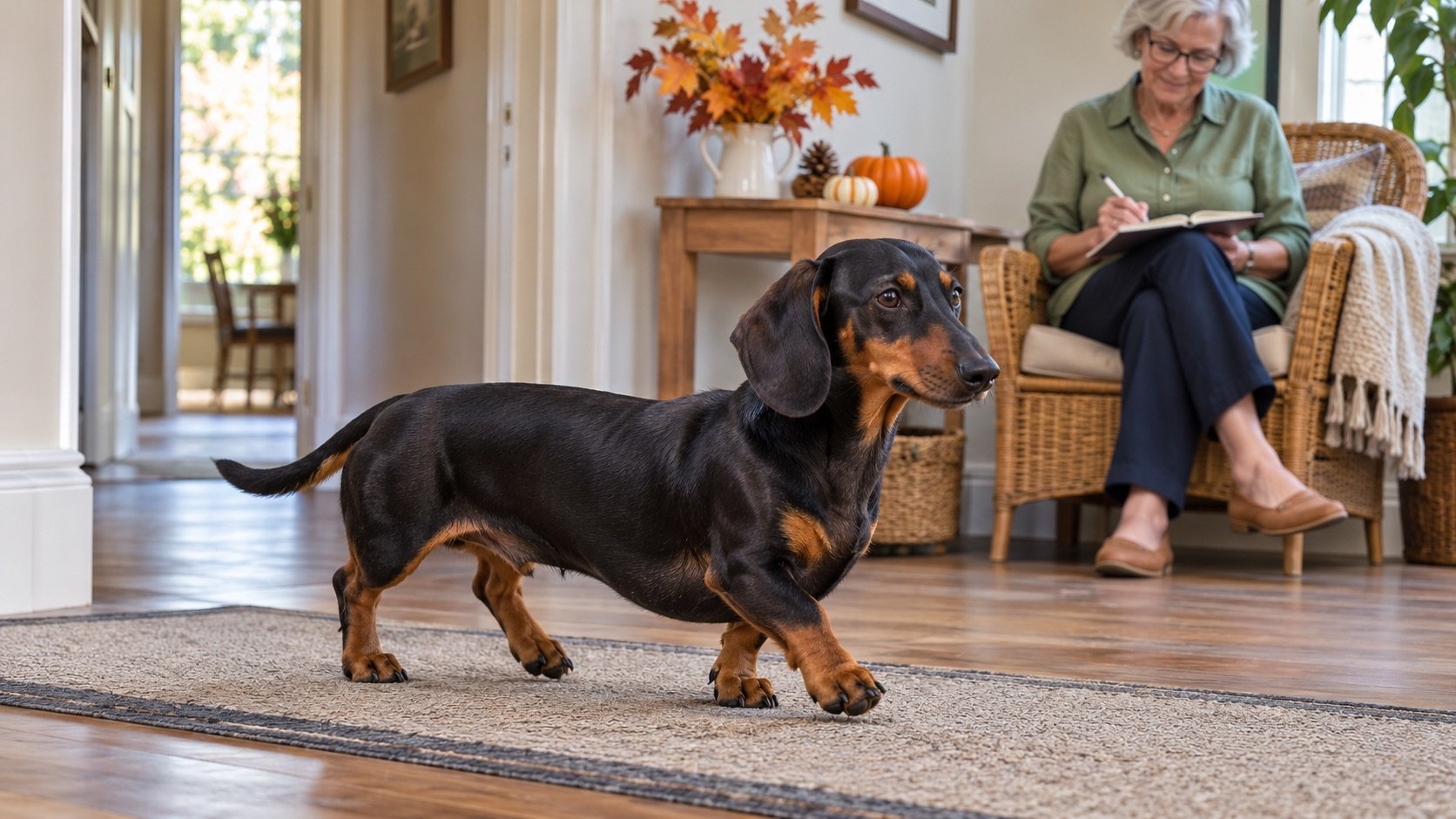
A Dachshund can be halfway across the room before you’ve finished laughing at whatever got them moving. That familiar shape, with a long back and short legs, comes from an inherited form of dwarfism called chondrodystrophy. It affects how cartilage develops, including the discs that cushion the spine. You don’t have to spend every walk watching for trouble. What’s worth learning now is the difference between a change you can bring up at a routine visit, pain that needs a call today and signs that mean going straight to a veterinary emergency hospital.
This guide is for general education. It can’t diagnose your dog, and breed statistics describe groups of dogs rather than predicting what will happen to yours. If you notice any of the warning signs below, contact your veterinarian or the nearest veterinary emergency hospital.
1. Why Dachshunds have breed-specific risks
The discs between the bones of the spine act as cushions. In dogs with chondrodystrophy, those discs can harden early. The American College of Veterinary Surgeons (ACVS) notes that disc calcification can show up on X-rays by age two. A stiff disc is more likely to rupture and press on the spinal cord.
Plenty of Dachshunds live long, active lives. Learn how your dog normally gets up, walks and turns. That gives you something concrete to describe if a movement suddenly looks different. If pain or weakness does show up, acting early gives your vet the most options.
2. IVDD: the breed's most important health risk
Intervertebral disc disease (IVDD) happens when part of a disc bulges or ruptures into the spinal canal and presses on the spinal cord. Some dogs show back or neck pain. Others develop weakness, trouble coordinating their legs or paralysis.
The share of cases and the risk for any one Dachshund are two different numbers. The American College of Veterinary Surgeons (ACVS) puts Dachshunds at 45–70% of cases among affected breeds, with clinical signs in these breeds starting, on average, between ages 3 and 6. Cornell University’s Riney Canine Health Center also identifies ages 3 to 6 as a period when Dachshunds may show signs.
For a look within the breed, researchers behind DachsLife 2015 surveyed owners of 2,031 UK Dachshunds, the largest published owner survey of the breed. Owners reported a veterinarian-diagnosed history of IVDD for 15.7% of dogs. That ranged from 7.1% in Standard Wire-Haired Dachshunds to 24.4% in Standard Smooth-Haired dogs. Miniature Smooth-Haired, Miniature Wire-Haired and Standard Smooth-Haired Dachshunds had higher odds than Standard Wire-Haired dogs. The owners chose to take part, and all the dogs were alive when surveyed. That makes the result a snapshot, not a lifetime prediction: the true lifetime risk could be higher or lower. No variety is exempt, though most Dachshunds never develop IVDD.
Don’t overlook the neck. ACVS says discs in the back (thoracolumbar discs) account for about 65% of disc ruptures, and discs in the neck (cervical discs) account for up to 18% of cases seen by vets. A sore neck matters even if your dog’s back legs aren’t wobbly.
3. Spinal emergency signs: when to go now
IVDD can worsen over hours. Cornell advises calling your veterinarian at the first sign of back discomfort. Go to your vet or the nearest veterinary emergency hospital immediately if you see:
- Sudden weakness, wobbliness or a “drunken” gait in the back legs, including hind feet crossing (ACVS)
- Inability to stand or use the back legs (ACVS; Cornell)
- Loss of bladder control or incontinence (ACVS; Cornell)
- Apparent loss of feeling in the back legs or tail — ACVS describes loss of pain sensation as a sign of severe spinal cord injury, and outcomes are worse the longer it goes untreated
Call your vet the same day for pain-only signs, which can come before weakness:
- Back or neck pain, a hunched posture, crying out when picked up, or reluctance to walk (ACVS)
- Avoiding turning the head one way (Cornell)
- Going to the food or water bowl but not eating or drinking — yet eating if the bowl is raised, which can point to neck pain (Cornell)
A painful back and a knee problem can look remarkably similar from across the room. Sorting them out takes a hands-on veterinary exam. You can describe the change without trying to name the condition yourself.
4. How IVDD is treated (overview)
Your vet will do a neurological exam and will usually recommend an MRI or CT to locate the affected disc. Treatment generally takes one of two paths:
Conservative (medical) care. Cornell says mild cases may be managed medically, at least at first. That can include strict activity restriction, pain medicine and possibly muscle relaxants. ACVS says this option is often offered only for a first episode with mild neurological deficits. Your vet sets how long the restriction lasts.
Surgery. To relieve pressure on the spinal cord, the surgeon removes bone over the spinal canal and the disc material that has pushed out. ACVS says surgery to relieve that pressure is almost always recommended in more severe cases. Recovery can take months and often includes rehabilitation. If your vet recommends surgery, Cornell advises against waiting.
The outlook depends in part on what the veterinary team finds on exam and imaging. According to ACVS, among dogs that still perceive pain in their limbs, about 90% can regain limb use with surgery, compared with 60–80% under strict medical management. When pain perception is gone, the figures are 50–60% with surgery and under 10% with medical management alone. These numbers describe groups of dogs rather than promising what will happen in an individual case. Pain perception is assessed by the veterinary team, never by testing your dog at home.
5. What the evidence says about reducing IVDD risk
Dachshund owners hear a lot of rules about stairs, jumping and harnesses. The most important thing to know is that no lifestyle change has been proven to prevent IVDD. Genes and body shape account for most of the risk. Here’s where everyday choices fit, and where the evidence stops.
Daily walks and exercise. In DachsLife 2015, dogs that exercised more than an hour a day had lower odds of IVDD. Dogs that exercised less than 30 minutes had higher odds. The authors caution that the survey shows an association, not cause and effect. Owners may simply have walked dogs less after back problems developed. The researchers couldn’t make firm recommendations from the survey. Keeping your Dachshund active within your vet’s advice is a reasonable, low-risk choice.
Jumping and stairs. Cornell recommends limiting stair use and jumps on and off decks, beds and sofas. Think walks instead of games that have your dog leaping for a toy. The DachsLife survey didn’t find a significant link between stairs and IVDD. Its finding on furniture jumping was likely influenced by owners restricting their dogs after diagnosis. A ramp or a lift onto the sofa can be a sensible precaution, but neither guarantees prevention.
Harness or collar? ACVS lists switching from a leash attached at the neck to a body harness among its suggestions after spinal surgery. A harness makes sense if your dog has a history of neck pain. Whether it helps prevent a first episode hasn’t been studied in Dachshunds.
Neutering. In DachsLife 2015, dogs that hadn’t been neutered had lower odds of IVDD than neutered dogs. That association doesn’t show that neutering causes IVDD. If you’re deciding when or whether to neuter your Dachshund, discuss the finding with your vet alongside the other considerations.
For everyday comfort and safety, support the chest with one hand and the rear with the other when you pick up your Dachshund, so the back stays level. Keep nails trimmed and put rugs on slick floors. These are practical habits; they haven’t been proven to prevent IVDD.
6. Weight and body condition
A lean body condition is good for your Dachshund’s joints and overall health. ACVS lists weight loss as one possible lifestyle change after spinal surgery. But the DachsLife survey didn’t find a link between IVDD and either body condition or body weight. The evidence doesn’t show that extra weight causes disc disease in Dachshunds.
Measure meals instead of eyeballing them, and count treats in the daily total. If more than one person feeds your dog, make sure everyone knows what counts toward that total. Ask your vet at each visit to score your dog’s body condition and explain what they’re looking for. If weight loss is needed, make the change gradually with the vet’s guidance.
7. Patellar luxation (slipping kneecaps)
Patellar luxation is when the kneecap slips out of the groove that normally holds it in place. ACVS describes it as one of the most common orthopedic conditions in dogs and says it’s diagnosed in 7% of puppies. That’s a figure for dogs generally, not Dachshund puppies specifically. About half of cases affect both knees.
You might notice a quick skip when your dog holds up a back leg for a step or two. In more persistent cases, a dog may keep limping. Vets grade the condition by severity, and ACVS says surgery is most often considered at grade 2 and above. Ask your vet to examine any new lameness, since back pain can also cause a skipping gait.
8. Teeth and periodontal disease
Bring up teeth at a regular wellness visit rather than waiting until your dog is struggling with meals. The American Animal Hospital Association (AAHA) recommends regular dental evaluations. If you notice bad breath, red gums, drooling or trouble eating, arrange a dental exam. Ask the vet to show you what they’re looking at and explain when your dog should be checked again.
Your vet sets the professional cleaning schedule. Ask what they can see during a routine look in the mouth and what they need dental X-rays to see. AAHA explains that anesthesia allows the veterinary team to take those images safely and clean below the gumline. A cleaning without anesthesia doesn’t address disease there.
For home care, AAHA recommends daily brushing with a soft pet toothbrush and toothpaste made for pets. Don’t use human toothpaste. For a chew or treat, look for the Veterinary Oral Health Council (VOHC) seal. If you have questions about making brushing part of the routine, ask the veterinary team to show you what they recommend for your dog.
9. Inherited eye disease (PRA)
Progressive retinal atrophy (PRA) refers to a group of inherited conditions that gradually damage the retina. Trouble seeing at night is often the first sign. Researchers have identified more than one PRA-related variant in Dachshunds:
cord1 / PRA-crd4 (RPGRIP1 gene). Researchers studying Miniature Longhaired Dachshunds found a 44-base-pair insertion in RPGRIP1. Later work showed that dogs with the same RPGRIP1 variant can develop signs at different ages and that the disease can progress at different rates. It also identified a MAP9 deletion associated with earlier onset. A DNA result describes inherited risk and can’t take the place of an eye exam.
rcd4 (C2orf71 gene). The UC Davis Veterinary Genetics Laboratory lists Dachshunds among breeds tested for this variant.
If you’re considering a puppy, ask the breeder which DNA tests the parents have had. If your dog starts bumping into things in dim light, hesitates on stairs at night or develops cloudy eyes, tell your vet. They may refer you to a veterinary ophthalmologist. A genetic test can tell you about risk; an eye exam shows what’s happening now.
10. Lafora disease in Miniature Wirehaired Dachshunds
Lafora disease is an inherited, progressive form of myoclonic epilepsy linked to a repeat-expansion mutation in NHLRC1. It’s best documented in Miniature Wirehaired Dachshunds. A 2017 PLOS ONE study analyzed 27 dogs after excluding dogs that carried the mutation but were still too young to have developed signs. The average age at onset was 6.94 years, with a range of 3.5–12 years. Common early signs included jerking without an obvious trigger, jerking in response to a stimulus or while falling asleep, and generalized seizures. The study describes a selected group and can’t predict the chance that any individual dog will be affected. DNA testing can identify dogs at risk and carriers to inform breeding decisions. If you notice new jerking episodes or seizures, get your dog evaluated promptly by a vet.
11. Everyday care and senior checkups
The basics matter at every age: check your Dachshund’s ears during grooming, schedule yearly wellness visits and ask your vet what screening makes sense as your dog gets older. Ear infections, Cushing’s disease and diabetes aren’t listed here as proven Dachshund-specific risks.
What to record before a veterinary call
When you call, start with what prompted you to pick up the phone. Say what changed, when you first saw it and whether it came on suddenly or gradually. Plain descriptions are enough: a skipped step, a yelp when your dog turned their head, a back foot crossing over the other or a dog that can’t get comfortable. If you can take a short video safely and without holding up care, it can show a movement that isn’t happening by the time you arrive. You don’t need footage to make the call.
Let the clinic know whether your dog can stand and walk, whether urination has changed and whether the signs are getting worse. New weakness, inability to use the legs, loss of bladder control or suspected loss of sensation need immediate veterinary assessment. Never try to test pain sensation yourself; that’s part of the veterinary neurological exam. Call first, rather than waiting to finish a diary or record a video. If the signs are pain only, call the same day, even if your dog still walks normally. The clinic can ask what else it needs to know and decide what exam or imaging makes sense.
Have a medication list, past spinal or orthopedic records and a brief account of earlier episodes handy if you can. Don’t delay an urgent visit to find paperwork. If you saw a fall or a jump, mention it without assuming it explains the symptoms. Tell the clinic what you saw and leave the diagnosis to the exam. A back problem and a knee problem can look alike, even when you’re watching your own dog.
If your dog has already been treated for IVDD, ask the treating vet for a plan before you need it again. Keep the plan and emergency hospital number somewhere a dog sitter or another caregiver can find them. Check that they know to call the clinic promptly if the warning signs appear. A new episode needs instructions for the dog in front of the veterinary team at that moment. This guide can’t tell you which medicine to give, how long to confine your dog or how to lift them in an emergency.
12. Questions to ask your veterinarian
- Which signs mean I should go to an emergency hospital, and which mean I should call you the same day?
- What is my dog's body condition score, and what daily food amount fits it?
- How much daily exercise is right for my dog, and what activities should we avoid?
- Do you recommend a harness for my dog, especially if there has been neck pain?
- Has my dog had (or should my puppy's parents have had) DNA tests for PRA variants or, for Miniature Wirehaired Dachshunds, Lafora disease?
- When should my dog have a dental exam and cleaning under anesthesia?
- If my dog has had an IVDD episode: what is our written relapse plan, which medications are safe at home, and should we see a rehabilitation vet?
- Which 24-hour emergency hospital or neurology/surgery referral center do you recommend near us?
13. Build a spinal emergency plan
Save the number and address of your nearest 24-hour veterinary emergency hospital now, while there’s time to think. Ask whether there’s a nearby neurology or surgery service your vet recommends. Share the contact details with anyone who regularly looks after your dog. If emergency signs appear, call ahead and follow the clinic’s transport instructions rather than improvising a way to move your dog. Don’t make looking up a specialist or collecting records a condition of leaving.
The bottom line
Disc disease is the biggest health concern linked to a Dachshund’s build. Knees, teeth and inherited eye disease deserve a place on your vet-visit list too. The most useful takeaway is knowing what you’ll do if something changes: call the same day for pain alone, go immediately for the emergency signs above, and ask your veterinary team for help if you aren’t sure which category fits. Keep your dog fit and lean within your vet’s advice, make time for dental care, and ask about DNA testing if you’re choosing a puppy. Genes aren’t something you can change, but you can have a plan before you need one.
14. Sources
American College of Veterinary Surgeons. Intervertebral Disc Disease. https://www.acvs.org/small-animal/intervertebral-disc-disease/ (page last updated 2023-12-28; accessed 2026-10-07)
Cornell University Riney Canine Health Center. Intervertebral Disc Disease. https://www.vet.cornell.edu/departments-centers-and-institutes/riney-canine-health-center/canine-health-topics/intervertebral-disc-disease (undated; reprinted from DogWatch; accessed 2026-10-07)
Packer RMA, Seath IJ, O'Neill DG, et al. DachsLife 2015: an investigation of lifestyle associations with the risk of intervertebral disc disease in Dachshunds. Canine Genetics and Epidemiology. 2016;3:8. https://doi.org/10.1186/s40575-016-0039-8 (accessed 2026-10-07)
American College of Veterinary Surgeons. Patellar Luxations. https://www.acvs.org/small-animal/patellar-luxations/ (modified 2026-09-28; accessed 2026-10-07)
American Animal Hospital Association. Dog & cat dental disease: Signs, professional cleanings, anesthesia, and home care. https://www.aaha.org/resources/your-pets-dental%20care/ ; 10 facts you need to know to protect your pet’s oral (and overall!) health. https://www.aaha.org/dental-care/
UC Davis Veterinary Genetics Laboratory. Progressive Retinal Atrophy (rcd4). https://vgl.ucdavis.edu/test/progressive-retinal-atrophy-rcd4-pra (accessed 2026-10-07)
Miyadera K, et al. The genetics of inherited retinal disorders in dogs: implications for diagnosis and management. https://pmc.ncbi.nlm.nih.gov/articles/PMC6042528/
Swain L, et al. Lafora disease in miniature Wirehaired Dachshunds. PLOS ONE. 2017;12(8):e0182024. https://pubmed.ncbi.nlm.nih.gov/28767715/ ; https://pmc.ncbi.nlm.nih.gov/articles/PMC5540395/