
Are Centipedes Dangerous to Dogs? Tyson Found One
Tyson found a centipede racing across the floor inside our home. That left me with two questions: could it hurt my dog, and why was a centipede in the house in the first place?
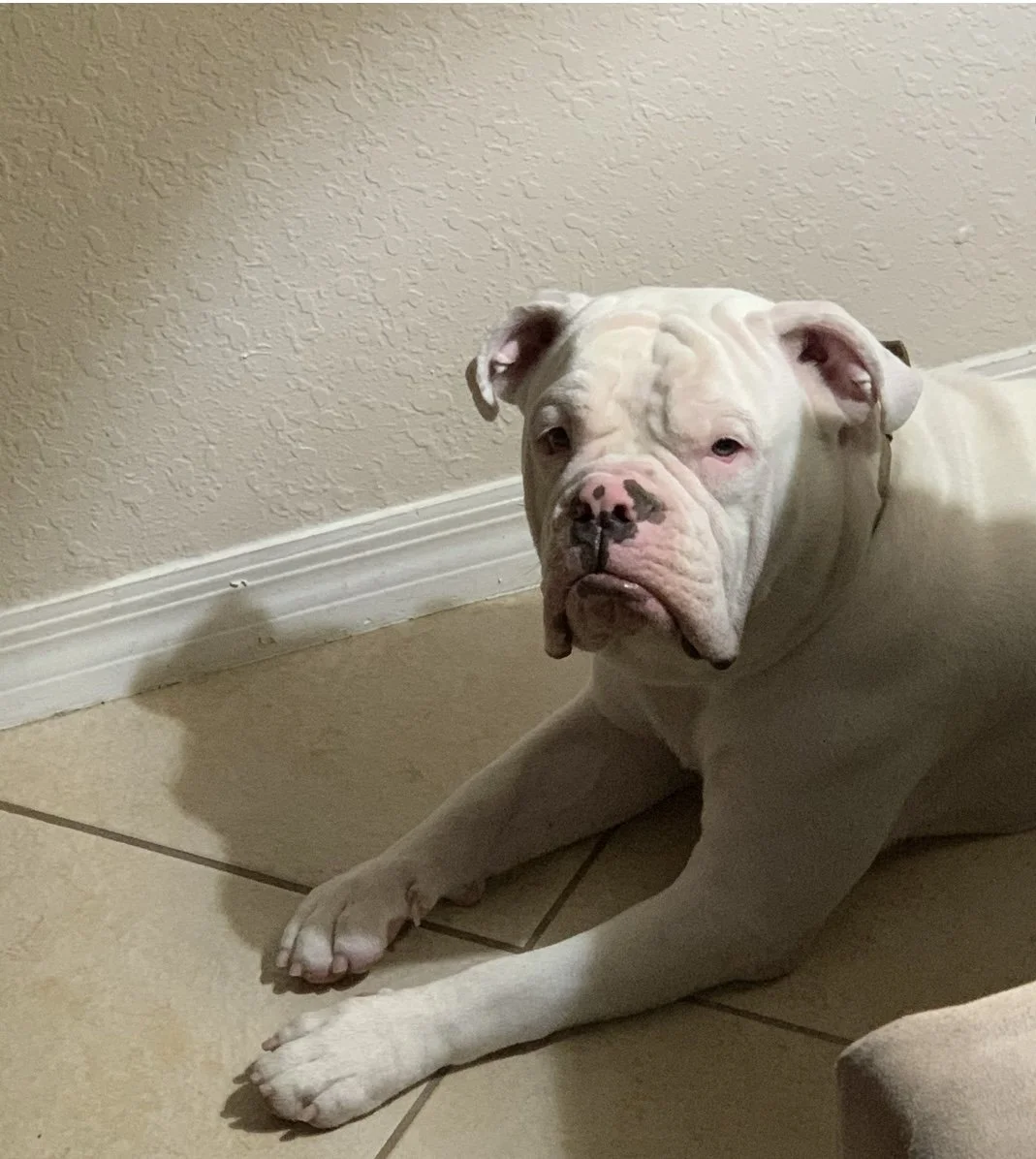
Can a centipede hurt a dog? Yes, potentially. Centipedes are venomous predatory arthropods. If a dog paws at, bites, or mouths one, the centipede may defend itself.
Watch for pain, redness, swelling, hives, vomiting, facial swelling, difficulty breathing, weakness, or collapse.
But finding a centipede indoors also raises another question: what is your home providing that makes the centipede want to be there?
Tyson Found Something on the Floor
I was watching the news when Tyson suddenly jumped up and ran toward the wall.
If you live with a dog, you probably know the look. Their whole body changes when they notice something before you do.
Tyson started sniffing along the floor. A few seconds later, I saw a centipede running away from him.
Now I had two problems.
I needed to keep track of the centipede, and I needed to convince Tyson that he did not need to personally investigate it.
Tyson had already entered hunt mode.
I eventually killed the centipede. Then I noticed Tyson rubbing his face.
That got my attention immediately.
I checked him. I couldn't see an obvious puncture. I didn't see swelling. His breathing was normal, and he was acting like himself.
Tyson has dealt with allergies before, so I wasn't going to assume everything was fine simply because I couldn't see anything.
I watched him closely.
Thankfully, nothing developed. Tyson was fine.
I was the one left with questions.
Are Centipedes Dangerous to Dogs?
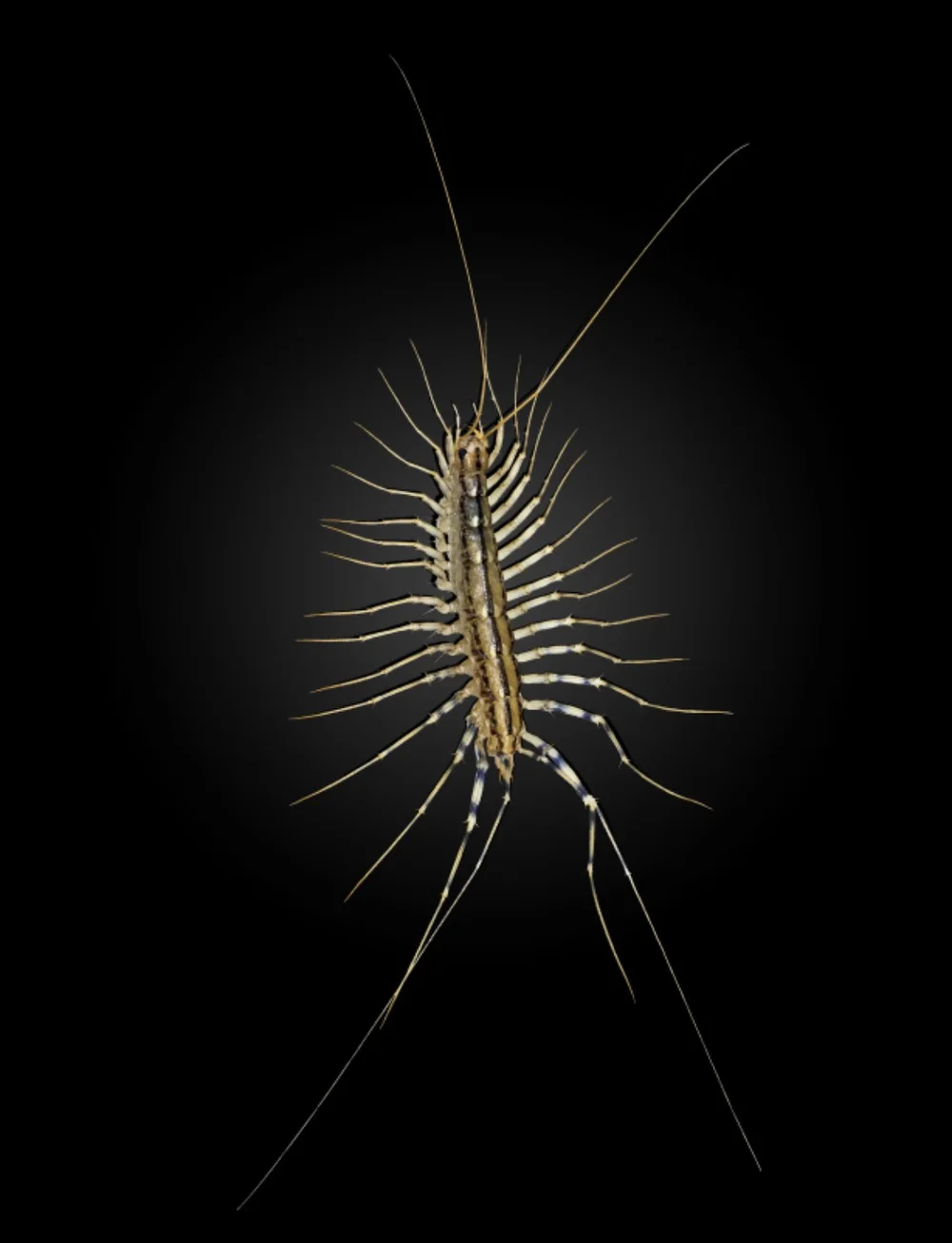
Centipedes aren't insects. They're predatory arthropods belonging to the class Chilopoda.
Their first pair of walking legs evolved into specialized venom-bearing structures called forcipules.
They use those structures to capture prey and can also use them defensively.
That's why a dog's nose, paw, or mouth is exactly where I don't want it when a centipede is racing across the floor.
People normally call this a centipede "bite." Technically, the venom-delivery system is different from an ordinary bite.
For a dog parent, though, the practical point is simple: don't let the dog keep pawing at, grabbing, or mouthing the centipede.
What Happens If My Dog Eats a Centipede?
If your dog ate a centipede—or caught, chewed, or swallowed one—move your dog away and remove any remaining pieces only if you can do so safely.
Dog parents sometimes ask, “Can dogs eat centipedes?” or “Are centipedes poisonous to dogs?” Centipedes are venomous rather than poisonous: they use venom when capturing prey.
For a dog, the immediate concern is that the centipede may defend itself inside the mouth while being caught or chewed. A centipede exposed to household pesticides could present an additional risk.
Watch your dog closely for:
- Excessive drooling or pawing at the mouth
- Redness or swelling around the lips, tongue, or muzzle
- Vomiting, diarrhea, or unusual discomfort
- Hives, weakness, restlessness, or unusual behavior
- Difficulty breathing or rapidly increasing facial swelling
Contact your veterinarian if symptoms develop, if you cannot identify what your dog swallowed, or if you believe the centipede contacted an insecticide.
Difficulty breathing, collapse, severe weakness, or rapidly worsening facial or throat swelling requires emergency veterinary care.
Do not induce vomiting or give Benadryl or another medication unless a veterinarian specifically instructs you to do so.
What Should I Watch For?
Every encounter won't look the same. The species, location of contact, and individual dog can matter.
Instead of trying to predict exactly what will happen, watch the dog in front of you.
- Normal behavior
- No obvious swelling
- Normal breathing
- No vomiting or hives
- Continue monitoring
- Persistent pain
- Redness or swelling
- Facial swelling
- Hives
- Vomiting
- Symptoms getting worse
- Difficulty breathing
- Severe facial or throat swelling
- Collapse
- Significant weakness
- Rapidly worsening reaction
What About Benadryl?
Don't automatically reach for a human medication.
Diphenhydramine is used in veterinary medicine in certain situations, but the appropriate medication and amount depend on the individual dog, the product, other medications, and the symptoms actually happening.
Call your veterinarian and follow their instructions. Difficulty breathing, collapse, or rapidly increasing facial or throat swelling should be treated as an emergency.
Why Was a Centipede in My House?
This became the more interesting question for me.
Killing the centipede I could see solved the immediate problem.
It didn't explain why the centipede was comfortable enough to be running through my house in the first place.
House centipedes are hunters. A home can provide them with some combination of moisture, prey, shelter, and access.
Take Away the Welcome Mat
If your home stops providing what a centipede needs, it becomes a much less useful place to live and hunt.
Does a Centipede Mean I Have Other Bugs?
One centipede doesn't automatically mean your house has an infestation.
Repeated sightings deserve a closer look.
House centipedes prey on other arthropods. Penn State Extension notes that finding them in larger numbers can point toward an available prey population.
In plain language:
The centipede you see may be hunting bugs you don't.
How Do I Keep Centipedes Out?
This is where Integrated Pest Management makes sense. Instead of starting with whatever chemical kills the centipede fastest, start by changing the environment.
Why this approach? EPA pest-management guidance emphasizes removing food, water, and shelter while closing entry points. Penn State gives similar guidance for house centipedes, including reducing prey, humidity, hiding places, and openings.
When Does Pest Control Make Sense?
Finding one house centipede doesn't automatically mean you need an exterminator.
Start with the environment.
Look for moisture. Look for other insects. Look for hiding areas and entry points.
If you're repeatedly finding centipedes or other pests, can't identify what's supporting them, or simply aren't comfortable dealing with the issue yourself, a licensed pest-control professional can inspect the home.
Don't only ask what will kill the centipede. Ask why your house is supporting it.
Should My Dog Have a Defined Place?
Tyson's encounter also made me think about where a dog settles inside the home.
Dogs can lie on household floors. I couldn't find credible evidence supporting a blanket rule that a healthy dog should never lie directly on the floor because of household pests.
What I do believe in is giving a dog a clearly defined Place.
A bed, mat, or training platform gives the dog an area where you can ask them to settle and remain until released. AKC's place-training guidance uses a crate, bed, or mat as the defined station.
It also gives you a specific area that can be inspected and maintained as part of your normal home routine.
What About an Elevated Mark?
An Inspired by Tyson Mark provides a clear training boundary and a defined place to settle.
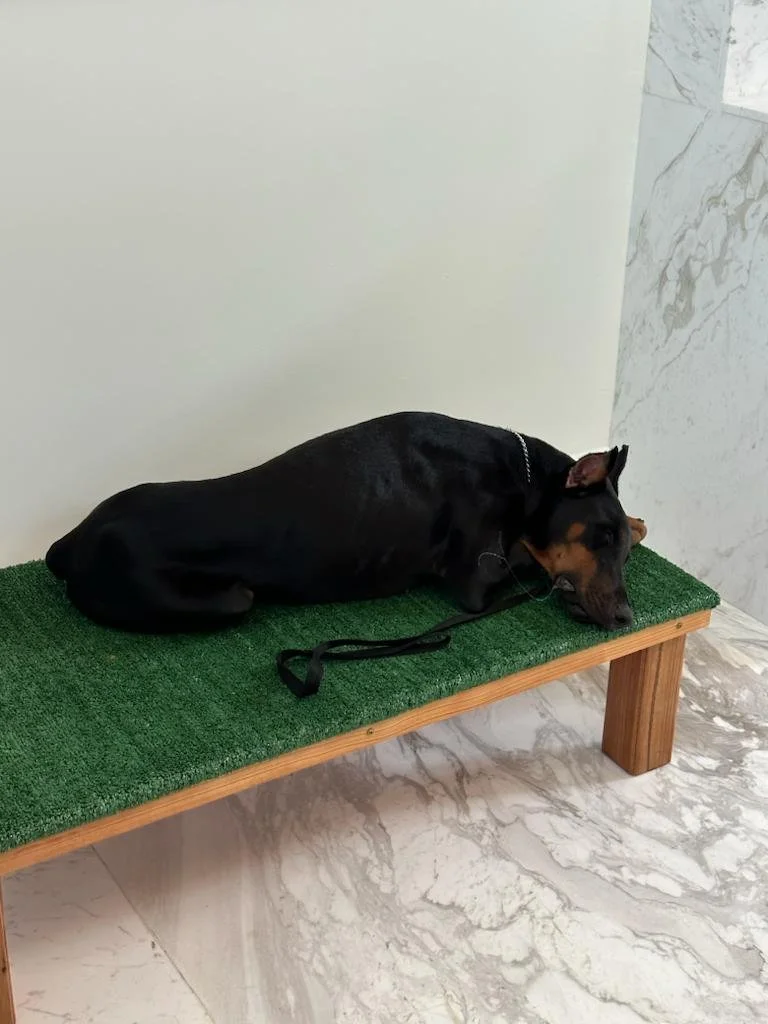
This is the kind of role I see for an elevated Mark inside the home.
The dog has a clear physical boundary. You know where you want the dog to settle, and the dog can learn exactly what area you're referring to when you use the Place cue.
The station is also visible and easy to inspect.
But I want to make one distinction clear:
An elevated platform is not a centipede-proof zone.
Centipedes crawl. So do many other household arthropods.
Elevating the dog doesn't replace fixing leaks, reducing prey insects, removing hiding places, or sealing entry points.
The Mark's role is as a defined training and resting station—not an extermination method.
Tyson's Lesson Was Bigger Than One Centipede
When I originally wrote about this encounter in 2022, the story was simple.
Tyson found a centipede.
I worried that it might have gotten him.
Thankfully, he was fine.
Looking at the story again, I think the bigger lesson is everything happening around the centipede.
Why was it there?
Was there moisture?
Was it finding insects to hunt?
Did it have somewhere protected to hide?
How did it get inside?
And where was Tyson when all of this was happening?
Home safety isn't one single thing.
It's the dog.
It's the house.
It's the environment.
It's the pest you can see—and sometimes the pests you can't.
🐾 Bottom Line
Tyson found one centipede, but that one encounter gave me several things to think about.
If your dog finds a centipede, separate them and watch your dog carefully for symptoms.
Then look around the house.
Reduce excess moisture. Reduce the prey the centipede is hunting. Remove unnecessary hiding places. Close obvious entry points.
Give your dog a defined place to settle if that fits your training routine.
Tyson's encounter ended without a problem. I still don't think he needs a rematch.

Quick Questions About Dogs, Centipedes & Your Home
Tap a question to expand the answer.
Are house centipedes dangerous to dogs?
Centipedes are venomous predatory arthropods and can potentially defend themselves if a dog paws at, bites, or mouths one. Prevent further contact and monitor the dog for pain, swelling, facial swelling, vomiting, hives, difficulty breathing, or other changes.
What should I do if my dog finds a centipede?
Move your dog away from the centipede. Check the face, mouth, paws, and exposed skin. Monitor closely. Contact your veterinarian if concerning symptoms develop.
Why do centipedes come into houses?
Homes can provide centipedes with moisture, protected hiding places, prey, and access through cracks, gaps, and other openings.
Does seeing a centipede mean I have other bugs?
One centipede doesn't prove an infestation. Frequent sightings can indicate that prey arthropods are abundant enough to support them.
What do house centipedes eat?
House centipedes prey on small arthropods, including silverfish, cockroaches, spiders, carpet beetle larvae, and other small invertebrates.
How can I make my house less attractive to centipedes?
Reduce excess moisture, repair leaks, lower humidity, reduce clutter and hiding places, address populations of other insects and spiders, and seal appropriate cracks and entry points.
Should I call a pest-control company?
One sighting doesn't automatically require professional treatment. Repeated sightings, unidentified pest activity, moisture issues, or a problem you aren't comfortable handling yourself are reasonable reasons to consult a licensed pest-control professional.
Should my dog sleep directly on the floor?
There isn't good evidence supporting a blanket rule that healthy dogs must never lie on a household floor. A designated bed, mat, or training platform can still provide a consistent Place where the dog is taught to settle.
Does an elevated dog platform prevent centipede bites?
No. Elevation is not a reliable pest barrier. An elevated platform can provide a clear training boundary and defined resting station, but household pest prevention still requires addressing moisture, prey, shelter, and entry points.
Should I give my dog Benadryl after a suspected bite?
Don't automatically give a human medication. Veterinary treatment depends on the individual dog, symptoms, medical history, and exact medication product. Contact a veterinarian for guidance.
References & Further Reading
- Penn State Extension. House Centipedes .
- U.S. Environmental Protection Agency. Introduction to Integrated Pest Management .
- U.S. Environmental Protection Agency. Smart Pest Control to Protect Your Health .
- Orkin. What Attracts Centipedes Indoors? .
- Undheim E.A.B., Fry B.G., King G.F. Centipede Venom: Recent Discoveries and Current State of Knowledge .
- VCA Animal Hospitals. Insect Bite Reaction in Dogs .
- ASPCA. Emergency Care for Your Pet .
- American Kennel Club. How to Teach Your Dog to Go to Their Place .
Related Articles from Inspired by Tyson

Add Inspired by Tyson as a Preferred Source to help our fresh dog stories appear more often in your Google news and search experience.