How Training Can Reshape Your Dog’s Brain
A dog who ignores a command isn't necessarily refusing to listen. Sometimes he doesn't understand what you want. Sometimes the environment is distracting him. Sometimes your cue sounds different than it did yesterday. Sometimes the reward just isn't worth giving up whatever already has his attention. And sometimes the dog seems to be waiting for an answer to a question people don't always think to ask: why?
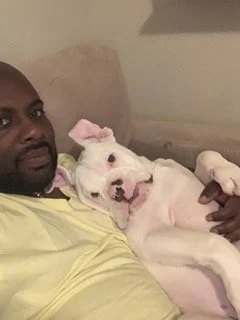
I've learned that lesson over and over with Tyson Gill (O.E.B.), my Olde English Bulldogge. Tyson has the independent streak a lot of people associate with bulldogs. When I ask him to do something, he doesn't always respond like a dog who believes the only fact that matters is that I gave a command. He looks at me and seems to actually weigh what's happening around him before deciding anything. If I call him over, his reaction sometimes looks like a string of questions running through his head — why am I coming, are we going somewhere, is there a problem, are you about to feed me, what am I giving up to come over there.
I obviously can't know that Tyson is literally thinking those exact sentences — that's my own interpretation after years of living and training with him. What I do know is that his behavior changed once I changed what the cue actually meant to him. I made coming to me worthwhile. During recall training, I rewarded him every time he came, praised him, celebrated him — and even now that Tyson knows the cue cold, I still celebrate when he responds. I want him to have a long history of learning that coming to me is always the right call, because one day the reason might be urgent. Tyson might not see the car. He might not see another dog. He might not understand why I suddenly need him beside me. In that moment, I don't want to be negotiating the value of the cue — I want years of built-up experience to answer the question for him.
New canine neuroscience is giving us another way to think about experiences like this. A 2026 study in the Journal of Neuroscience examined brain communication networks in 108 dogs and reported differences associated with both selective breeding and learning history. The researchers also looked at a smaller group of service dogs with similar backgrounds and found more targeted differences tied to intensive training. The findings connect training experience with pathways involved in receiving information and preparing behavioral responses.
How Dogs Learn Commands
When people ask how dogs learn commands, it's tempting to picture a dog simply memorizing a word — "sit" means sit, "come" means come, "down" means lie down. But the actual learning process is more complicated than attaching a dictionary definition to a sound.
Think about everything that happens when you tell your dog to sit. First he has to notice you're communicating at all, and separate your voice from the television, traffic outside, another person talking, a barking dog, the air conditioner, whatever else is competing for his attention. He has to identify the sound or gesture as something familiar, connect it to a behavior he's performed before, and prepare his body to do it. Then something happens afterward — maybe a treat, maybe praise, maybe the leash goes on, maybe the door opens, maybe nothing happens at all. That consequence becomes part of the cue's history. Repeat the process enough times and the dog builds an association among the signal, the behavior, and what follows it. Training isn't really about teaching words. It's about creating predictable patterns.
What the New Dog-Brain Study Examined
The 2026 research looked at MRI data from 108 dogs to investigate how communication-related brain networks differ with breed history and learning. Part of the work compared dogs from modern breeds with dogs representing more ancestral lineages, which matters because humans have selectively bred dogs for very different jobs. A herding dog needs to closely track human direction and the movement of livestock. A retriever needs to follow a handler's instruction at a distance. A livestock guardian is expected to make more independent decisions. A scent hound stays locked onto information coming from its nose. A companion breed has generations of selection built more around simply living close to people.
Those histories shape physical traits and behavioral tendencies, and the study suggests they may also show up in communication-related brain networks — the researchers found broader differences among modern breeds in networks involved in processing communication and coordinating responses. That doesn't mean one breed understands humans and another doesn't. It means breed history may shape part of the neurological starting point. Then the researchers looked at training itself.
Why the Service-Dog Group Matters
Twenty-eight service dogs gave the researchers an especially useful comparison group, since they shared more similar genetic and early-life backgrounds than a random group of household pets would. Some completed intensive service-dog training. Others left the program for reasons that weren't primarily behavioral, including health-related ones. That let the researchers look at training itself while reducing a lot of the usual noise that makes dog comparisons hard.
Imagine comparing a highly trained Labrador against an unrelated family dog of a different breed. If their brains differ, what actually caused it — breed, genetics, early socialization, living environment, daily exercise, training, the owner's own behavior? Probably some mix of all of it. A more closely matched group makes the training question much easier to isolate.
The service dogs that completed intensive training showed more focused differences in sensorimotor and associative pathways — the systems involved in processing information and preparing actions. Earlier fMRI work with assistance dogs has also shown that brain responses to reward-related hand signals can be associated with later training success, which shows how neural responses and real-world working outcomes can connect.
Across the broader 2026 study, certain connectivity patterns were also associated with higher trainability ratings — though that doesn't mean an MRI can predict whether your dog will turn out perfectly obedient. Trainability isn't one switch. It's the product of genetics, health, motivation, stress, prior experience, the training environment, and the person doing the training, all layered together.
Breed history
inherited tendencies
IN FRONT
OF YOU
Training
environment
repetition
Does Dog Training Change the Brain?
So does dog training actually change the brain? The careful answer is that training is a learning experience, and learning is associated with changes in how brain systems function and connect. The new dog study found differences tied to intensive training, but it doesn't prove that every dog develops identical brain changes from every training method — and that distinction matters. It would be easy to turn research like this into a headline claiming scientists proved that teaching "sit" rewires your dog's brain. That goes too far.
What the research actually supports is more nuanced: inherited traits shape part of how canine communication systems are organized, and experience continues shaping how those systems get used, with training being one important form of that experience. That tracks with what training actually requires — the dog repeatedly receives information, repeatedly chooses or performs an action, repeatedly experiences the consequence, and over time that association gets stronger. The dog becomes faster, more reliable, or more flexible in how he responds.
Tyson Gill Taught Me to Ask "Why?"
My approach to training Tyson changed once I stopped treating his hesitation as a personal challenge. Olde English Bulldogges can be very independent, and Tyson doesn't respond well to the idea that he should do something just because someone wants to prove they can make him do it. What actually works for us is communication.
When I say Tyson needs to understand the "why," I don't mean he understands human explanations the way another person would. I mean the behavior needs a history that makes sense to him — there has to be a real reason the response is worth performing. Food makes that easy with Tyson, since he's highly food motivated. If I mark the correct behavior and reward it, I'm communicating something fast and clear: yes, that was the choice I wanted. That reward gives the behavior value and makes the next repetition more likely. For Tyson, food is often the clearest way to answer the "why."
Why Recall Was Hard for Tyson
Recall is one of my best examples. I'd call Tyson — "come" — and sometimes he'd just look at me. If he was comfortable where he was, or something else had grabbed his interest, why would he leave it? From my side, that was the actual problem: the cue didn't have enough history behind it yet. So I built one. When Tyson came, something good happened — a treat, praise, attention, celebration. I wanted him to learn he doesn't need to know the reason before making the choice; the cue itself predicts a good outcome. That's why I still celebrate recall today. Training may technically be "complete," but I don't want that positive history to fade. Every correct response is another chance to reinforce what the cue actually means.
Every Cue Develops a Reputation
Picture two dogs hearing the exact same word: "come." Dog A usually comes and gets food, praise, play, or affection. Dog B usually hears "come" right before something fun ends — come inside, come leave the park, come stop sniffing, come stop playing, come get your nails trimmed. Both dogs hear the same sound, but the emotional and practical history attached to it can be completely different. That's part of why training consistency matters so much. Your dog isn't just learning vocabulary. He's learning what the vocabulary predicts.
Rewards Are Information
I think some owners resist treats because they feel like the dog should obey without needing one. But when a dog is learning, a good reward does more than just purchase a behavior — it provides information. The dog does something, you mark it immediately, he gets something he actually values, and the whole sequence becomes clearer to him.
The American Veterinary Society of Animal Behavior currently recommends reward-based methods for dog training and behavior modification and advises against aversive methods. That doesn't mean reward-based training has no rules or that the dog decides everything. It means you teach the behavior you want in a way that makes the correct answer understandable and worth choosing.
Sometimes I Am the Confusing One
One of the biggest lessons Tyson has taught me is that the dog isn't always the one making the mistake. Sometimes I am. A good example is the phrase "sit down." It sounds completely normal in everyday conversation, but I trained Tyson to treat sit and down as separate cues — sit means put your rear on the ground or platform, down means lie down. So when I say "sit down," what did I actually just ask him to do? Sometimes Tyson sits and then just looks at me, because from his side I may have just given him two separate commands. That's not stubbornness. That's confusion I created.
My accent matters. My tone matters. How fast I say the word matters. My body language matters. If I trained one version of a cue and suddenly deliver something different, I can't automatically assume the dog should understand anyway. Before I say "he knows better," I've learned to ask myself a different question first: was I actually as clear as I thought I was?
Mixed Signals Create Training Problems
Dog owners create inconsistent systems all the time without realizing it. One person says "down" to mean lie down. Another says "down" when the dog jumps on the couch. Someone else says "off." Another says "get down." One person lets the dog jump up to greet them; another gets annoyed when he does the exact same thing. One person feeds from the table; another punishes begging. Then the whole family concludes the dog doesn't listen. From the dog's side, the rules may just be unreliable. Dogs are very good at noticing patterns — including ones we never meant to create. The more consistent we are, the easier the whole system is for the dog to understand.
Timing Changes the Message
Timing is another place where human intention and canine learning can drift apart. Say I tell Tyson to sit. He sits. I reach into my pocket. He stands. Then I hand him the treat. What did I actually reward? In my head, I rewarded the sit — but the dog only experiences the sequence of events as they happened. That's one reason marker words or clickers are useful: the marker identifies the exact instant the dog got it right. Sit, "yes," reward. The dog gets more precise information, and that precision matters more as training gets harder.
Why Tyson Responds Faster Indoors
Tyson responds to cues noticeably faster inside the house than outside — dramatically faster, honestly. That makes sense once I actually watch him. Inside, he knows the environment: the smells, the normal sounds, who belongs there, the furniture, the routine. Outside, his head's on a swivel — a car passes, someone walks by, a dog barks, something moves in the distance, he catches a scent from an animal that passed through earlier, he hears a noise I don't even register. His attention is split across all of it. Watching him, it's like his behavior is asking what's going on, where did that come from, how close is it, do I need to pay attention, what are we even supposed to be doing right now. The command hasn't changed. The difficulty has.
Inside the House
- Familiar smells
- Predictable sounds
- Known people
- Routine environment
- Fewer competing signals
Outside the House
- Cars and people
- Other dogs
- Moving objects
- Unfamiliar smells
- More environmental information
Knowing a Command Is Not the Same as Generalizing It
This is where owners often get frustrated. The dog sits perfectly in the kitchen, then you walk outside and suddenly he seems to have forgotten the word entirely. The more likely explanation is that he hasn't yet learned to perform the behavior reliably in that new environment. Generalization is a real, important part of canine learning — research shows dogs can use different perceptual features when generalizing what they've learned, and that the context learning happens in can shape how they apply it later.
That's why training should get harder gradually: start in the easiest environment, then change one variable at a time. Practice in another room, move to the backyard, add distance, add duration, introduce a mild distraction, go somewhere unfamiliar, practice at a safe distance from another dog. Don't assume that success in one environment automatically transfers to every other one.
Why "Down" Is Harder Outside
Tyson gives me another good example here. Outside, when I ask him to lie down, he'll sometimes pause and look at me first. I can't know exactly what he's thinking, but I can watch his behavior. He's more alert outside in general. Standing gives him maximum freedom to watch and react; sitting gives up some of that mobility; lying down gives up even more. So asking for "down" in an active environment is asking for more than the same cue means in our living room. From my perspective, when Tyson lies down outside, he's trusting me to handle more of what's going on around us — I think of it as "I'm responsible for security, you can follow the cue." That's my own read on our relationship, not a scientific claim about what every dog thinks. But the practical lesson holds up broadly: a behavior can get harder depending purely on the environment around it.
Distance Is Part of Training
Another dog barking gives me a good example of this. If that dog is far enough away, Tyson might look in that direction and then just move on — that's progress. He noticed it, evaluated it, decided it didn't need more attention. If that same dog moves closer, the situation changes. Tyson gets more alert, and his responsiveness to me can drop. I've learned not to pretend a dog three feet away is the same distraction as a dog thirty feet away — it isn't. Distance changes difficulty. If your dog can stay calm at 40 feet, work there. Then try 35. Then 30. Don't rush straight into the hardest version of the exercise and then punish the dog for failing it.
Give Dogs Time to Process
Tyson often pauses before responding, looking at me for a few seconds. I've learned not to fill every one of those pauses with another command. Owners do this constantly — "sit," "sit," "sit," "sit!" — and what actually happened is the cue accidentally became the fourth "sit" delivered in an irritated voice. Instead, say it once, wait, and watch the dog. If he responds, mark it. If he doesn't, look at the lesson itself instead of him — did something distract him, are you too far away, is the reward actually worth the effort right now? That pause gives both sides information.
More Repetitions Are Not Always Better
People often assume twenty repetitions must teach more than five. Not necessarily — twenty bad repetitions can teach the wrong pattern just as easily, while five clean ones can be more useful. Quality matters more than volume. Research on pet dogs has also found that training experience doesn't simply make dogs universally better at every cognitive task; different types and amounts of training relate differently to inhibitory control and other measures.
That fits what experienced owners already see in real life — training is specific. A dog can be exceptional at one job and struggle with another. One dog might have excellent obedience and still get distracted around prey; another might have incredible scent skills and zero interest in repetitive obedience drills. The goal isn't turning every dog into the same dog. It's improving communication and reliability for the life that specific dog actually lives.
Short Training Sessions Can Work
Training doesn't have to mean an hour-long formal session. Five focused repetitions can be enough, and you can build training right into the day — ask for a sit before opening the door, practice place while cooking dinner, use recall from another room, ask for a brief stay before putting the food bowl down, reward calm behavior while watching TV, practice leash manners on a short stretch of the walk. Those moments add up. The dog is learning through repetition whether or not you ever call it "training."
Your Dog Is Learning All Day
This might be the most important point for owners. Training doesn't start when the treat pouch comes out and stop when it goes away — dogs are constantly learning what actually works. If jumping gets attention, jumping worked. If barking makes you walk over, barking worked. If pulling hard enough gets him to the interesting smell, pulling worked. If sitting quietly makes the door open, sitting worked. Consequences are teaching the dog all day long, which means consistency outside formal training sessions matters just as much as consistency inside them.
Tyson Communicates With Me Too
Training isn't one-way. Tyson has trained me plenty too. If I'm sitting in his preferred spot on the couch, he'll walk over and nudge me — message received. If his bowl is empty, he goes and puts his face near it. If he wants to go outside, he sits near the door, and if I don't notice fast enough, he comes back and nudges me until I stand up and he heads for the door. He's built behaviors that reliably communicate something to me, and they work because I respond to them.
Think about how much dogs actually learn about us — what keys mean, what shoes mean, what the refrigerator means, the difference between you walking casually toward the door and you actually getting ready to leave the house. They pick up on routines we don't even realize we have. We spend a lot of time talking about how dogs understand our commands, but it's just as interesting that dogs are constantly learning how to command our attention right back.
Dogs Can Learn Human Words—But Not Like We Do
Research on dogs' responses to spoken labels shows a lot of individual variation. Some dogs become exceptionally skilled at learning object names, while most dogs never develop large vocabularies at that level. Other research shows that sound quality and the way words are delivered can affect how well dogs recognize familiar verbal information.
That's another reason I pay attention to how I actually deliver cues. The human brain is very good at treating slightly different pronunciations as the same word — a dog doesn't always make that jump as easily. Your voice, timing, and context are all part of the cue, whether you mean them to be or not.
Food Works for Tyson
Tyson is motivated by food, plain and simple. He also loves play, and his prey drive can be strong, but food gives me an efficient way to reinforce structured training. That doesn't mean every dog is wired the same way — some dogs will work hard for a ball, some want tug, some want praise, some just want access to the environment. A chance to sniff can be a reward. Going outside can be a reward. Being released to play can be a reward.
Platform Training Gives Tyson Clarity
Platforms are a big part of how I work with Tyson. The most practical advantage is that a platform gives him a clear physical destination. The floor is vague — "go over there" could mean two feet to the left or three feet forward, who knows. A platform has boundaries. Tyson can see it, feel where his body is relative to it, and I can immediately tell when he's reached the right spot. That cuts out a lot of ambiguity.
The MARK platform also fits naturally into how Tyson and I already live together. I sit on elevated furniture. He's part of my household. Giving him his own defined elevated place feels respectful to me — that's my personal read on our relationship, not a claim that science shows dogs universally view elevated furniture as equality with humans. The actual training advantage is more concrete than that: the platform creates a target, and a defined target makes communication easier.
A Platform Does Not Train the Dog
The platform itself isn't magic. You still need the basic sequence — cue, behavior, marker, reward, repetition. Over time, the platform can become strongly associated with things like place, stay, settling, and impulse control. It gives the dog a clear answer to the question of exactly where you want him, which becomes especially useful when you're training around distractions.
5 Ways Platforms Improve Dog Training
Inspired by Tyson MARK Training Platforms
Reward-Based Training Still Has Boundaries
Reward-based training sometimes gets described as if it means never telling a dog no or never having expectations. That's not accurate. Dogs still need boundaries and structure, and some behaviors just can't be allowed for safety reasons. The real difference is that effective training does more than suppress the behavior you dislike — it teaches the alternative you actually want. If a dog jumps on visitors, what should he do instead? Sit? Go to place? Stay behind a gate? Bring a toy? Settle on a platform? The clearer the desired behavior is, the easier it becomes to actually teach.
Puppies Are Building Their Adult Habits
When you bring home a puppy — especially a large, strong, or independent breed — the work you do early on matters. The puppy is practicing behaviors that turn into adult habits. If pulling works for six months, you've now got six months of pulling history to undo. If recall gets ignored for a year, you'll have to build value into that cue later, from scratch. If calm behavior gets rewarded from puppyhood, you're building a completely different history. That doesn't mean adult dogs can't learn — they absolutely can — but an adult dog comes with an existing library of experience, and you may need more patience because you're teaching new patterns on top of old ones.
Adult Dogs Still Learn
A dog's ability to learn doesn't disappear when puppyhood ends. Adults can learn new cues, improve impulse control, change routines, form new associations, and become more reliable. The process might take more repetition or more careful management depending on the dog's history. Whether you train during everyday life, hire a qualified trainer, or do both, the important part is consistency — training has to actually become part of how you live with the dog.
Do Not Confuse Fear With Stubbornness
There's another situation owners need to watch for. A dog that suddenly stops responding may not be challenging you at all — fear, pain, illness, or stress can change behavior fast. A dog who normally lies down easily but suddenly resists might be uncomfortable. A dog who becomes unusually reactive might be dealing with something beyond ordinary obedience. Persistent fear, aggression, or sudden behavior changes deserve professional attention. Training matters, but it's not a substitute for veterinary care when a medical problem might be driving the behavior.
When the Dog Struggles, Change the Lesson
This might be the biggest lesson Tyson has taught me. When the dog struggles, don't immediately blame the learner — look at the lesson instead. Make the task smaller. Make the cue clearer. Reduce the distraction. Increase the distance. Improve the reward. Slow down. Give the dog a real chance to succeed, then build from there.
The Owner Has to Learn Too
The brain research focuses on dogs, but dog training really has two students. The dog learns. The person learns too. Tyson has taught me to constantly check my own behavior first. Was I actually clear? Did the environment just get too hard, or did I pick the wrong reward? Is he tired, uncomfortable, or trying to tell me something I'm ignoring? Those questions improve training because they replace anger with actual information.
What Other Dog Studies Tell Us
The new brain findings don't mean more training automatically makes a dog better at every mental task — other canine research paints a more complicated picture. Studies comparing breeds have found differences in traits like social cognition, inhibitory control, problem-solving, and responses to human communication, but those differences aren't universal across every cognitive ability, and researchers caution that breed history, environment, and human-dog interaction can all overlap.
Training shows the same kind of complexity. Research involving pet dogs trained in obedience, agility, and scent work found that more training experience didn't improve performance across every cognitive test — scent-work dogs showed stronger inhibitory-control characteristics on some measures, but simply being more highly trained didn't make every dog better at everything. Another study comparing highly trained sport dogs with dogs that had little formal training similarly found that trained dogs didn't automatically show better motor self-control.
What Supports the Idea
Brain-imaging studies have identified training-related differences and plasticity in communication and working-dog networks.
What Keeps It in Perspective
More training does not automatically improve every cognitive skill or make every dog universally better at every task.
None of that necessarily conflicts with research showing brain differences after intensive training — the studies are just measuring different things. A change in communication-related brain connectivity doesn't mean a dog becomes universally "smarter." What it points toward is something more specific: what a dog practices may strengthen particular skills and communication systems without improving every form of cognition.
That distinction matters for family dogs. Teaching recall strengthens recall. Practicing place improves a dog's ability to settle in a defined location. Scent work exercises a different set of abilities entirely. Training should be judged by what you're actually trying to teach the individual dog, not by whether it turns him into a better performer at everything.
What the Research Does Not Prove
Brain research makes great headlines, which is exactly why the limitations matter. The 2026 study involved 108 dogs, but the intensive service-dog comparison was a much smaller slice of that group, and service dogs live through structured breeding, socialization, and training programs that can differ a lot from a typical household dog's experience. The study found associations between breed history, training, and brain connectivity — it doesn't show that every difference came entirely from training, doesn't prove one training technique is neurologically superior, and doesn't tell owners exactly how many minutes a day they should be training. It doesn't mean every dog learns at the same speed, and it doesn't mean a highly trained dog will automatically outperform another dog on every type of cognitive task. And it doesn't erase breed differences either.
Breed Is a Starting Point, Not a Verdict
I know Tyson's breed tendencies. I respect them. I don't ignore them. But I also don't let "he's a bulldog" become an excuse for every behavior. Calling a dog stubborn can end the conversation right there. I'd rather it start one. Why is he hesitating? Does the reward actually mean something to him, or did I move too fast and lose him? Those are the kinds of questions that produce real solutions. "He's stubborn" doesn't produce anything. Breed can help you understand tendencies. It shouldn't stop you from actually learning the individual dog in front of you.
What Tyson's Training Has Taught Me
Tyson has taught me that communication matters more than control. A pause isn't automatically refusal, and a command he knows cold at home can suddenly get harder somewhere new — usually because I wasn't as clear as I thought I was. He's shown me that a good reward gives real information, and that he communicates back just as much as I communicate to him. But the biggest lesson is probably that patience isn't optional. If you choose a strong, independent dog, you have to be ready to put that work in — starting when he's young, continuing once he's grown, and never really ending, because the relationship itself keeps changing too.
So, How Do Dogs Learn Commands?
Dogs learn commands through repeated associations among cues, actions, context, and consequences. The word matters, but so does your tone, your timing, your body language, the environment, the dog's emotional state, the reward, and his previous experience with that specific cue. Training strengthens those associations through repetition, and practicing in different environments helps the dog use the behavior more reliably everywhere else. What looks like a simple command is actually the product of a much bigger communication system — which is exactly what makes the new brain research so interesting. It gives us a glimpse of the biological systems behind something dog owners already experience every day: learning leaves a history.
Can Training Reshape Your Dog's Brain?
The emerging research suggests training experience is associated with differences in canine brain communication pathways. That doesn't hand us a shortcut. There's no scan that replaces patience, no brain hack that creates perfect recall overnight, no breed that removes the need for training. What we do have is something more useful: evidence that experience matters.
Your dog brings genetics into every training session, along with breed tendencies, prior experience, motivation, and whatever happened five minutes before you asked him to work. And then you bring something too — your timing, your patience, your consistency, your communication, your relationship with the dog. Those things shape what happens next.
Train the Dog Standing in Front of You
Use one clear cue. Give the dog time to respond. Reward the behavior you want repeated. Practice where the dog can actually succeed. Add difficulty gradually. Don't confuse distraction with disobedience, and don't confuse fear with stubbornness. Don't assume that because the dog succeeded once, he understands the behavior everywhere. Pay attention to what motivates him, and pay attention to what he's telling you. And when a lesson keeps failing, change the lesson before you blame the learner.
Tyson Gill didn't learn recall because I proved I could dominate his independence. He learned because I gave "come" a history. Coming to me became something worth doing. I reinforced it, I celebrated it, I made it clear — and years later, I still do.
And if training really can reshape the way a dog's brain processes communication, then every clear, patient, consistent interaction matters a little more than we may have realized.
Sources
- Journal of Neuroscience — Selection and Learning Shape Communication Networks in the Dog Brain
- American Veterinary Society of Animal Behavior — Humane Dog Training Position Statement
- Impact of Training Discipline and Experience on Inhibitory Control and Cognitive Performance in Pet Dogs
- Working-dog brain networks and training-related plasticity
- Scientific Reports — Functional MRI in Awake Dogs Predicts Suitability for Assistance Work