Before guests arrive, check what your dog can reach—from medication and bags to plants and food—and make a calm safety plan.
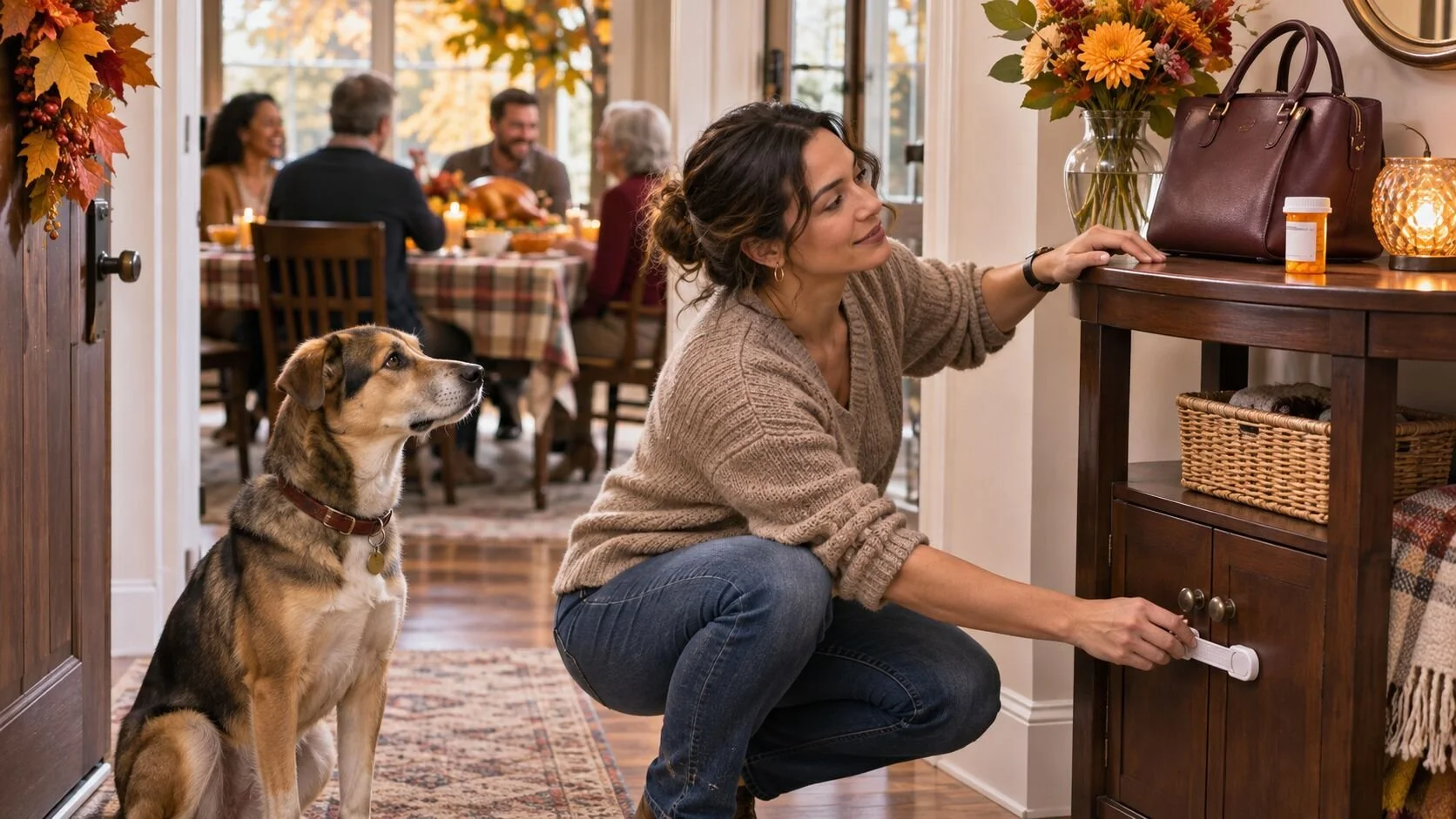
You’ve set the Thanksgiving table. Now look at the room from your dog’s side of it. A ribbon that slipped under a chair, a guest’s open bag or a cord dangling from a centerpiece can all be within reach before anyone sits down. Walk through the rooms your dog can get into while you still have time to move things, and remember to check the routes between those rooms too.
This is a decorations and guest-space check, separate from the food risks in our Thanksgiving kitchen coverage. ASPCA holiday guidance identifies wires, batteries, breakable ornaments and candles as hazards. The American Veterinary Medical Association also advises keeping pets away from table decorations and making a quiet space available for an animal who is nervous around visitors.
Start at dog height
Take a look at the low tables and the floor first. Where does the cord from that lighted decoration go? Could your dog reach the battery pack from the couch? Is a candle sitting where one good tail wag could knock it over? If a fragile decoration falls, would it land where your dog could grab the broken pieces before anyone notices?
The ASPCA warns that chewing an electrical wire can cause a serious shock. A punctured battery can burn a pet’s mouth and esophagus, and pieces of a breakable ornament can injure the mouth or digestive tract. Those are reasons to move the item itself, not just hope a dog ignores it. Put cords and battery packs out of reach, choose a safer position for fragile decorations, and keep a candle where a dog cannot knock it over. Do not leave a burning candle unattended.
A decoration that looks harmless in your hand may be easy to swallow when it is on the floor. Ribbons, tinsel and other string-like material deserve particular care. The ASPCA says swallowed tinsel can obstruct the digestive tract and may require surgery. We cannot tell from appearance alone whether a swallowed object will pass. If you see or suspect an ingestion, call your veterinarian for advice instead of waiting for a holiday gathering to end.
Remember the guests’ belongings
Someone coming in with an overnight bag or a purse might put it down without thinking about what your dog likes to investigate. The ASPCA recommends asking visitors to store medicines in a closed cabinet rather than leaving them in a bag or suitcase. Set aside a place for small gifts and other tempting items while you’re at it. A place you can point to at the door works better than a warning everyone has to remember.
Wrapped gifts are not automatically safe on the floor. A dog may smell food inside a package even when people cannot see what is under the paper. Move food gifts and candy away from areas the dog can access. The point is to make the safe choice easy for your guests, too: a shelf or closed room works better than a warning everyone has to remember.
Even guests who have dogs at home won’t know your dog’s habits or how your house is laid out. Tell people where bags go, which space is the dog’s retreat and who’s watching the door. If children are visiting, ask adults to supervise their time with the dog and leave the quiet space alone. It’s much easier to agree on the plan while people are arriving than to explain it over a room full of conversation.
Table greenery can be another invitation. AVMA advises keeping pets away from plants and table decorations. The ASPCA notes that holly and mistletoe can make pets sick if eaten, while poinsettias can cause gastrointestinal irritation. There is no need to guess whether an unfamiliar arrangement is safe. Put it where your dog cannot reach it and ask your veterinarian or animal poison control if an exposure occurs.
Make a plan for the busiest hour
The front door may open repeatedly as people come in, and the room can get louder than a normal afternoon. AVMA recommends a separate room or crate with a favorite toy for a dog that becomes nervous around visitors. Set that space up before the rush rather than asking the dog to settle in the middle of it. Check that the space has what your dog normally needs and that guests know not to open it casually.
Give someone a specific job before it gets busy. Who’s watching the dog when the front door opens? Who’s picking up things that hit the floor? Who’s checking that the gate latched? A quiet room helps a dog take a break, but it doesn’t replace supervision when your dog is back with the group.
Give the room one more look when guests start to leave. After a long meal, it’s easy to miss the ribbon that came off a gift or a used battery taken out of a decoration. Clear the floor and low tables before the dog comes back in. If someone else has been watching your dog, make sure they know which doors and gates should stay closed while everyone is carrying bags out.
If something happens
If you suspect your dog chewed an electrical cord, swallowed a decoration, came into contact with a battery or got into a potentially toxic plant or substance, call your veterinarian promptly. Prevent further exposure when you can do so safely. ASPCA Animal Poison Control is another resource at (888) 426-4435. Tell the veterinary team what your dog may have encountered, when it happened and what you’ve noticed. A photo or the original packaging can help, but don’t wait to make the call while you look for it.
Do not assume a dog is fine because the party continues or because you cannot see a missing piece. The right response depends on the item, the amount, the dog and the symptoms. A veterinarian can tell you whether an immediate examination is needed. This article cannot diagnose an exposure or give a home treatment.
Before the doorbell starts, check at dog height, move cords and batteries, and secure candles and breakables. Give guests a place for their things and give your dog a quiet place to go. Then make one last pass during cleanup. The point is to set up the room so you don’t have to notice every dropped ribbon or open bag in the middle of dinner.
Sources for editorial verification
ASPCA, Holiday Safety Tips: https://www.aspca.org/pet-care/general-pet-care/holiday-safety-tips
American Veterinary Medical Association, Thanksgiving pet safety: https://www.avma.org/resources/pet-owners/petcare/thanksgiving-pet-safety
More stories
 Daily Doggy NewsPreparing Your Dog for a Holiday Boarding Stay
 Daily Doggy NewsThanksgiving Visitors and Dogs: A Practical Safety Plan
 Latest Daily Doggy NewsShiitake Research Does Not Prove Longer Lives
 Canine JournalKennel Cough: What Dog Owners Should Know
 Tyson’s LifeThe Boss Has Four Legs
 It MattersShould Ear Cropping Still Be Legal?