
Rabies Vaccine for Dogs: Benefits & Risks
Bhutan's rabies milestone shows what coordinated prevention can accomplish. Research on vaccine reactions also raises questions about individual risk, ingredients, and how owners should approach their dog's next vaccination.

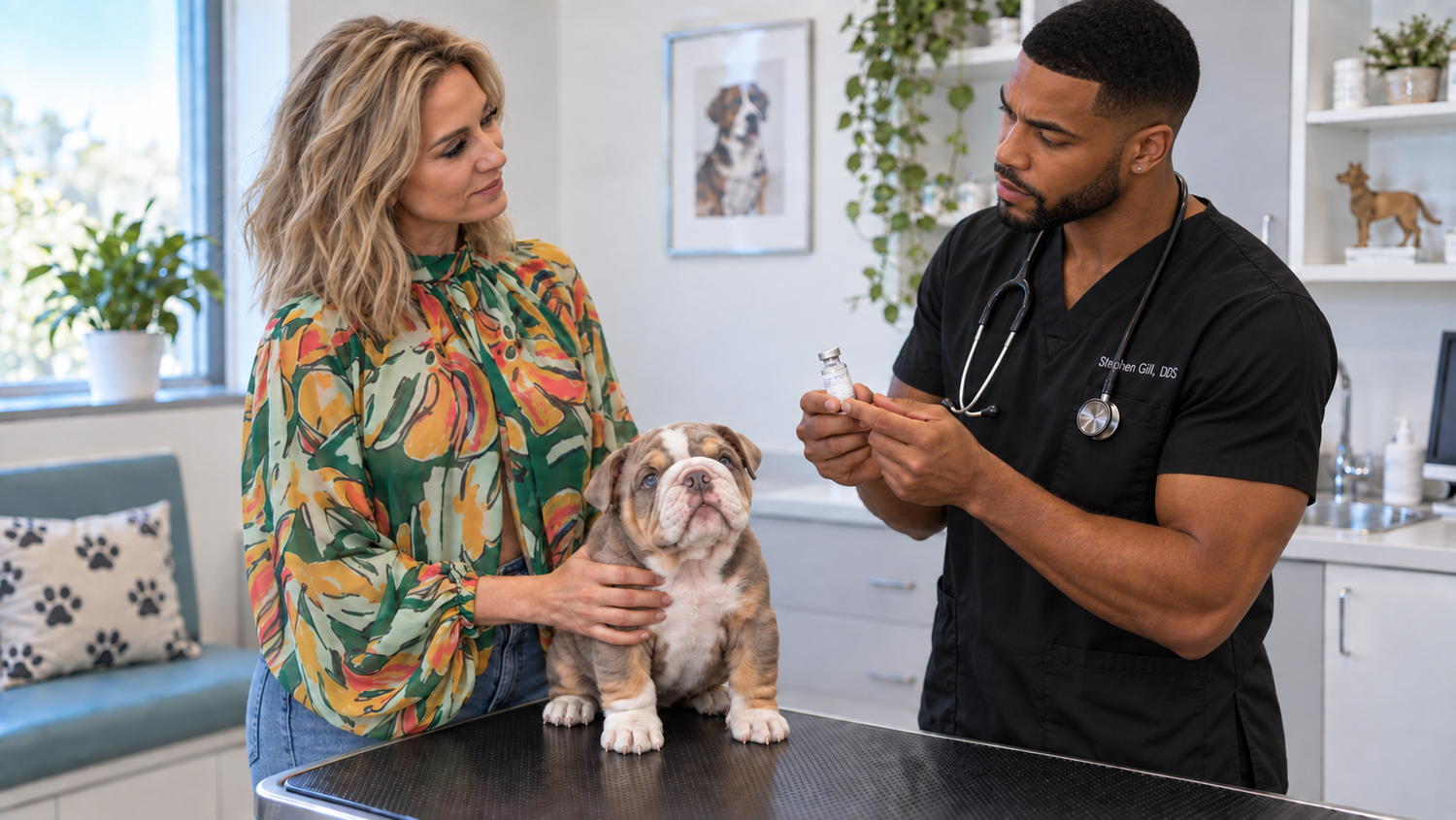
Bhutan's milestone brings vaccination into focus
On September 4, 2026, the World Health Organization validated Bhutan's elimination of dog-transmitted human rabies as a public-health problem. Bhutan became the first country in WHO's South-East Asia Region to achieve that recognition. It has recorded no human deaths from dog-mediated rabies since June 2023.
Dog vaccination was part of a broader effort. Bhutan also built out disease surveillance and expanded access to preventive treatment for people exposed to rabies, alongside managing the dog population. The milestone does not mean every source of rabies has disappeared or that prevention can stop. WHO's announcement
For owners considering a rabies vaccine for dogs, the news brings a familiar concern into focus: how do we protect against a deadly infection while taking vaccine reactions seriously?
Owners deserve an explanation of the benefits and the risks, including what researchers know about vaccine ingredients and what remains unresolved.
The short answer
Dog vaccination is an established tool for preventing rabies transmission. Vaccine reactions also occur, and some ingredients have been implicated in allergic responses in susceptible dogs. The research reviewed here does not establish that vaccine ingredients generally cause more harm than vaccination prevents.
That conclusion leaves room for individual concerns. A dog with a previous reaction needs a conversation with its veterinarian about which product to use and what precautions make sense for that animal. WHO rabies guidance, AAHA vaccination guidance
Why vaccinating dogs protects people, too
Rabies spreads through infected saliva, most often through bites. Dogs account for up to 99% of human rabies transmission globally, although the sources of infection vary by region.
WHO identifies mass dog vaccination as the most cost-effective strategy for preventing human rabies because it interrupts transmission at its source. Preventing infection in dogs reduces opportunities for infected animals to expose people.
Human medical care remains essential. Someone bitten or scratched by a potentially rabid animal needs prompt assessment for post-exposure treatment. A community vaccination programme does not replace care for an individual exposure. Once clinical rabies develops, the disease is almost always fatal. WHO rabies fact sheet
Bhutan's achievement is a current example of prevention working across veterinary and human healthcare, not a verdict on the safety of any particular vaccine formulation.
Rabies vaccine side effects in dogs: what the research measures
A 2023 study examined records from 4,654,187 dogs vaccinated during approximately 16.1 million visits to 1,119 veterinary hospitals. Researchers searched for possible adverse events recorded within three days of vaccination.
Events were recorded after 31,197 visits: approximately 19.4 per 10,000 vaccination visits, or 0.19%. This was a rate of recorded possible adverse events, not a death rate.
Smaller dogs generally had higher rates, particularly dogs weighing five kilograms or less. Recorded rates increased as the number of vaccines administered at a visit rose from one to four. French Bulldogs and Dachshunds had the highest breed-associated rates.
The findings can help veterinarians discuss risk with owners, but the three-day window only counts events close to the shot. The study identifies associations; it does not establish that vaccination caused every recorded event. It also cannot capture problems that show up later or that an owner never reports back to the clinic. Read the 2023 study
Why is my dog tired after vaccines?
Mild sluggishness, reduced appetite, a small fever, or soreness around the injection site can occur after vaccination. These effects often resolve within a day or two.
The severity matters. A dog resting more than usual needs a different response from one that collapses or struggles to breathe. Contact your veterinarian if tiredness is pronounced, worsening, persists beyond a day or two, or comes with other concerning symptoms.
Seek immediate veterinary care for breathing difficulty, collapse, facial swelling, or repeated vomiting or diarrhea after vaccination. Do not wait for a routine monitoring period to pass when severe signs appear.
Note when symptoms began and tell the clinic which vaccines your dog received. That information helps the veterinary team assess the event. AVMA guidance for pet owners
Dog vaccine ingredients: what's actually inside?
"Vaccine ingredients" describes several different kinds of material. The component intended to stimulate protection against a pathogen is different from an adjuvant added to strengthen the immune response. Preservatives and stabilizers serve other functions, and traces of proteins used during manufacturing may remain.
Calling everything beyond the target antigen a "filler" obscures those differences. Evaluating a safety concern requires identifying the substance and the formulation involved.
AAHA discusses allergic responses to proteins associated with vaccine production, including bovine serum albumin, gelatin, and casein. It also cautions that the number of diseases listed on a combination vaccine does not automatically determine its adverse-event risk. AAHA's discussion of vaccine components
A useful question for the veterinarian is therefore specific: which product will my dog receive, and what is known about its components and reactions?
Evidence that ingredients can contribute to allergic reactions
A study published in 2005 compared 10 dogs that developed immediate allergic reactions after vaccination with 50 dogs that did not.
Eight of the reacting dogs had high levels of antibodies called IgE directed against the vaccines. Further testing implicated proteins from fetal calf serum, a material used in vaccine production. One dog showed reactivity to gelatin and casein.
The findings point to an ingredient-related mechanism for allergic reactions in some dogs, though the group was small and the formulations tested are older ones. Not every dog exposed to these ingredients will react, and today's products may differ. Original ingredient-allergy study
Follow-up research examining samples from 16 dogs with post-vaccination allergic reactions identified reactivity to several calf-serum proteins, which is a reason to look at particular components rather than assume only the disease antigen matters. Neither study says anything about metal toxicity or a shortened lifespan. Follow-up research
Aluminum adjuvants and the mortality question
Concern about aluminum adjuvants has reached the research stage.
The NERVE-Dog study protocol, published in 2022, proposed comparing an aluminum-adjuvanted rabies vaccine, a non-adjuvanted rabies vaccine, and placebo in an owned, free-roaming dog population. The researchers intended to investigate differences in all-cause mortality and possible mechanisms.
That's a meaningful question about formulation, but a study protocol isn't a result — it's a plan. The document doesn't tell us whether aluminum caused deaths or whether removing it would improve survival, and no completed results publication turned up while researching this article. NERVE-Dog study protocol
What the puppy mortality study actually found
That investigation grew out of a finding worth reporting carefully.
An analysis of a randomized trial in a high-mortality dog population examined rabies vaccination beginning at six weeks of age. Female puppies receiving the primary vaccination had a higher hazard of death from any cause over the following seven weeks: a hazard ratio of 2.69, with a 95% confidence interval of 1.27–5.69. The same increase was not demonstrated in males.
About 30% of subjects were lost to follow-up. The researchers examined possible selection bias and concluded that it did not explain their findings under the assumptions used in their analysis.
This is a concerning signal in one particular population, but the study doesn't point to aluminum, thimerosal, or any other specific ingredient as the cause, and it can't tell us what routine vaccination does to an adult household dog's lifespan. These were young puppies followed for a short window under conditions very different from a typical home, and that context matters when weighing the result. Read the trial analysis
Thimerosal in dog vaccines
Thimerosal, also spelled thiomersal, is an ethylmercury-containing preservative. Its presence varies by product.
For example, the manufacturer identifies thimerosal as a preservative in IMRAB 3 and states that IMRAB 3 TF does not contain it. Both products carry warnings about possible reactions. "Thimerosal-free" therefore describes a formulation difference; it does not mean "reaction-free" or necessarily "adjuvant-free." Manufacturer's product information
A small study published in 2013 examined 48 canine hair samples and found no statistically significant vaccination-related increase in total hair mercury. The researchers reported an association with fish consumption instead.
That doesn't prove lifetime safety — hair mercury is a limited measurement, not a full picture of what's happening in the body — but it also doesn't support a claim that vaccination measurably raises mercury in hair. Canine mercury study
Rabies vaccines without an added adjuvant
A 2025 paper reported research on a non-adjuvanted alphavirus RNA-particle rabies vaccine.
The authors reported protection in vaccinated dogs and cats challenged with rabies more than three years after a single dose administered at 12 weeks of age. Their affiliations included Merck and MSD Animal Health, a relevant industry connection for readers assessing the work.
The study is evidence this approach can produce sustained protection under the conditions tested — it isn't proof that other formulations are harmful, that a non-adjuvanted product eliminates every possible reaction, or that it offers any lifetime survival advantage.
Whether a product like this is available and approved for use where you live, and what vaccination schedule it would require, is something to check with your veterinarian separately. There is no basis here to claim that this vaccine produced Bhutan's national milestone. Read the vaccine study
Stephen's perspective: the safety question deserves an answer
My concern is whether ingredients and metals in vaccines create additional problems for dogs that could outweigh the benefits. I want that question investigated seriously.
The research gives us evidence of ingredient-related allergic reactions and a mortality signal in a particular puppy population. It also leaves important questions unresolved. I cannot present those findings as proof that vaccination generally does more harm than good.
For this article, my position is that owners deserve clear information about the product being used and an honest discussion of their dog's individual risk.
Questions and answers
How often do dogs need a rabies vaccine?
The answer depends on the product, previous vaccinations, and applicable requirements. For example, the manufacturer's IMRAB 3 and IMRAB 3 TF instructions specify revaccination one year after the first vaccination in dogs, followed by three-year intervals. Your veterinarian should confirm the schedule that applies to your dog; a research finding about longer immunity is not permission to extend that schedule independently. Product instructions
Can my veterinarian adjust the plan after a previous reaction?
Yes. AAHA discusses precautions such as limiting the number of vaccines administered during a visit and considering the animal's medical history. Giving less than the manufacturer's recommended vaccine dose is not advised. A smaller dog needs an appropriate clinical plan, not an improvised partial dose. AAHA guidance
Does tiredness mean my dog has been poisoned?
Tiredness alone cannot identify a cause or establish poisoning. Mild, brief sluggishness is a recognized post-vaccination response. Severe weakness, worsening symptoms, or the emergency signs described above require veterinary assessment rather than an assumption about ingredients. AVMA guidance
Should a suspected reaction be reported even if the cause is uncertain?
Yes. The 2024 World Small Animal Veterinary Association guidelines advise reporting suspected adverse events even when the relationship to vaccination is uncertain. Useful details include the product and batch number, the dog's information, and a description of the event.
Reporting helps manufacturers and regulators identify potential safety problems. It also allows an individual event to contribute to a more useful body of evidence. WSAVA vaccination guidelines
What if my dog is exposed to a potentially rabid animal?
Contact your veterinarian promptly. If a person may also have been exposed, seek medical or public-health guidance immediately. Prevention means keeping pets vaccinated and supervised outdoors, and keeping them away from wildlife. A suspected exposure requires professional assessment even when vaccination records are available. CDC prevention guidance
The takeaway
Bhutan's milestone demonstrates the value of sustained rabies prevention. The safety research makes a separate point: individual reactions deserve investigation, and the components of a vaccine matter.
The evidence reviewed here supports asking informed questions about formulation and personal risk — it doesn't support the claim that vaccine ingredients generally outweigh the benefits of rabies prevention.
At your dog's next appointment, ask which vaccine is being used and explain any previous reaction, then get clear instructions on what to watch for afterward.
Top takeaways
- Rabies prevention and vaccine safety belong in the same conversation.
- Ingredient-related allergic reactions are documented; broad claims of shortened lifespan remain unproven.
- Mild tiredness and a medical emergency require different responses.
- Keep the product name and vaccination record available when discussing or reporting a suspected reaction.
Sources and further reading
- WHO: Bhutan's elimination of dog-transmitted human rabies
- WHO: Rabies transmission and prevention
- Moore and colleagues: Adverse events following canine vaccination
- AVMA: Vaccination information for pet owners
- AAHA: Postvaccination adverse events and reactions
- Research on IgE reactivity to vaccine components
- Follow-up research on calf-serum allergens
- NERVE-Dog: Study protocol comparing vaccine formulations
- Knobel and colleagues: Puppy mortality trial analysis
- Boehringer Ingelheim: IMRAB 3 and IMRAB 3 TF information
- Research on mercury in canine hair after vaccination
- Research on a non-adjuvanted RNA-particle rabies vaccine
- WSAVA: 2024 vaccination guidelines
- CDC: Rabies prevention and control
Continue Reading

About Stephen Gill
Stephen Gill
Stephen Gill is the founder of Inspired by Tyson and writes about canine health, training, behavior, and everyday life with dogs. His reporting combines current research with practical experience and focuses on turning complicated dog-health topics into information owners can actually use.
View Stephen Gill's author profile ->