
Screwworm in Dogs: Symptoms, Treatment & Prevention
New World screwworm can turn a small wound into a serious medical problem. Here's what dog owners should know about symptoms, treatment, prevention, exposure risk, and when veterinary care is urgent.

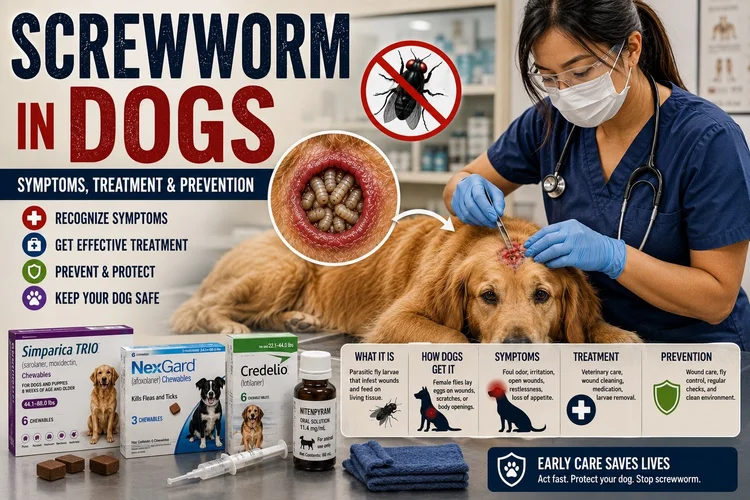
Most dog owners have dealt with a cut, scrape, irritated paw, or insect bite before — usually you clean it and keep an eye on it while it heals.
New World screwworm changes that calculation, because even a small break in the skin can give the fly a place to lay its eggs.
That doesn't mean every scratch on your dog is suddenly an emergency, but it does mean dog owners should understand what screwworm is, what an infestation can look like, and when a wound has stopped being something you simply watch at home.
That's become especially important in 2026. After decades without locally acquired animal cases in the United States, New World screwworm has returned, and federal and state agencies are responding with surveillance, animal-movement controls, sterile-fly releases, and treatment resources aimed at containing and eventually eradicating the parasite again.
USDA maintains a live dashboard for current animal and wild-fly detections instead of relying on static case counts.
For the average dog owner, the most useful place to start isn't maps or case numbers — it's your dog.
What Is New World Screwworm?
Despite its name, a screwworm isn't actually a worm — it's a species of fly, and the medical problem occurs during its larval stage.
An adult female fly is attracted to wounds and certain body openings, where she deposits eggs. Those eggs hatch into larvae — maggots — that burrow into tissue and feed on it while it's still alive.
That's what sets this parasite apart from many of the maggots people associate with decomposition.
As the larvae keep feeding, the wound can grow larger, deeper, more painful, and foul-smelling. The infestation itself is called myiasis.
Dogs aren't the only animals at risk. New World screwworm can infest livestock, wildlife, pets and, more rarely, people.
How Can a Dog Get Screwworm?
A dog doesn't have to suffer a major injury first. The fly needs access to vulnerable tissue, and the opening can be surprisingly small.
Potential entry points include:
- Cuts and scrapes
- Bite wounds
- Surgical wounds
- Irritated or damaged skin
- Insect or tick bites
- Areas around the eyes, ears, nose or mouth
- Other body openings
CDC notes that wounds as small as a tick bite can attract a female screwworm fly in areas where the flies are present.
Exposure matters just as much as the wound itself. A dog with a scratch living far from an affected area isn't facing the same risk as a dog with an open wound where New World screwworm flies have actually been detected.
What Does Screwworm Look Like in Dogs?
If you find maggots in a wound, don't try to identify the species yourself from photos online.
Different fly larvae can look similar to someone without specialized training, and a veterinarian or animal-health authorities are the ones who can determine whether a suspicious infestation needs testing for New World screwworm.
Instead of trying to become an amateur entomologist, concentrate on what you can actually observe.
Screwworm Symptoms in Dogs
USDA tells animal owners to watch for enlarging or draining wounds, maggots or egg masses, discomfort, and suspicious lesions around body openings.
Screwworm vs. Ordinary Maggots: Can You Tell the Difference?
This is a natural question after seeing photos of screwworm larvae, but it's not one we should encourage people to answer with a home diagnosis.
If there are maggots in your dog's wound, the important question isn't whether you can identify them — it's why they're there at all.
That's reason enough to call your veterinarian.
New World screwworm is also a reportable animal-health concern, so a veterinarian's involvement lets the right testing and response happen through USDA and other animal-health authorities.
Is Screwworm Contagious Between Dogs?
Not in the way we normally think about contagious diseases.
A dog doesn't develop screwworm simply because it touched another infested dog. The infestation begins when a female screwworm fly lays eggs on vulnerable tissue.
An infested animal still matters to the larger outbreak, though, because the larvae eventually leave the host, continue developing, and can contribute to another generation of flies.
That's part of why suspected cases need to be reported and handled properly instead of treated casually.
Which Dogs Are Most at Risk?
Right now, geography is one of the biggest factors.
FDA says most dogs in the United States remain at low risk because of where they live, though dogs that live in, travel to, or return from areas where infestations have been identified should get closer monitoring.
Beyond location, an exposed dog faces greater risk if it has an open wound or damaged skin.
That makes wound monitoring especially important for dogs recovering from surgery or injury, outdoor working dogs, dogs spending a lot of time outside in affected areas, and dogs with skin problems that leave open sores.
That doesn't mean those dogs are destined to become infested. It means they have something the fly is looking for — an accessible place to lay eggs.
How Fast Can Screwworm Become Serious?
This isn't something to watch for a week and hope it disappears.
Female New World screwworm flies can lay hundreds of eggs at a time, and once those eggs hatch, the larvae enter the wound and feed on living tissue.
How much damage occurs depends on the location of the infestation, the number of larvae, how long it's been present, and the dog's overall condition.
Left untreated, New World screwworm can cause severe tissue damage and can be fatal.
That's why the threshold for calling your veterinarian should be low the moment larvae are visible.
How Do Veterinarians Treat Screwworm in Dogs?
Treatment isn't simply about killing a parasite — the wound itself matters just as much.
A veterinarian may need to address the larvae, evaluate the extent of tissue damage, clean and manage the wound, and treat any complications.
The exact approach depends on the individual dog and the severity and location of the infestation.
In 2026, veterinarians also have more pharmaceutical options available than they did when the current threat first began moving north.
FDA Treatment Options for Dogs
There's an important distinction to make here: a drug can be fully approved, conditionally approved, or made available for a particular use through an Emergency Use Authorization (EUA).
Those terms aren't interchangeable.
For dogs, Credelio Quattro-CA1 received conditional approval for treatment.
FDA has also made products including Credelio, NexGard, Simparica TRIO and generic nitenpyram available for applicable dog uses through Emergency Use Authorizations.
None of that means dog owners should pick one themselves after finding a suspicious wound.
This is veterinary treatment, not a home decision.
Does Flea and Tick Medicine Prevent Screwworm?
This deserves special attention because familiar product names can create a dangerous misunderstanding.
On August 13, 2026, FDA authorized Simparica TRIO for the treatment of New World screwworm myiasis in dogs and puppies.
FDA is explicit that this particular authorization is for treatment, not prevention.
So if your dog already gets a monthly flea, tick, or heartworm medication, don't assume that automatically protects against New World screwworm.
The product, the indication and the regulatory authorization all matter.
If you live in or plan to travel through an affected area, ask your veterinarian what precautions actually make sense for your dog.
Can a Dog Survive Screwworm?
Yes — an infestation doesn't automatically mean a dog will die.
Treatment options exist, and affected animals can recover.
New World screwworm should still be taken seriously because the larvae keep damaging living tissue as the infestation progresses.
USDA's current detection system distinguishes between active cases undergoing mitigation and inactive cases where myiasis has resolved and treatment is complete, among other resolved outcomes.
The practical lesson is simple: early recognition and veterinary treatment matter.
How Can I Protect My Dog From Screwworm?
There isn't one single step that makes every dog completely safe.
For most owners, prevention starts with something much simpler: knowing what's normal for your dog.
1. Check Your Dog Regularly
You don't necessarily need a formal nose-to-tail examination every night. Use the moments you already have.
When you rub your dog's belly, look at the skin. When you wipe the paws, look between the toes. When you scratch behind the ears, notice whether anything feels different.
You're looking for wounds, irritated areas, swelling, discharge or anything else that wasn't there before.
2. Don't Ignore Small Wounds
A tiny wound doesn't mean screwworm.
But in an affected area, a tiny wound can provide an opportunity for a fly. Keep wounds clean and follow your veterinarian's instructions for wound care.
3. Pay Attention After Surgery
If your dog recently had surgery, follow the discharge instructions carefully and monitor the incision.
Contact the veterinarian if the site opens, begins draining, develops an unusual smell, or otherwise isn't healing as expected.
4. Know What's Happening Where You're Traveling
USDA maintains a current detection dashboard showing confirmed animal cases and wild-fly detections, so you don't have to rely on old news reports.
If you're traveling with your dog, check the situation before you leave and again before you come home.
5. Take Maggots Seriously
If you see larvae in a wound or body opening, don't spend hours comparing pictures online — call your veterinarian.
What About Dogs in Florida?
For Florida dog owners, screwworm isn't an abstract piece of history.
Florida experienced a New World screwworm outbreak in the Keys in 2016, with wildlife — particularly Key deer — heavily affected before it was eradicated.
That history is part of why animal-health officials take new detections seriously.
Florida dog owners also need perspective, though.
A confirmed case hundreds of miles away doesn't mean every dog in the state suddenly faces an immediate threat.
The better approach is following current state and federal guidance, paying attention to animal-movement requirements when traveling from affected areas, and knowing what an abnormal wound looks like.
For those of us in Florida, especially with dogs that spend a lot of time outdoors, wound checks are a reasonable habit whether screwworm is circulating or not.
Can Humans Get Screwworm From Dogs?
People can develop New World screwworm myiasis, but human infestation is rare in the United States.
The infestation isn't spread by simply petting a dog.
Humans, like animals, become infested when the fly deposits eggs on vulnerable tissue.
Anyone with a suspicious wound or visible larvae should seek medical care rather than try to treat it themselves.
Frequently Asked Questions About Screwworm in Dogs
Can indoor dogs get screwworm?
Being primarily indoors should reduce opportunities for exposure, but it doesn't create absolute protection. A dog still goes outside, and risk depends heavily on whether screwworm flies are present in the area and whether the dog has vulnerable tissue.
Can a tiny cut attract a screwworm fly?
Yes. In affected areas, even small breaks in the skin can provide an opportunity for the fly. CDC notes that wounds as small as a tick bite may be enough.
Does every wound with maggots mean New World screwworm?
No. Other fly species can infest wounds too, and owners shouldn't try to identify larvae themselves. A wound containing maggots warrants veterinary attention regardless.
Should I remove screwworm larvae myself?
A suspected infestation should be handled with veterinary guidance. New World screwworm is also an animal-health reporting concern, so contacting a veterinarian promptly allows the dog to receive appropriate treatment while giving authorities the opportunity to investigate a suspected case.
Does Simparica TRIO prevent screwworm?
Its August 2026 EUA specifically authorizes it for treatment, not prevention, of New World screwworm myiasis in dogs and puppies.
Should I stop taking my dog outside?
For most U.S. dog owners, no. Federal officials continue to characterize the overall risk as very low. Owners in affected areas should follow local guidance and take appropriate precautions rather than assuming every outdoor trip is dangerous.
What I Want Dog Owners to Remember
New World screwworm deserves attention, not panic — those are two different things.
Most of us already know our dogs better than we realize: which paw they lick when something bothers them, where an old scar is, what their skin normally looks like, and usually, when something doesn't look right.
Use that familiarity.
Look at a new cut when it happens, notice their skin when you're rubbing their belly, and find out why if they keep licking one spot.
If you ever see maggots in a wound, don't worry about identifying the species — just call your veterinarian.
New World screwworm can cause devastating injuries, but knowing what to watch for puts dog owners in a much better position to catch a problem early.
The United States eradicated this parasite once before, and federal and state agencies are now trying to contain and eliminate it again through surveillance, treatment, animal-movement controls, and sterile-fly releases.
Our part is simpler: keep an eye on the dog actually in front of us.
Sources & Further Reading
- U.S. Department of Agriculture, Animal and Plant Health Inspection Service. Current Status of New World Screwworm. View source →
- U.S. Department of Agriculture, Animal and Plant Health Inspection Service. New World Screwworm. View source →
- U.S. Food and Drug Administration. Animal Drugs for New World Screwworm. View source →
- Centers for Disease Control and Prevention. New World Screwworm Situation Summary. View source →
- Florida Department of Agriculture and Consumer Services. New World Screwworm. View source →
- Florida Department of Agriculture and Consumer Services. Dog and Cat Movement Requirements. View source →
Continue Reading
New World Screwworm Outbreak: What Dog Owners Need to Know →
About the Author
Stephen Gill
Stephen Gill is the founder of Inspired by Tyson and editor of its dog-focused publications. His work focuses on canine health, behavior, everyday dog ownership, and issues affecting dogs and the people who care for them.
View Stephen Gill's author profile →