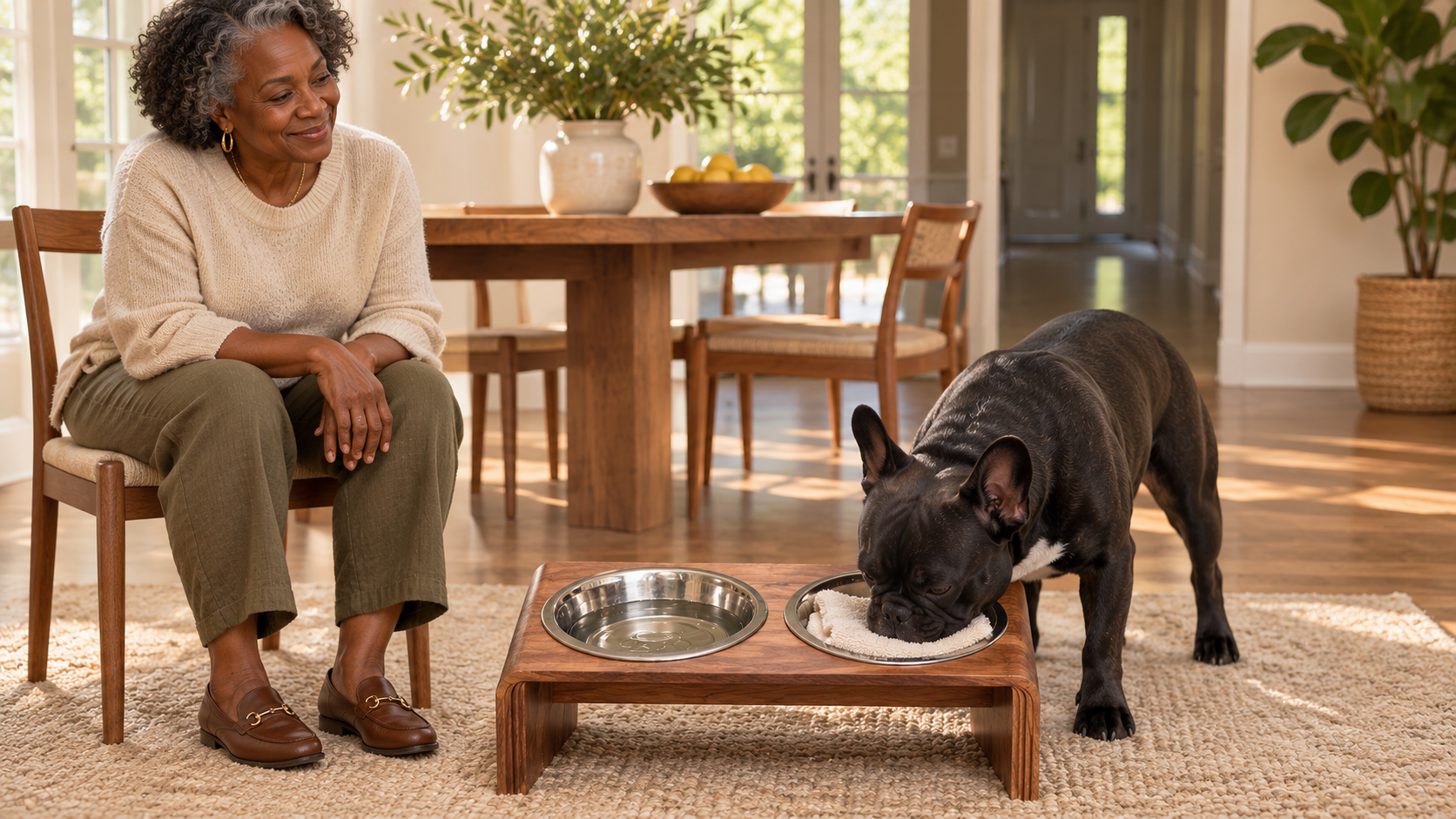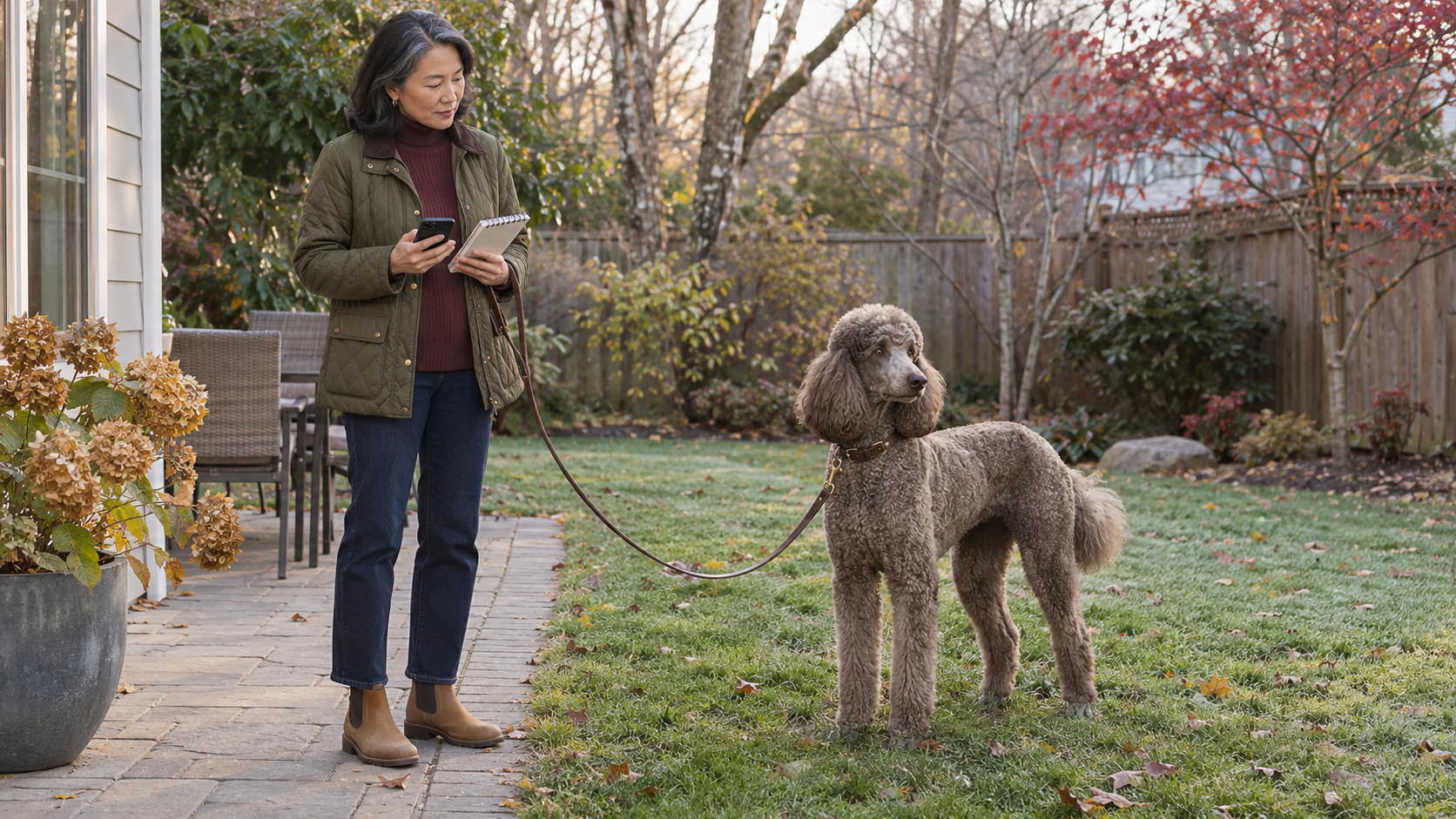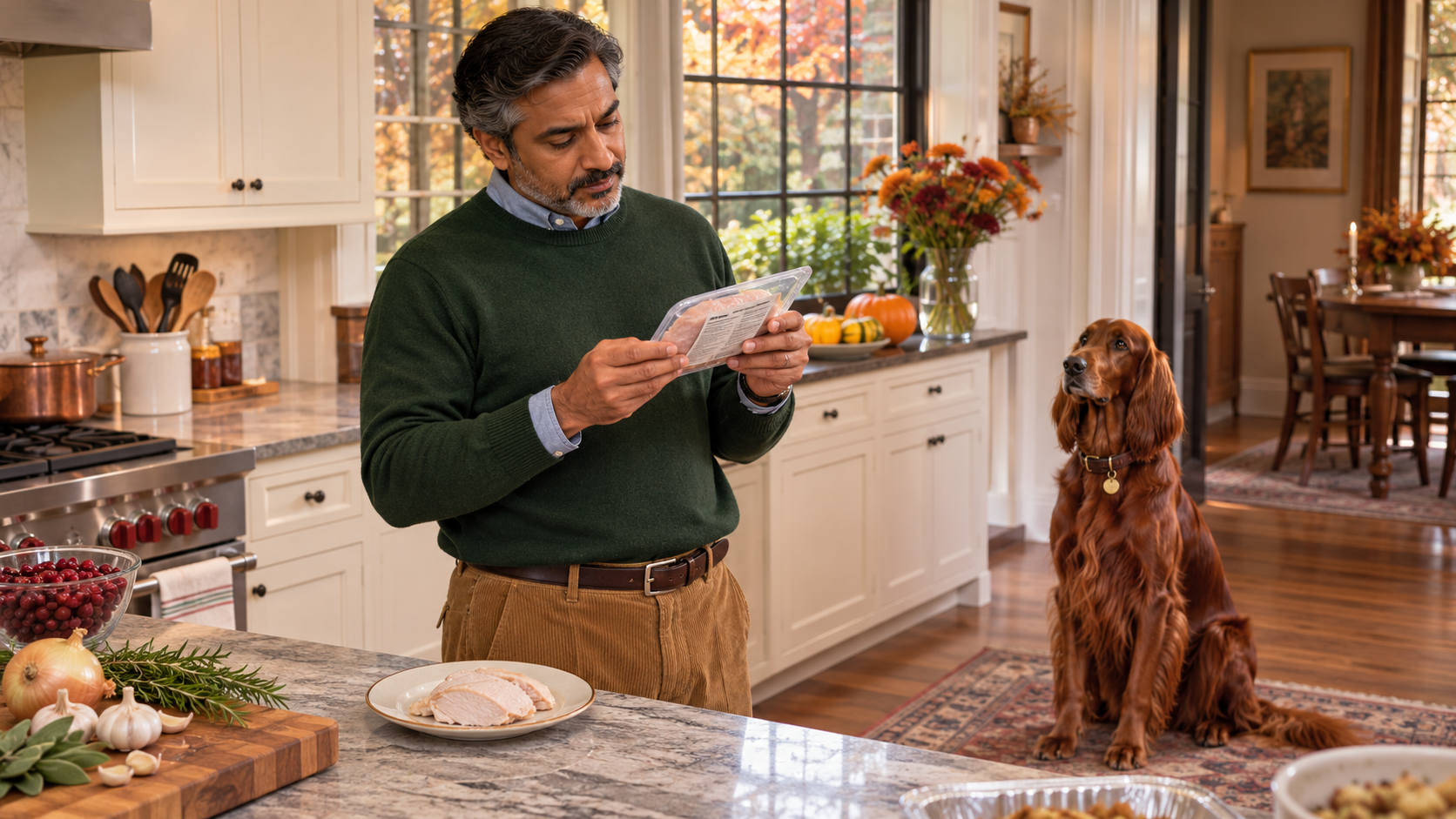
A dependable guide gives a dog structure, safety, and clear practice—not a confrontation over household status.

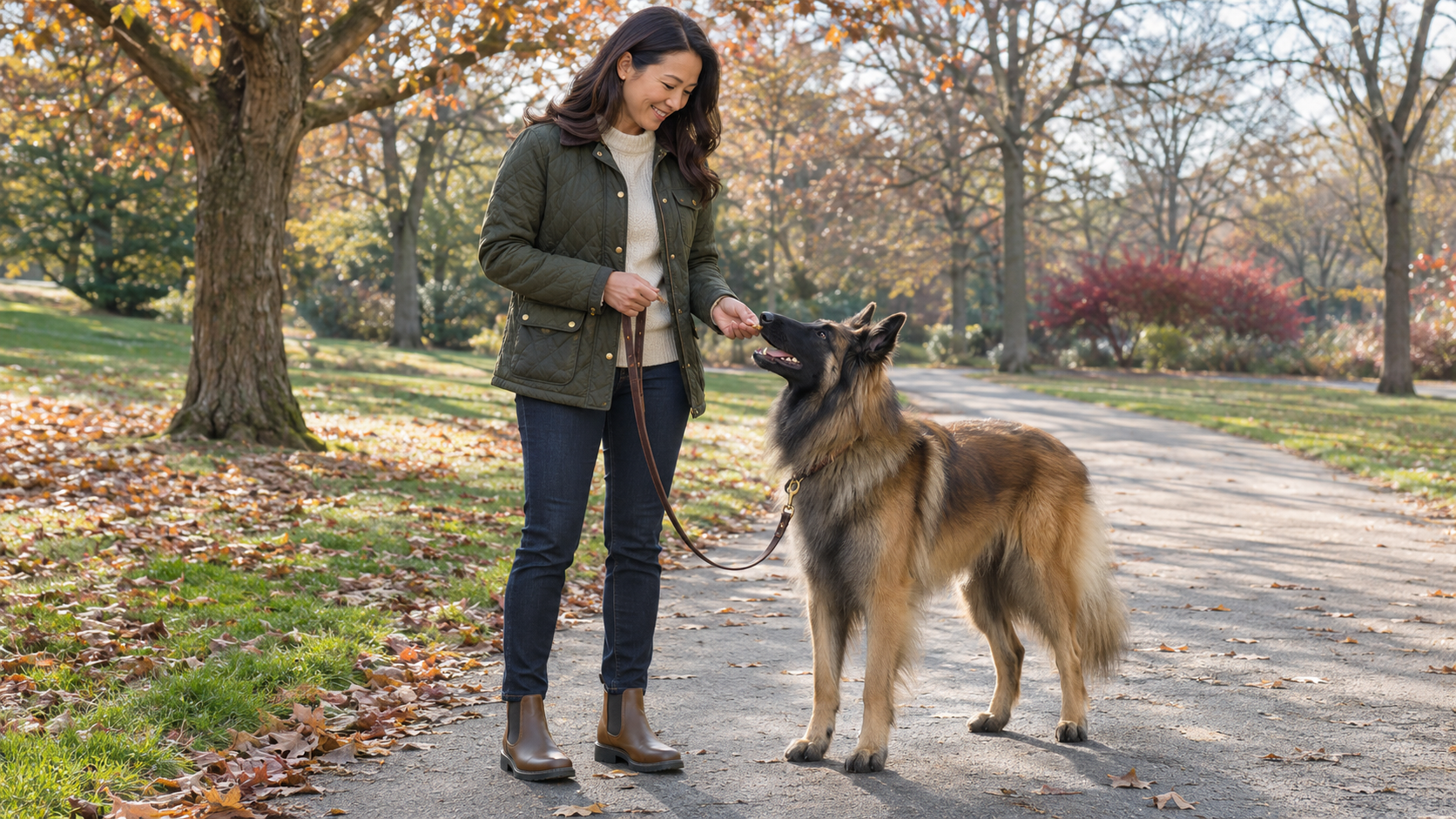
A dog who jumps at guests, pulls toward every smell, barks for attention, or ignores a cue can make daily life feel chaotic. When every outing or arrival feels like hard work, it is understandable to wonder whether your dog needs a “pack leader.”
Wanting to give your dog steady guidance makes sense. Dogs benefit from predictable routines, safe management, and practice with skills that work in the situations they actually encounter. The trouble starts when everyday behavior problems are taken as proof that a dog is trying to outrank the people at home.
The American Veterinary Society of Animal Behavior (AVSAB) offers a useful way to separate those ideas in its current guidance. Leadership can mean meeting needs, setting up a safe environment, and teaching a dog what to do. Dominance-based household tactics ask a different question: how can a person win, control, or physically demonstrate status? For ordinary manners problems, that second question is usually less useful than asking what the dog is doing, what triggers it, and what skill can replace it.
You can use reward-based training and still have clear household rules. Boundaries, repetition, and careful management all belong in the plan, without turning a dog’s mistakes into a contest.
What people mean by “pack leader”
The phrase has become a shortcut for several different ideas. One owner may mean, “I want the family to use the same rules.” Another may mean, “I need my dog to feel secure around visitors.” A third may have been taught to eat first, walk through doorways first, or physically correct a dog to show who is in charge.
It helps to be clear about which of those ideas you mean. A consistent household can be kind and organized without staging confrontations. Family members can agree that guests are greeted with four paws on the floor, that food stays on a counter unless offered, or that a dog pauses before a door opens. Those are teachable routines, not proof that anyone has claimed rank.
AVSAB’s dominance statement cautions against using dominance as a catch-all explanation for unruly behavior. Dogs have social relationships and may compete over valued resources in particular circumstances. That does not mean a dog who pulls on a leash, rushes a door, or barks for a toy is declaring a bid for household leadership. Start instead with what you can observe: the behavior, the setting, the dog’s health, and what the dog has learned from previous experiences.
Why the “alpha” story lingers
The popularity of rank-based advice is easy to understand. It offers a simple explanation and a fast-sounding fix: be firmer, be first, make the dog comply. But real behavior is usually less tidy. A dog may jump because people have sometimes greeted jumping warmly. A dog may pull because the walk is exciting and the leash has occasionally delivered access to a smell or another dog. A dog may bark because it needs a break, has learned that noise gets attention, feels worried, or is over-aroused.
Wolf research is also often simplified into a household rulebook. Modern veterinary guidance describes dogs’ social lives as flexible, and field observations of wolves do not prescribe how people should handle pet dogs. A family group in nature is not a reason to pin a dog, take possessions to make a point, or demand that a dog “earn” safety, water, relief, affection, or food.
Reading the training evidence carefully
AVSAB’s current humane-training statement recommends reward-based methods for teaching and behavior problems. That is a professional recommendation informed by both welfare and practical training concerns; it is not a claim that every research study tests every technique in every situation.
Research should be read with the same care. A 2020 observational study of dogs at training schools found more stress-related behavior and less favorable welfare measures in dogs attending high-aversive schools than in dogs attending reward-based schools. Because owners were not randomly assigned, the study cannot prove that one school’s methods alone caused every difference. It is still relevant to the welfare question: methods that rely on fear, pain, or intimidation carry risks that deserve attention.
Other research has measured specific training outcomes under particular conditions, and there is debate about study design and interpretation. That debate is not a reason to default to household dominance. A narrow result on one task does not establish that confrontational methods are necessary, safe, or broadly useful. Effectiveness, welfare, generalization to daily life, and professional recommendations are related but separate questions.
What consistent guidance looks like
A practical household plan starts with one visible goal. Instead of “be respectful,” choose “wait with four paws on the floor when someone comes in” or “walk with a loose leash for three steps before reaching the next tree.” Everyone should know what success looks like, how to stop the dog from repeatedly practicing the unwanted behavior, and how to reward the alternative.
Management is part of good training. A baby gate, a leash during a greeting, a calm room away from a busy doorway, or putting tempting objects out of reach can protect people and prevent a dog from practicing a behavior that is hard to change. These small changes give your dog a better chance to learn and give you fewer difficult moments to handle.
A well-timed reward tells the dog, “That worked. Try it again.” It might be food, access to a sniff, a toy, play, a chance to greet, or moving toward a preferred place. What matters is that it is safe and meaningful to that individual dog, delivered close enough to the behavior to be clear.
Five everyday moments to rethink
Jumping at arrivals. Start with a greeting setup the dog can handle. Use distance, a gate, or a leash if needed so the dog cannot repeatedly launch at visitors. Notice and reward four paws on the floor before the jump begins. A sit can be useful for some dogs, but a fearful dog should not be pressured to approach a visitor. Keep the focus on a greeting that feels calm and safe for everyone involved.
Pulling toward smells. Practice where distractions are low. Reward a moment of slack leash, then a few steps. Let appropriate sniffing be part of the walk; access to a smell can itself reinforce staying connected. Walking ahead is not proof of a power struggle. If a dog lunges, panics, or cannot recover around triggers, get a plan tailored to that dog rather than simply applying more pressure.
Barking for interaction. Before ignoring noise, check ordinary needs: food, water, toileting, rest, activity, and distress. Watch for the quiet moment before the usual barking sequence and offer an already-learned alternative. Withholding attention is not an answer to panic or fear, and a sudden change in barking deserves a veterinary conversation.
Doorway excitement. Practice an easy pause away from the door, then change one small part of the picture at a time: a hand on the knob, a crack of light, a step outside. Safe access to the yard or walk can be the reward. If your dog urgently needs to toilet, let that need come first rather than insisting on the routine.
Mouthy puppy play. Provide appropriate toys, keep hands out of rough games, and calmly end interaction when teeth touch skin. Consistency matters more than drama. Seek professional guidance for bites connected to fear, handling, guarding, injury, or increasing intensity. Those situations call for more than ordinary puppy-manners practice.
When it is not a leadership problem
A dog who freezes, growls, snaps, guards, bites, shows intense fear, or changes suddenly needs a different response from a dog who is simply excited. Do not test the dog, grab a guarded item, force the dog off furniture, pin the dog, or punish warning signals. Warnings are information, and suppressing them can make risk harder to see.
Create safe separation from triggers, especially children and other animals where relevant. Seek veterinary assessment for sudden change, pain concerns, or handling sensitivity. Moderate or severe aggression, a bite history, or serious fear warrants veterinary behavioral expertise. A basket muzzle may be part of a professionally guided safety plan, but it is not permission to expose a dog to an unsafe situation.
How to choose help
A trainer’s label alone does not tell you how they work. Ask what happens when a dog struggles, what tools the trainer uses, and how the trainer explains fear, mistakes, or aggression. Look for clear, humane teaching, realistic expectations, and a willingness to coordinate with a veterinarian when health or safety is involved. Credentials can be useful context, but they do not replace asking about actual methods.
What dependable guidance means
Think about what would make a good choice easier for your dog: predictable routines, a safe environment, practice they can manage, and people who notice what they are communicating. Those are useful things to provide every day.
If “pack leader” means being a dependable guide, the answer is yes. Be the person who provides safety, structure, and a path to success. If it means proving rank through confrontation, choose a different model. It is more likely to protect trust while giving you a plan you can repeat tomorrow.
A practical family plan
Replace the label “dominant” with observations: what happened, where, who was present, and what followed. Then change the setup before the dog is overwhelmed. A gate, leash, quieter room, or pause in the routine can prevent rehearsal while a new skill is taught. Choose one replacement behavior that fits the moment, such as four paws on the floor, a brief check-in on leash, moving to a resting place, or taking a toy. Reward success at a level the dog can manage.
Boundaries are compatible with humane teaching. Access to the doorway, a visitor, food, or play can be managed without forcing a confrontation. Make the desired behavior clear and safe enough for the dog to repeat. There is no need to keep score over who has “won” an interaction. A dog who cannot respond may be over-aroused, tired, worried, uncomfortable, or facing a task that is too difficult. Lower the difficulty and look for patterns rather than escalating pressure.
Keep a short observation log if a behavior keeps recurring. Note the setting, trigger, response, and what helped. This is not a diagnostic tool, but it gives a trainer or veterinarian useful detail. Sudden changes, guarding, bites, intense fear, or escalating behavior belong with veterinary and qualified behavior support, not a household status test.
Everyday structure without a status contest
Useful household structure answers practical questions for your dog: Where can I rest? What happens at the door? How do greetings work? What can I do when everyone gets busy? Clear answers give you a plan you can repeat. Treating each of those moments as a test of authority can make ordinary mistakes feel personal.
Start with needs before training. A dog who has had no chance to toilet, rest, sniff, eat, or decompress may have less capacity for a difficult greeting or walk. Meeting those needs is not “spoiling” a dog. It creates a better starting point for learning. It also helps an owner notice when behavior is unusual. A sudden reluctance to move, be touched, eat, or settle should prompt a veterinary conversation rather than a stronger correction.
Next, make the desired behavior easy to see. If the family wants a dog to pause at the door, decide where the dog should stand, how the door will open, and what reward follows a calm pause. If the dog charges forward, close the door only as a management step, not as a dramatic test. Reset, reduce the difficulty, and try again when the dog can succeed. Repeated short practices are more useful than one long confrontation.
Use the environment thoughtfully. Put shoes away if the goal is to reduce stealing. Use a covered trash container rather than waiting to scold a dog for reaching it. Set up a quiet resting area during a child’s energetic playdate. These everyday choices reduce opportunities for a dog to practice behavior that is rewarding or unsafe, while the family teaches a more useful alternative.
When several people share a dog, consistency should be realistic. One household might agree that the dog can be on furniture only with an invitation; another may decide the sofa is always available. Either can work if the rule is clear, kind, and not enforced through intimidation. The important point is not a particular rule; it is avoiding a cycle where one person rewards a behavior, another punishes it, and the dog cannot predict what will happen.
The same applies to rewards. Food can be useful, but so can movement, play, a chance to sniff, access to a familiar person, or a favorite toy. If a reward stops working in a hard situation, consider whether the setting has become too difficult before assuming the dog is being manipulative. Step back to an easier version. Rewarding a behavior is information about what to repeat, not a payoff for competing with people.
When to ask for help sooner
Ordinary excitement can usually be managed with gradual practice. Fear, guarding, repeated lunging, bites, intense distress, or conflict among household animals deserve a different level of care. Do not provoke a reaction to “see who is in charge.” Create distance and safe separation, especially around children or other pets. A veterinarian can help assess sudden change, pain, or health contributors, and a qualified behavior professional can help build a safety-focused plan.
Good help does not promise instant obedience or a cure. Ask what happens when a dog struggles, how the professional uses management, and whether they will coordinate with veterinary care if needed. Observe whether the explanations focus on behavior and context or on shaming the dog and owner. A plan that protects warning signals and teaches alternatives is usually more useful than one built around proving rank.
A final check-in for owners
Before using any technique, ask: Does this make the dog safer? Does it teach a behavior I can recognize? Can everyone in the household do it calmly? If the answer is no, simplify. The goal is a dog who understands what works and a family that can guide without turning daily life into a battle for status.
As you put the plan into practice, look for ways to prevent trouble, give the dog a workable choice, and help everyone respond calmly and consistently. A dog does not need to be frightened or physically overpowered to learn household expectations. If a plan makes everyone more tense, return to the simplest safe step and seek qualified support for behavior that is beyond ordinary manners practice.
Keep safety in view as you teach the next workable behavior, and ask for help before a situation becomes dangerous. Progress is often quieter than a dramatic correction: fewer rehearsals of the problem, more successful choices, and a dog who can recover more easily in ordinary life.
A humane plan can be firm without becoming harsh. It asks the owner to be observant, prepared, and consistent, not to dominate a dog through fear. When behavior is difficult, ask what would make the next safe, successful repetition possible for this dog, in this setting, with the support you can provide.
Sources and further reading