Most dogs do not need a major reset after the clocks change. Keep familiar routines steady, watch your dog’s behavior, and give the new schedule time to feel normal.

The clocks changed over the weekend. Your dog didn’t read the clock, but they may notice that the household is doing familiar things at a different time.
Some dogs barely register the fall time change. For others, a dog used to the old schedule may be hungry, ready for a walk, or ready for bed before the new clock says it is time. The useful response isn’t to assume there’s a problem. Keep the day predictable, watch how your dog is doing, and give the routine time to settle.
Remember What Actually Changed
In most of the United States, daylight saving time ended at 2:00 a.m. on Sunday, November 1, when clocks moved back one hour. Dogs respond to daylight and household patterns, not to clock time. They may notice that breakfast, walks, departures, or bedtime happen at a new point in their usual pattern.
Keep the Everyday Anchors Steady
Start with food, potty breaks, walks, rest, and bedtime. Keep one or two anchors steady first, then adjust other nonmedical routines gradually if needed. Keep familiar places and routes consistent. The AKC notes that sudden routine changes can unsettle some dogs.
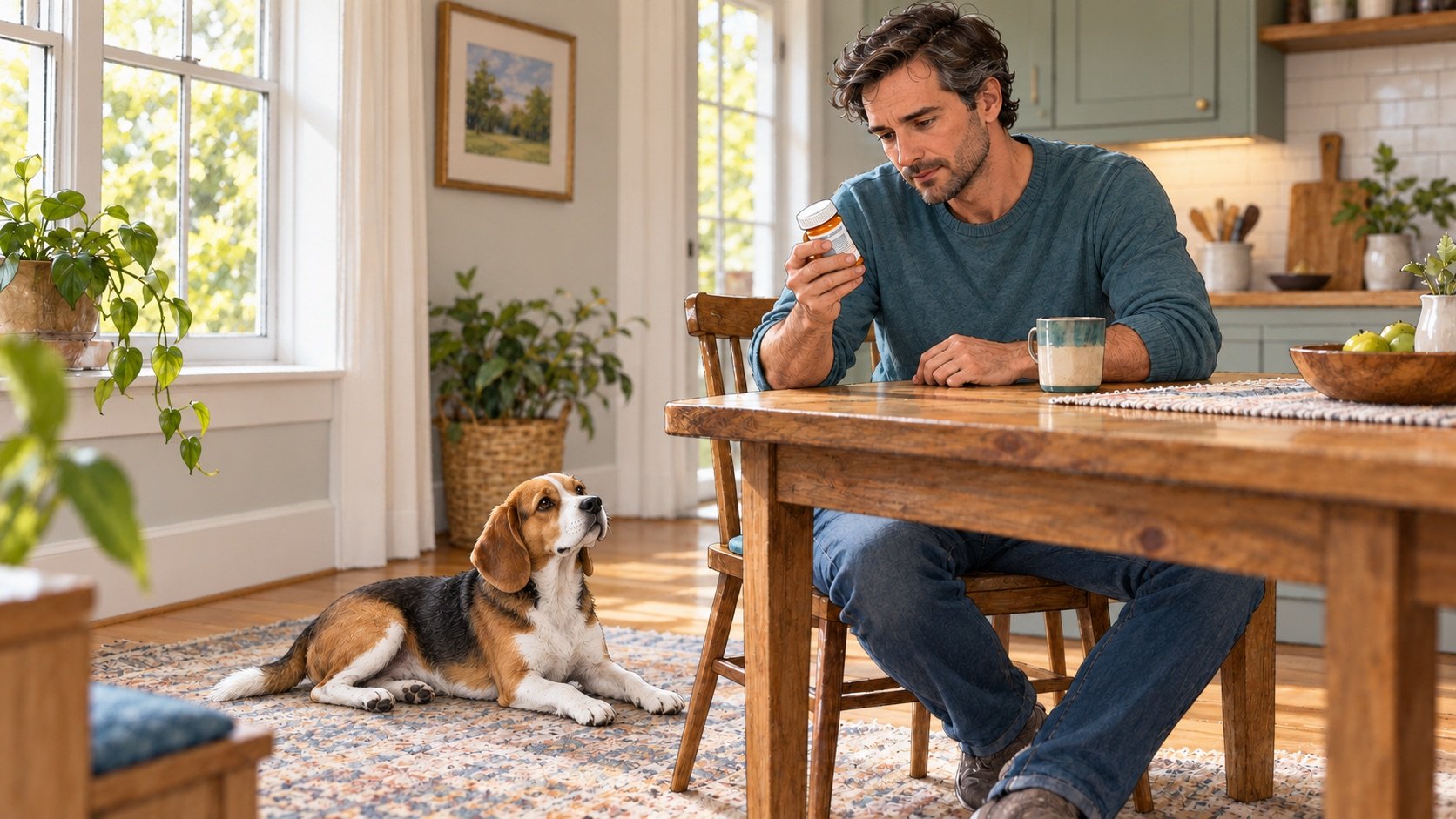
If your dog takes prescribed medication, don’t change the timing on your own because the clock changed. Ask the prescribing veterinarian for guidance.
Watch Your Dog, Not the Calendar
There is no universal adjustment period. A small peer-reviewed study found no change in morning activity among 29 companion dogs after the fall clock change, but the sample was small and regional. Notice whether your dog is resting, eating, walking, and using the bathroom normally instead of assuming a reaction.
Make the Day Easier, Not Perfect
Offer the usual walk, give your dog time to sniff, and avoid turning an unusual morning into a major training session. The AKC’s gradual-adjustment advice applies to the week before the change; after the change, keep routines predictable and adjust gradually if your dog needs it.
Know When It Is More Than a Routine Issue
Contact a veterinarian for ongoing vomiting or diarrhea, a sudden behavior change, refusal to eat, unusual tiredness, pain, blood in the stool, or other worsening concerns. Don’t assume a health concern is just the time change.
A Quiet Reset
Most dogs don’t need a major reset after the clocks fall back. They need clear routines, enough rest, a chance to move and sniff, and an owner who notices when something is different.
Sources and further reading
About the author
Stephen Gill
Stephen Gill is the founder of Inspired by Tyson and writes Daily Doggy News from real life with Tyson. His work covers dog ownership, behavior, safety, canine health, working dogs and the relationship between dogs and their people.
Read Stephen Gill’s full author profileRead More
Scroll or use the arrows to explore more stories.
Daily Doggy NewsA Halloween Costume Comfort Check for Dogs
 Daily Doggy NewsHelp Your Dog Handle Halloween Decorations
 Daily Doggy NewsWedgewood Recall: What Dog Owners Should Check
 Canine JournalAre Florida Frogs and Toads Dangerous to Dogs?
 It MattersA Shelter Dog’s Day Out Still Matters
 Tyson’s LifeIs a 10-Minute Walk Enough for Your Dog?