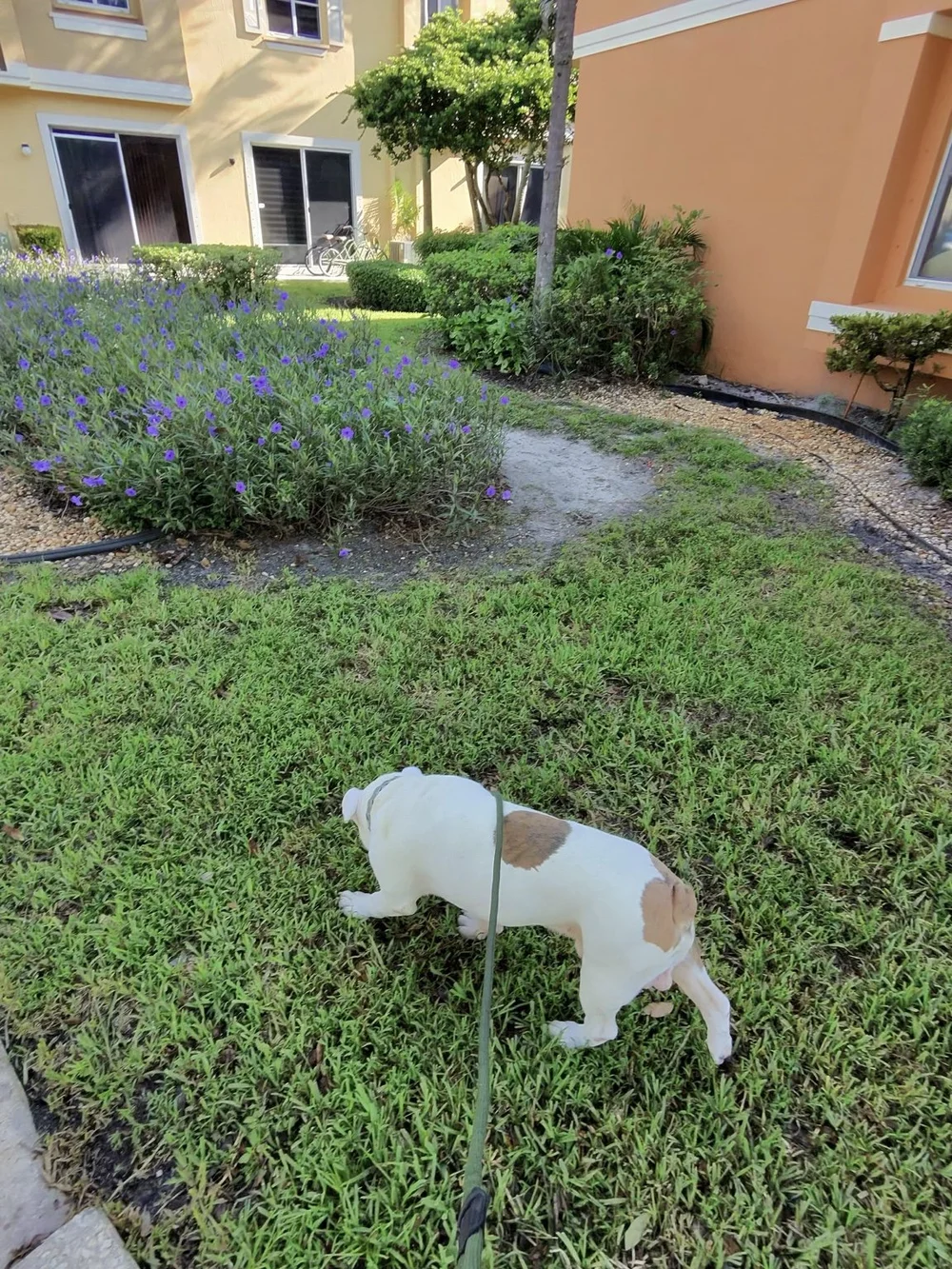
What’s Lurking on Your Dog’s Night Walk?
A regional guide to rabies risks and nighttime hazards across the U.S.

Porch lights are coming on earlier, pumpkins are appearing on doorsteps, and more of the daily dog walk now happens after dark. The rustle in the hedge might be a neighbor's cat, a raccoon heading for the trash cans, or nothing at all.
Here is the honest starting point: night walks are not inherently dangerous. The risks that do exist are identifiable, depend heavily on where you live, and become much more manageable once you know what you are looking at and what to do next. Some nighttime animals matter because of rabies. Many more matter only because they can bite, sting, spray, kick or poison a curious dog. Knowing the difference is the most useful thing you can carry on a dark sidewalk, along with a leash and a light.
Key takeaways
- In the U.S., rabies lives mainly in wildlife: in 2024, bats, raccoons, skunks and foxes made up most of the 3,834 rabid animals reported nationally.
- Being near a wild animal is not a rabies exposure. Exposure means a bite, or saliva or nervous tissue reaching a wound or the mouth, eyes or nose.
- Any contact between your dog and a bat, raccoon, skunk, fox or other wild carnivore deserves a call to your veterinarian and local health or animal-control office, even if your dog is vaccinated.
- Most other night hazards—snakes, toads, porcupines, coyotes, alligators and scorpions—are regional. Some, like snakebite and toad poisoning, are veterinary emergencies.
- Controlled sniffing is fine. Steer your dog away from wildlife, carcasses, burrows, dense brush, trash piles and water edges.
1. What actually counts as a rabies exposure
Rabies spreads through direct contact between broken skin or mucous membranes—the mouth, eyes or nose—and infectious material, mainly saliva, from an infected animal. A bite is the classic route. CDC's clinical guidance also counts saliva or nervous tissue getting into an open wound or scratch, and says the virus is not spread through contaminated objects such as clothes or bedding.
Just as important is what does not count. CDC's veterinary guidance states that being physically close to a suspected rabid animal is not considered an exposure, although officials may want to assess pets that roam free near a rabid animal. CDC's advisory recommendations also list petting or handling an animal, and contact with blood, urine or feces, as non-exposures. The guidance notes that the rabies virus is inactivated by drying and ultraviolet light and does not persist in the environment.
So the question to ask after a strange moment on a walk is not “Was my dog near it?” but “Could my dog have bitten, been bitten by, or mouthed that animal?”
2. Which U.S. wildlife matters for rabies
The most recent national surveillance report, covering 2024 and published online in the Journal of the American Veterinary Medical Association on August 31, 2026, counted 3,834 rabid animals, a 2% rise from 2023. More than 91% were wildlife. Bats accounted for about 36% of cases, raccoons 28%, skunks 17% and foxes 7%. Four human rabies deaths were reported in 2024.
Each of those animal groups has its own geography. According to CDC, raccoon rabies is found in the eastern U.S. from Canada to Florida and west to the Appalachians; skunk rabies is found across most of the Midwest and West; fox rabies is concentrated in the Southwest and Alaska; and rabid bats have been found in every state except Hawaii.
Some animals get more worry than they deserve. CDC states that small rodents such as squirrels, rats and mice, and rabbits and hares, are rarely infected and have not been known to transmit rabies to people. State health departments, including Rhode Island's and Texas's, also classify opossums as low-risk. That does not make a fight with any animal harmless, but it does change the rabies conversation.
What about this summer's CDC alert? On September 10, 2026, CDC issued a health advisory about a nationwide increase in reported human rabies exposures and post-exposure treatment. It said at least eight state health departments had reported increases, and that use of rabies vaccine and immune globulin rose by roughly a third and three-quarters compared with the same months of 2025. The advisory describes more reported exposures and treatments, not a confirmed nationwide outbreak in animals, and it names no specific states or species. Its advice for pet owners is simple: keep pets up to date on rabies vaccination and away from wildlife when possible.
3. Why bats need special handling
Bats are the rabies animal most U.S. dog owners are likely to meet up close, and CDC says contact with infected bats is the leading cause of human rabies deaths in the U.S. Realistic dog-and-bat moments tend to be ordinary: a bat that has gotten into the house, garage or screened porch; a grounded or injured bat on a patio or lawn; or a dog that grabs, mouths or carries a bat it found.
If that happens, CDC's advice is not to release the bat until you have talked with a public-health expert, because a captured bat can be tested. Call animal control or your health department to capture it safely. If officials ask you to contain it yourself, CDC describes covering it with a box or jar while wearing leather work gloves, sliding cardboard underneath and taping it shut. Never handle a bat with bare hands, and keep your dog in another room.
CDC also advises never approaching animals that appear injured, sick or dead, especially nighttime animals seen out during the day.
4. Rabies risk vs. physical hazard
Most nighttime animal problems for dogs have nothing to do with rabies. A rattlesnake, cane toad, porcupine or feral hog can badly hurt a dog without carrying any rabies risk. Meanwhile, a quiet bat on the kitchen floor is a genuine rabies question even though it is unlikely to injure anyone.
Keeping those two ideas separate helps you choose the right call: a rabies question goes to your veterinarian plus health or animal-control officials; an injury or poisoning goes to a veterinarian, sometimes urgently. A serious wildlife bite can be both.
5. Why your dog's vaccination status matters
After a plausible exposure, what happens next depends largely on your dog's rabies vaccination record. CDC's current guidance for veterinarians describes three paths:
- Current on vaccination: an immediate booster, followed by 45 days of monitoring for signs of rabies under the owner's supervision.
- Overdue: assessed case by case by public-health and animal-health officials. Many dogs can be boosted and managed like currently vaccinated animals; the length of the lapse and severity of the exposure matter.
- Never vaccinated: CDC recommends euthanasia because no licensed product can guarantee the animal will not develop rabies. If the owner declines, a strict four-month quarantine with immediate vaccination is required.
Local and state officials make the final decisions, and requirements vary by jurisdiction. Dogs are uncommon among rabid animals today—24 of 3,834 cases in 2024, compared with 243 cats—and CDC credits vaccination with that success. The U.S. eliminated the canine rabies variant in 2007.
For more information about the vaccine itself, see our guide to rabies vaccine benefits and risks for dogs.
6. Should you let your dog sniff at night?
Yes, in a controlled way. Sniffing is a normal, enriching part of a walk, and we found no authoritative evidence that ordinary sniffing of grass or sidewalks is a rabies route. The virus needs direct contact with a wound or mucous membrane and does not persist in the environment.
The practical risks at night come from what a dog's nose leads it into. Keep sniffing on open, visible ground within your light, and redirect your dog away from:
- Wildlife of any kind, including animals that seem calm or slow.
- Carcasses or anything dead.
- Holes, burrows and dense brush where snakes and other animals shelter.
- Trash cans and compost, which draw raccoons, skunks and, in some areas, bears.
- Unidentified movement in grass—a toad, snake or scorpion is easier to avoid than to treat.
- Shorelines and water edges in alligator and crocodile country.
7. Fast-reference table
| Animal | Rabies relevance | Physical danger to dogs | Where encountered | Night-walk response |
|---|---|---|---|---|
| Bats | High | Low | All states except Hawaii; homes, garages, porches and lawns | After any contact, contain the bat if safe and call your veterinarian and health department |
| Raccoons | High in the East | Moderate due to fights | Eastern U.S.; trash and yards | Avoid; after contact, call your veterinarian and health department |
| Skunks | High in the Midwest and West | Spray and possible eye injury | Much of the Midwest and West; widespread elsewhere | Avoid; call after contact; seek veterinary care if spray enters the eyes |
| Foxes | High where fox variants circulate | Moderate | Southwest and Alaska | Avoid; after contact, call your veterinarian and health department |
| Opossums, rodents and rabbits | Low | Low to moderate due to bites | Widespread | Avoid and ask a veterinarian to treat wounds |
| Coyotes | Not a primary U.S. rabies concern today | High for small dogs | Many areas, including suburbs; active around dawn, dusk and night | Use a short leash, pick up a small dog and haze a lingering coyote |
| Venomous snakes | None | High | Many southern and western areas; more nighttime activity in hot weather | Avoid brush; a bite requires an emergency veterinarian |
| Cane toad or Sonoran Desert toad | None | High if mouthed | Florida, Texas and Hawaii; southern Arizona and New Mexico | Rinse the mouth and go to an emergency veterinarian |
| Porcupines | Low | Moderate to high due to quills | Alaska, the West, northern states, Great Lakes and Northeast | Go to a veterinarian immediately; do not pull the quills yourself |
| Alligators and American crocodiles | None | High near water | Southeastern U.S.; American crocodiles along the south Florida coast | Use a leash and stay away from the water's edge, especially from dusk to dawn |
| Feral swine | None, but they can carry pseudorabies | High | Parts of many states | Avoid and leave the area |
| Bark scorpion | None | Usually local pain; occasionally serious | Arizona and nearby parts of the Southwest | Watch for symptoms and call your veterinarian or a poison line |
| Moose | None | High | Alaska and other moose country | Light the yard and scan before letting dogs outside |
8. Watch, call or go: how to respond
Watch and create distance. Most sightings end here. Shorten the leash, keep moving away and do not let your dog investigate. For coyotes, Colorado Parks and Wildlife advises keeping pets on a short leash and picking up small dogs when a coyote is visible. New York's Department of Environmental Conservation suggests making loud noises and waving your arms if a coyote lingers.
Call your veterinarian and local health or animal-control office when your dog has touched, bitten, been bitten by or mouthed a bat, raccoon, skunk, fox or other wild carnivore, or when a bat is found where your dog has been. Have your dog's rabies certificate handy.
If a person may have been bitten or scratched, wash the wound with soap and water for at least 15 minutes, as WHO advises, and seek medical care.
Go to a veterinarian now for:
- Snakebite. Keep your dog quiet and get to a veterinarian. The Merck Veterinary Manual warns against ice, tourniquets, cutting or suction and notes that antivenom works best early.
- A toad in the mouth. University of Florida experts advise wiping the mouth with a wet cloth and rinsing it for about 10 minutes with the head pointed down, then calling your veterinarian.
- Porcupine quills. Cornell's veterinary college advises against removing them yourself because quills can migrate deeper.
- Skunk spray in the eyes or mouth. Rinse with cool water and seek veterinary care. Cornell notes that spray can damage the cornea.
- Serious wounds from any animal fight. Make the rabies call too if the animal was a rabies-relevant species.
9. What you may encounter where you live
These are patterns, not guarantees. Not every species below lives throughout its region.
Northeast and Mid-Atlantic
Rabies: This is raccoon-rabies country. USDA describes that variant running from southwest Alabama into southeastern Canada and west to eastern Ohio, and its 2026 oral-vaccine bait drops cover states from Maine to Virginia. Bats are present statewide.
Other hazards: Coyotes, porcupines in northern and forested areas, and skunks.
Where: Trash cans, wooded yard edges and garages.
Tip: Vaccine baits are safe for dogs, although USDA says a dog that eats many may experience a temporary upset stomach. Leave the baits where you find them.
Southeast and Florida
Rabies: Raccoons and bats.
Other hazards: Alligators throughout coastal lowlands from North Carolina to Florida and the Gulf. Florida officials say alligators and crocodiles are most active between dusk and dawn. The American crocodile is limited to south Florida's coast. Cane toads, active mostly at night, are established in central and south Florida and are highly toxic to dogs that mouth them. Venomous snakes and coyotes are also part of the picture.
Where: Ponds, canals, retention lakes and lawns after rain.
Tip: Check water bowls left outside because toads are drawn to them.
South Central and Texas
Rabies: The south-central skunk variant, plus bats. Texas's gray fox variant has been eliminated, and the dog-coyote variant was last detected in 2004, although USDA still drops vaccine baits along the Texas-Mexico border.
Other hazards: Copperheads, alligators in east and central Texas and southeastern Oklahoma, cane toads in Texas, porcupines in western Oklahoma and feral hogs where established.
Tip: Carry a light that reaches the ground ahead of your dog, not just your face.
Midwest and Great Plains
Rabies: The north-central skunk variant, plus bats. USDA's raccoon-vaccine program aims to keep raccoon rabies from spreading west into America's heartland.
Other hazards: Coyotes, porcupines around the Great Lakes and Dakotas, and skunk spray. Brown recluse spiders live from central Texas through Kansas and Missouri, but they are a low-priority concern for walks.
Tip: Dusk is peak skunk time during warm months. A short leash avoids most spray incidents.
Southwest desert
Rabies: The Arizona gray fox variant, skunks and bats.
Other hazards: Rattlesnakes, the Sonoran Desert toad, bark scorpions and coyotes. Arizona Game and Fish says rattlesnakes move around more at night once days turn hot. Sonoran Desert toads are active at night, especially during the summer monsoon, and can poison dogs that mouth them.
Tip: During summer, the cooler night walk is also snake and toad time. Stay on clear paths.
The West: California, Pacific Northwest and Mountain West
Rabies: Skunks, including a distinct California variant, and bats.
Other hazards: Coyotes, porcupines and rattlesnakes in warmer, drier areas. Conditions vary sharply between coast, valley and mountain, so check your state wildlife agency.
Tip: On trails and at campsites, keep food and trash secured and dogs leashed after dark.
Alaska
Rabies: Alaska's Department of Fish and Game says rabies occurs most often in arctic and red foxes from the North Coast, West Coast and Alaska Peninsula, and urges owners to vaccinate dogs.
Other hazards: Moose, which the department warns view dogs as enemies and may kick even leashed dogs, and bears, which pets and pet food can attract. Alaska has no snakes.
Tip: Turn on outside lights and scan the yard before letting a dog out in the dark.
Hawaii
Rabies: Hawaii is the only rabies-free state and has never had a native rabies case, protected by strict quarantine rules for dogs, cats and other carnivores. Stowaway bats from the mainland have occasionally been found and are handled by state officials.
Other hazards: The main nighttime concern for dogs is the cane toad, which appears on dewy lawns at night and can end up in pet food bowls. There are no native snakes, and snakes are illegal in the state.
Tip: Bring food and water bowls inside at night.
10. A simple night-walk routine
- Keep your dog's rabies vaccination current and know where the certificate is.
- Use a well-fitted harness or collar with reflective or lighted elements, a short or hands-free leash, and a light that shows the ground ahead.
- Light the yard and scan before letting your dog outside.
- Keep sniffing to open, visible ground and skip brush, burrows, trash and water edges.
- Save your veterinarian's number, the nearest emergency animal hospital and your local animal-control or health department in your phone.
The bottom line
The dark isn't the danger. Most evening walks end with nothing more than a sniffed hedge and a happy dog. Knowing which animals matter where you live—and whether a moment calls for distance, a phone call or a drive to the veterinarian—lets you enjoy the season's early nights with confidence.
This guide provides general information, not veterinary or medical advice. Wildlife and rabies patterns change and differ by state; your veterinarian and local health and wildlife agencies have the final word. Sources checked September 28, 2026.
Keep up with Daily Doggy News
Get practical dog-safety reporting, research and everyday guidance from Inspired by Tyson.
Explore Daily Doggy News
About the author
Stephen Gill
Stephen Gill is the founder of Inspired by Tyson and editor of Daily Doggy News. His work covers dog health, behavior, safety, research and everyday life with dogs.
Read Stephen Gill's full author profile