Why Dogs Need Time to Sniff on Walks
Walking your dog gives them exercise and fresh air, sure, but a walk isn't only about steps. It's about scent, choice, and pace too.
Sniffing is a huge part of a dog's day — it's completely normal behavior, and it's how dogs learn about the world around them. When you let your dog sniff on a walk, you're giving them more than just a break. You're giving them mental work and a chance to explore in a way that actually feels natural to them.
This article gets into why sniffing matters, what it actually does for your dog, how to build better walks around it, and how to support your dog's nose at home too.
The quick answer
Sniffing is one of the main ways dogs gather information about places, people, animals, and other dogs. Giving your dog safe time to sniff can add mental enrichment, movement, choice, and variety to a walk. It does not replace regular exercise, but it can make a daily walk more useful and satisfying.
Why Sniffing Matters for Dogs
Dogs use smell to learn about places, people, animals, food, and other dogs — their nose picks up on details we'd never notice in a million years. A patch of grass can hold an entire trail of information: another dog may have passed through, a squirrel might have crossed the path, rain and wind and heat may have shifted the scent since the last walk. Sniffing is how a dog sorts through all of that and makes sense of the area.
It also gives the brain something to do. Every new scent is information to process, and that mental work can help cut down on boredom and keep a dog engaged. A dog who gets enough safe physical and mental activity tends to settle better afterward, though of course every dog is a little different.
Benefits of Sniffing for Dogs
Sniffing does more than just entertain your dog for a few minutes — it adds real enrichment, movement, choice, and variety to what would otherwise be a pretty ordinary walk.
It can also help some dogs slow down and feel calmer. A nervous dog might use scent to gather information before working up the nerve to approach something new, and a busy, high-energy dog often focuses better once given time to actually investigate. Sniffing isn't a fix for fear or anxiety on its own, but it can be a genuinely useful piece of a thoughtful routine.
There's a fitness angle too. It won't replace regular exercise, but sniffing still gets a dog moving, turning, and exploring — just at a slower pace. How much of that balance makes sense depends on age, health, energy level, weather, and what your vet recommends.
Why Rushing a Walk Can Hurt
It's easy to hurry a walk when you're busy — sometimes a quick bathroom trip is all the schedule allows. But if every single walk turns into a rushed errand, your dog loses out on an important chance to explore.
Rushing can also make a nervous dog feel less secure. Dogs often need a moment to look, smell, and figure out how they feel about something new, and pushing them forward before they're ready can ramp up tension instead of easing it. If your dog regularly shows fear, panic, aggression, or a sudden change in behavior, talk to your vet or a qualified behavior professional.
Moving too fast can also just be hard on the body. Puppies, senior dogs, short-nosed breeds, and dogs with medical conditions tire out faster than you'd expect, and hot pavement or humid weather only adds to the risk. Keep an eye on your dog's breathing, movement, and general willingness to keep going — a walk shouldn't turn into an endurance test.
How to Let Dogs Sniff on Walks
Start by deciding what kind of walk you're actually taking. Some are mainly for exercise, some can be slower sniff walks, and plenty can be a mix of both.
A simple cue like “go sniff” works well for letting your dog know it's exploration time, paired with a different cue for when it's time to move on. Clear cues like these help your dog understand that sniffing is allowed without every walk turning into a long stop-and-start negotiation.
Start small — give your dog five minutes to set the pace in a safe area, keep the leash loose when you can, and just follow along without pulling. You can stretch that time out as you both get comfortable with the routine.
Use Loose-Leash Training to Create Better Sniff Walks
A dog who's constantly being pulled or corrected tends to feel tense and stop enjoying the walk altogether. Loose-leash training makes sniffing safer and more comfortable for both of you.
Start with equipment that actually fits. A well-fitted harness offers comfortable control for a lot of dogs, though the right choice really depends on the individual — check that the straps don't rub, restrict movement, or give your dog a way to back out of it.
Reward calm walking with treats, praise, or simply the freedom to sniff — for a lot of dogs, getting to reach an interesting smell is reward enough on its own. If your dog starts pulling, stop or change direction instead of jerking the leash, and reward the moment it goes loose again.
Choose Safer Routes with Interesting Smells
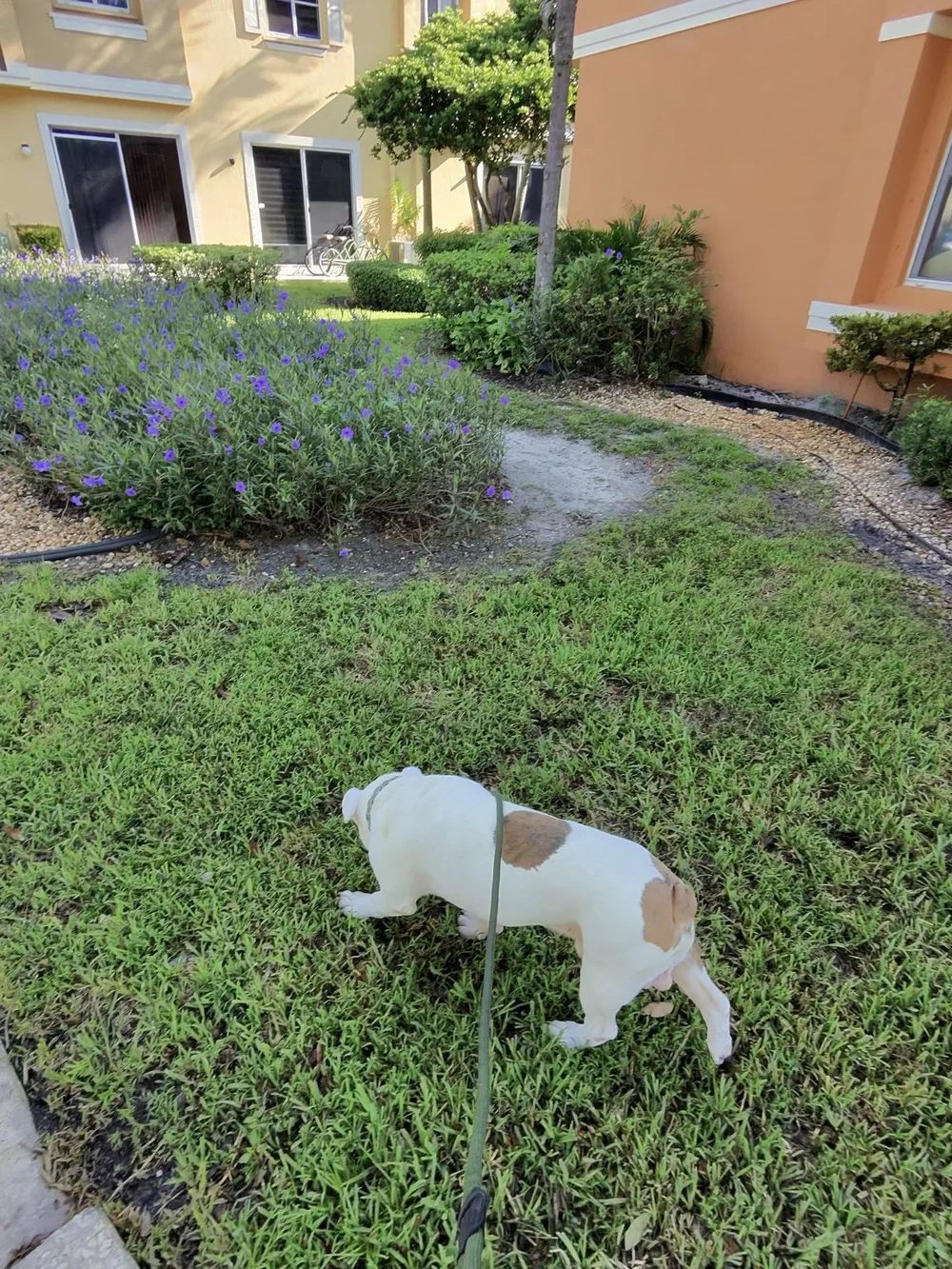
Parks, trails, and quiet green spaces usually offer a lot more to explore than busy roads, though a familiar neighborhood can still be interesting since the scents shift throughout the day.
Stay alert to hazards while your dog sniffs around — keep them away from broken glass, trash, unknown food, toxic plants, chemicals, wildlife waste, and standing water, and don't let them wander onto private property or approach another dog without asking first.
Other Ways to Support Your Dog's Nose
You can support your dog's nose at home too, with some simple scent-based games. These are great for rainy days, extreme weather, or just when your dog needs a calmer form of enrichment.
Easy nose work games are a good place to start. Let your dog watch you place a treat under one of two cups, encourage them to choose, then reveal the reward. Scattering a few treats across a clean floor or folding them loosely inside a towel works just as well.
You don't need expensive supplies for this — cardboard boxes, paper packing material, towels, and cups all work fine under supervision. Just strip out any tape, staples, plastic, or anything else your dog might try to swallow.
When Sniffing Needs Extra Support
Not every sniffing habit is harmless, and a sudden change is worth paying attention to. Call your vet if your dog suddenly loses interest in smells, seems unable to breathe normally, has nasal discharge, paws at their face, or shows any sign of pain.
Some dogs also get so locked onto scent that walks start to feel unsafe. A qualified positive-reinforcement trainer can help with pulling, attention, and recall, and a veterinary behavior professional may be the better call when sniffing is tangled up with intense fear, compulsive behavior, or aggression.
This article is general educational information — it can't diagnose a medical or behavioral condition, and it's no substitute for advice from a vet who actually knows your dog.
Conclusion
Walking isn't just about exercise. It's brain work, safe choices, and time to explore too.
Sniffing is just a normal part of dog life, and it adds real mental enrichment, movement, variety, and enjoyment to a daily routine. You don't need to turn every outing into a long scent adventure — a few calm pauses can make a real difference on their own.
Build sniffing into your walks at whatever pace works for both of you. Stick to safe routes, comfortable equipment, clear cues, and patient loose-leash training, and round it out at home with a few simple sniffing games.
When you make room for your dog's nose, you're making room for them to experience the world in their own way.
Q&A
Why is sniffing more than a distraction on walks?
It's one of the main ways dogs gather information — it helps them notice animals, people, food, and changes in familiar places, all while giving their mind something to work on.
Can sniffing count as exercise?
It adds movement and mental work, but it doesn't replace all physical exercise. The right mix depends on your dog's age, health, energy, and any guidance from your vet.
How long should I let my dog sniff on a walk?
There's no single rule here. Start with a few minutes in a safe area and see how your dog does, then balance sniffing time against exercise, training, weather, and your own schedule.
What if I rush my dog and don't let them sniff?
An occasional quick walk is completely normal. But if every walk is rushed, some dogs get bored, frustrated, or tense from losing that regular chance to explore.
How can I make walks better for sniffing?
Pick safe routes with grass, trees, and interesting smells, use loose-leash training, let your dog pause when it's practical, and teach clear cues for when sniffing starts and stops.
Are scent games safe for every dog?
Most can be adjusted to fit your dog, but supervision matters. Stick to safe materials, avoid anything your dog might swallow, and scale the difficulty for puppies, seniors, and dogs with medical or mobility concerns.
When should I talk with a veterinarian?
Reach out for sudden behavior changes, breathing trouble, nasal discharge, pain, intense fear, compulsive behavior, or any other concern about your dog's health.
Sources
- Applied Animal Behaviour Science: Let Me Sniff! Nosework Induces Positive Judgment Bias in Pet Dogs
- Learning and Motivation: Smelling More or Less—Investigating the Olfactory Experience of the Domestic Dog
- Animals: Canine Olfaction—Physiology, Behavior, and Possibilities for Practical Applications
This article is general educational information, not a diagnosis or a substitute for veterinary care. Contact a veterinarian if your dog develops breathing trouble, nasal discharge, facial pain, a sudden loss of interest in smells, or another concerning change.
About the editor
Stephen Gill writes Daily Doggy News from real life with Tyson, the Olde English Bulldogge behind Inspired by Tyson.