
The MARK Dog Platform: 7-Day Training Guide
You bought a Mark Platform because you want a dog who can settle down on command instead of pacing behind you every time you're in the kitchen. That's what this guide is for. Over the next seven days you'll teach your dog one command — "Mark" — and by the end of the week that command handles most of the chaos that comes with owning a dog: door dashing, counter surfing, jumping on guests, and never getting five minutes to yourself.
Quick start
- One cue word: "Mark"
- 5–10 minutes, twice a day
- Pick a marker word ("Yes") and a release word ("Free" or "Break") before Day 1
- Go back a day if your dog isn't reliable yet — don't push forward
Every Mark Platform is cut and built to order out of treated wood, finished with polyurethane in a matte or gloss look, and topped with the surface material you pick to match your home furniture. It's built to live wherever you need it — inside, on the porch, anywhere in between.
Sizing is where the Mark Platform really breaks from what else is out there. The Mark 18 is sized for small and toy breeds. The Mark 2x2 is the training platform for dogs of any size, and it's what most people start with — it also works as a sleeping platform for small-to-medium dogs, and comes in a 1-foot or a 6-inch height, so seniors and dogs with hip or joint problems aren't making a jarring jump to get up. The Mark 2x3 gives small-to-medium dogs extra sleeping room, and depending on your dog's build, some large dogs fit it too. The Mark 2x4 steps up for bigger dogs, and if you've got a working or athletic dog that needs more room to move, we'll custom-build a 2x5.
Not sure which size fits your dog? Use the Mark size calculator — enter your dog's info and it'll recommend the right one. Check current sizes and pricing here.
None of that matters until your dog knows what "Mark" means, which is the whole point of the next seven days.
Why a place matters (not just a dog bed)
A bed is where your dog goes to relax and check out. A Mark Platform is different — it's a spot with a job attached to it. Your dog steps on, works, gets rewarded, and steps off when the job is done. Keeping that boundary clear is the reason platform training beats telling your dog to "stay" on a mat or a dog bed: a flat surface has no edge, so a dog can inch off it a little at a time and never fully register they left. A platform with real height forces an actual decision, since stepping off means physically climbing down instead of drifting off the edge.
That clear edge is also why you'll start to see your dog choose to stay on the Mark even when something tempting is happening three feet away. Your dog knows exactly where the line is, and is choosing on their own to stay on the right side of it.
Think about what a solid "Mark" cue would actually fix in your house. The door opens and your dog is wedged in the gap trying to get out. Dinner hits the table and you've got a nose at your elbow the whole meal. Guests walk in and it's pure chaos before anyone gets a hello in. A trained "Mark" gives your dog a job to do in every one of those moments instead of leaving them to improvise — and once they know the platform is where good things happen, they'll start heading there on their own.
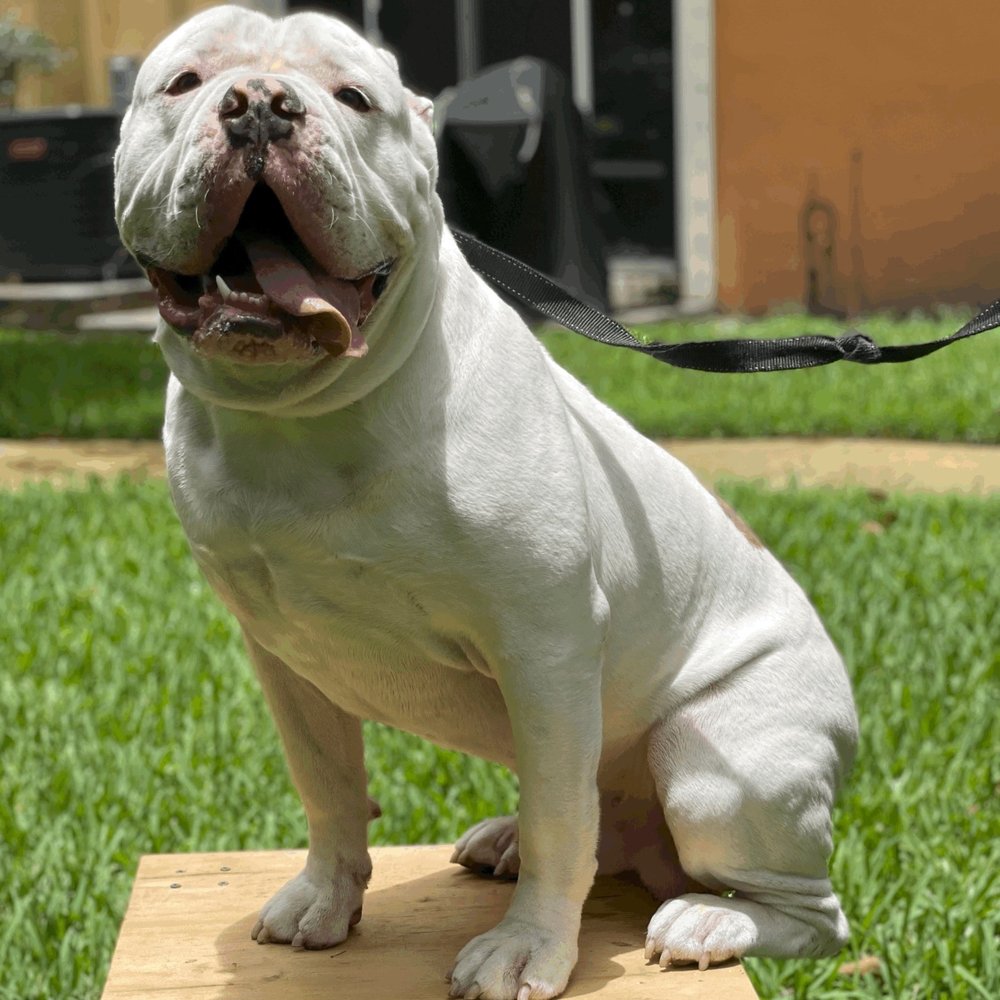
Tyson sitting on the Mark 18. His stance is tight and his attention is locked on me — the same discipline the Mark was originally designed to build. The Mark 18 is a great starting point for initial training, whether you've got a puppy or a bigger dog.
Where the Mark comes from
The Mark itself has a real history behind it. Eric Gonzales of Bite Life K9 taught me the concept while I was training my own dog, Tyson — a technique he learned in the early 1990s under the mentorship of Omar V. Muller, back when it started as a studio training prop for keeping working dogs in position for photo and film work. I built out that idea into the Mark Platform you're using today.
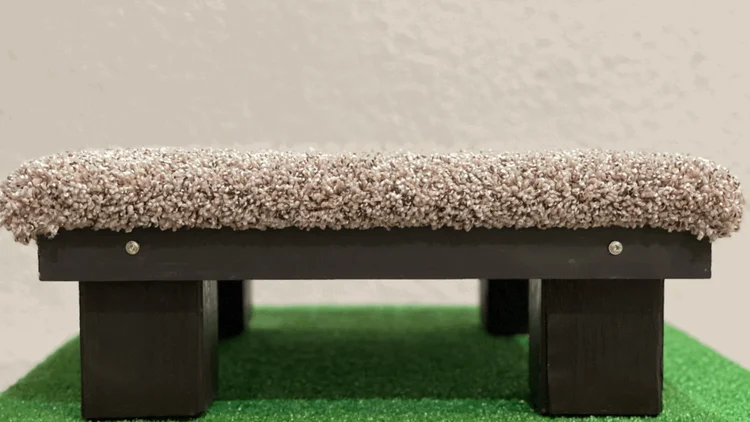
MARK 18
From $60The size closest to where it all started.
How this week works
Five to ten minutes, twice a day, is plenty. Dogs learn faster in short sessions than in one long one, and you'll both stay more patient that way. Each day builds on the last, so if your dog isn't reliable yet, go back a day instead of pushing forward. Rushing a step is the most common reason training stalls out.
Two tools you'll use all week:
A marker word. Pick a word like "Yes" and say it the instant your dog does the right thing, then follow it with a reward. Think of it as a photograph of the exact behavior you're paying for.
A release word. Pick a word like "Free" or "Break" that tells your dog the job is over. Say it, pause for one second, then let them off — if you move at the same time you say it, your dog will learn to watch your body instead of listening for the word.
Find what motivates your dog before you start. Most dogs work best for small, soft treats you can hand out fast — cut-up hot dogs, cheese, or boiled chicken all work well. If your dog is more toy-driven, a quick game of tug can be just as strong a reward as food.
Getting on the Mark
Today's only goal is teaching your dog that four paws on the Mark Platform means good things happen.
Set the platform up in a quiet room with space around it — a living room works well. Don't push it against a wall yet; a wall on one side can make some dogs hesitant to jump up. If you have a puppy, a small dog, or a dog with joint issues, use the six-inch option.
If your dog jumps up on their own, mark and reward the second all four paws land. Give two or three more treats in a row for staying up there, then toss a treat to the floor to invite them off and reset.
If your dog needs help, hold a treat at their nose and slowly guide them onto the platform. Mark and reward the moment all four paws are on. Repeat five or six times per session.
Once your dog is reliably following the treat onto the platform, start fading the food out of your hand: use the same hand motion, but empty. Your dog should still jump on. Mark and reward from your other hand or a treat pouch once they do — this is what lets you eventually cue "Mark" with just your voice or a point, instead of always needing a treat visible in your hand.
Once you can predict your dog is about to jump on — you'll see them lean toward it or look at it — start saying "Mark" right before they do. Mark and reward when they land. That's the cue starting to take hold.
End the day here. Don't add duration yet.
Staying put and the release word
Yesterday your dog learned to get on the Mark. Today they'll learn to stay there until you say so.
Cue "Mark." The moment your dog is up, mark and reward. Then say your release word, pause for one full second, and toss a treat to invite them off. That pause matters — it's what teaches your dog the word means "you're free," not your hand movement.
If your dog jumps off before you release them, don't scold. Point back to the Mark, wait for them to get back on, pause, then release — and save the reward for the next clean repetition.
Run five to eight repetitions per session today. By the end of the day, most dogs will wait for the release word instead of bolting the second their paws land.
Building duration
Now you'll start asking your dog to hold their spot a little longer before the reward comes.
Cue "Mark." Wait one or two seconds before marking and rewarding instead of rewarding instantly. If your dog holds still, gradually stretch that wait time up toward 20-30 seconds over the day's sessions.
Use this rule to decide when to add more time: if your dog succeeds 8 or more times out of 10 reps, add a few more seconds. Between 5 and 7 out of 10, hold at the current time. Below 5, drop back to the last duration that worked. This keeps sessions winnable instead of frustrating for either of you.
Mix a couple of easy, short reps in between the harder, longer ones. That variety keeps your dog from getting discouraged.
Adding distance
Today you'll start stepping away from your dog while they hold their spot — the skill that makes the Mark Platform useful for real chores like unloading groceries or cooking dinner.
Cue "Mark," mark and reward while standing right next to the platform. Then take one step back, mark, and return to reward your dog on the Mark itself — never call them to you for the reward, or they'll learn to break position and come find you instead.
When you add distance, drop the duration back down to a couple of seconds. Asking for more distance and more time at once is too much for most dogs to handle together.
Work up gradually to walking across the room, then to another room entirely. If your dog breaks position, that's your cue to shrink the distance back down, not to push through it.
Adding distractions
Your dog can hold the Mark with distance now. Today, test that against something tempting.
Cue your dog onto the Mark. Present a toy in one hand without giving it to them — reward for staying put. Then wiggle it. Then squeak it. Then toss it in the air. Then, finally, try dropping the toy on the ground next to the platform. Each time, only reward if your dog holds their position. If they break, reset and go back one step in that ladder.
Once your dog handles the toy test, try a real-world version: walk around the room tidying up — fold a blanket, put toys away, carry dishes to the kitchen — or start chopping vegetables nearby. Human-grade, non-greasy treats work well here; cheese cubes, carrot slices, and boiled chicken are easy to keep on hand. Reward periodically for staying on the Mark while you go about your business.
If your dog conquers the toy distraction completely, that's a good place to take a break and play with that toy together — they earned it. Celebrate it and have some fun.
Another way to test this: play a real game of tug or fetch with your dog, then ask them to drop the toy and send them to the Mark. If you're playing tug, hold the toy close to your body and point to the Mark with your empty hand; if you're playing fetch, pick up the ball first, then cue "Mark." Mark and reward each successful repetition, then release your dog to go right back into the game. This teaches your dog that going to the Mark doesn't mean the fun stops — sometimes it's just a pause button.
Sending your dog to the Mark
So far you've been cueing your dog while standing close. Today, send them to the Mark from farther away — the skill that handles doorbell chaos and dropped food.
Start three feet from the Mark. Give the cue "Mark," pointing if needed. Reward the second they're on it. Add distance gradually over several reps, and eventually try sending them from another room — losing sight of you can be a real challenge for some dogs, so build up to it slowly.
If your dog seems hesitant to go, help them out: point toward the Mark, or take a couple of steps toward it yourself. That extra encouragement early on makes them more likely to succeed, and you can fade it out as they get more confident.
Then add a real distraction along the path. Set an empty food bowl about halfway between you and the Mark. Send your dog to the Mark from 6-10 feet away and reward on the platform. Walk back to your spot, then call your dog to you — if they ignore the bowl on the way, praise them and go drop a treat in it together. This teaches your dog that walking past temptation pays off better than stopping for it.
Real life
This is the day everything from the week comes together in the situations you bought the Mark Platform for in the first place.
Practice sending your dog to the Mark for the doorbell. Have them hold position while you cook dinner or fold laundry nearby. Send them to the Mark when a guest walks in, and let them greet people calmly once you release them instead of launching at the door.
Keep rewarding generously this week. A dog who gets paid well for choosing the Mark over a distraction will keep making that choice even after you start fading out the treats.
What's next
The Mark cue doesn't need the platform forever. Once it's solid, you can ask your dog to "Mark" on a park bench, a boulder, or a rug — anywhere with a clear edge. That's useful on a trail when you're passing other hikers, or any time you want your dog settled somewhere specific without carrying furniture with you.
If you hit a wall on any day, go back to the last step your dog was reliably successful at and rebuild from there. Dogs progress at different speeds, and backing up one step almost always fixes it faster than pushing through.
Common questions
What makes a Mark Platform different from a regular dog bed or mat?
A Mark Platform gives your dog a clear working spot with a real edge. Unlike a flat bed or mat, the raised platform makes it easy to see when the dog is on or off the boundary. That's why platform training works better for a place command than a soft, flat bed.
How long should each training session be during the 7-day plan?
Five to ten minutes, twice a day, is plenty. Short, steady sessions help dogs learn faster and keep both of you from getting frustrated. If your dog isn't ready for the next step, go back a day instead of pushing forward.
Why are the marker word and release word important?
The marker word, like "Yes," tells your dog the exact moment they did the right thing and that a reward is coming. The release word, like "Free" or "Break," tells your dog the job is over and they can leave the Mark. Pause for one second after the release word so your dog learns the word itself — not your body movement.
What should I do if my dog jumps off the Mark before being released?
Don't scold your dog. Point them back to the Mark, wait for them to get back on, pause, and then release them properly. Save the reward for a clean repetition, so staying in place until released is what earns the payoff.
Can the Mark cue be used somewhere other than the platform later?
Yes. Once the cue is solid, your dog can "Mark" on other surfaces with clear boundaries — a park bench, a boulder, a rug. That makes the skill useful outside the home, including on trails, around other people, or anywhere you want your dog settled in a specific spot.
Resources & Learn More
- Dogs Are Den Creatures — Eric Gonzales, Bite Life K9. The full origin story of the Mark, and why elevation matters for a den-creature species.
- The Mark System Blueprint — a paid training course by Omar Von Muller, the Hollywood animal trainer, built around the same Mark system he developed for elite working and film dogs.
- Omar Von Muller — Omar's own site, covering his broader dog training background and experience.
Ready to get your Mark Platform?
Sold exclusively through Inspired by Tyson. Not sure which size fits your dog? The calculator will tell you.